

ASK-Teva is used for secondary prevention of stroke, myocardial infarction, TIA, angina, and prevention of thrombosis in high-risk patients.

We deliver to:
🇦🇺 Australia
🇧🇪 Belgium
🇨🇦 Canada
🇨🇿 Czechia
🇩🇰 Denmark
🇪🇪 Estonia
🇫🇮 Finland
🇬🇷 Greece
🇭🇺 Hungary
🇮🇪 Ireland
🇮🇱 Israel
🇮🇹 Italy
🇯🇵 Japan
🇰🇼 Kuwait
🇱🇻 Latvia
🇱🇹 Lithuania
🇲🇽 Mexico
🇲🇩 Moldova
🇳🇱 Netherlands
🇳🇴 Norway
🇵🇱 Poland
🇷🇴 Romania
🇸🇰 Slovakia
🇰🇷 South Korea
🇨🇭 Switzerland
🇬🇧 United Kingdom
🇺🇸 United States of America
and more
We deliver to:
🇦🇺 Australia
🇧🇪 Belgium
🇨🇦 Canada
🇨🇿 Czechia
🇩🇰 Denmark
🇪🇪 Estonia
🇫🇮 Finland
🇬🇷 Greece
🇭🇺 Hungary
🇮🇪 Ireland
🇮🇱 Israel
🇮🇹 Italy
🇯🇵 Japan
🇰🇼 Kuwait
🇱🇻 Latvia
🇱🇹 Lithuania
🇲🇽 Mexico
🇲🇩 Moldova
🇳🇱 Netherlands
🇳🇴 Norway
🇵🇱 Poland
🇷🇴 Romania
🇸🇰 Slovakia
🇰🇷 South Korea
🇨🇭 Switzerland
🇬🇧 United Kingdom
🇺🇸 United States of America
and more
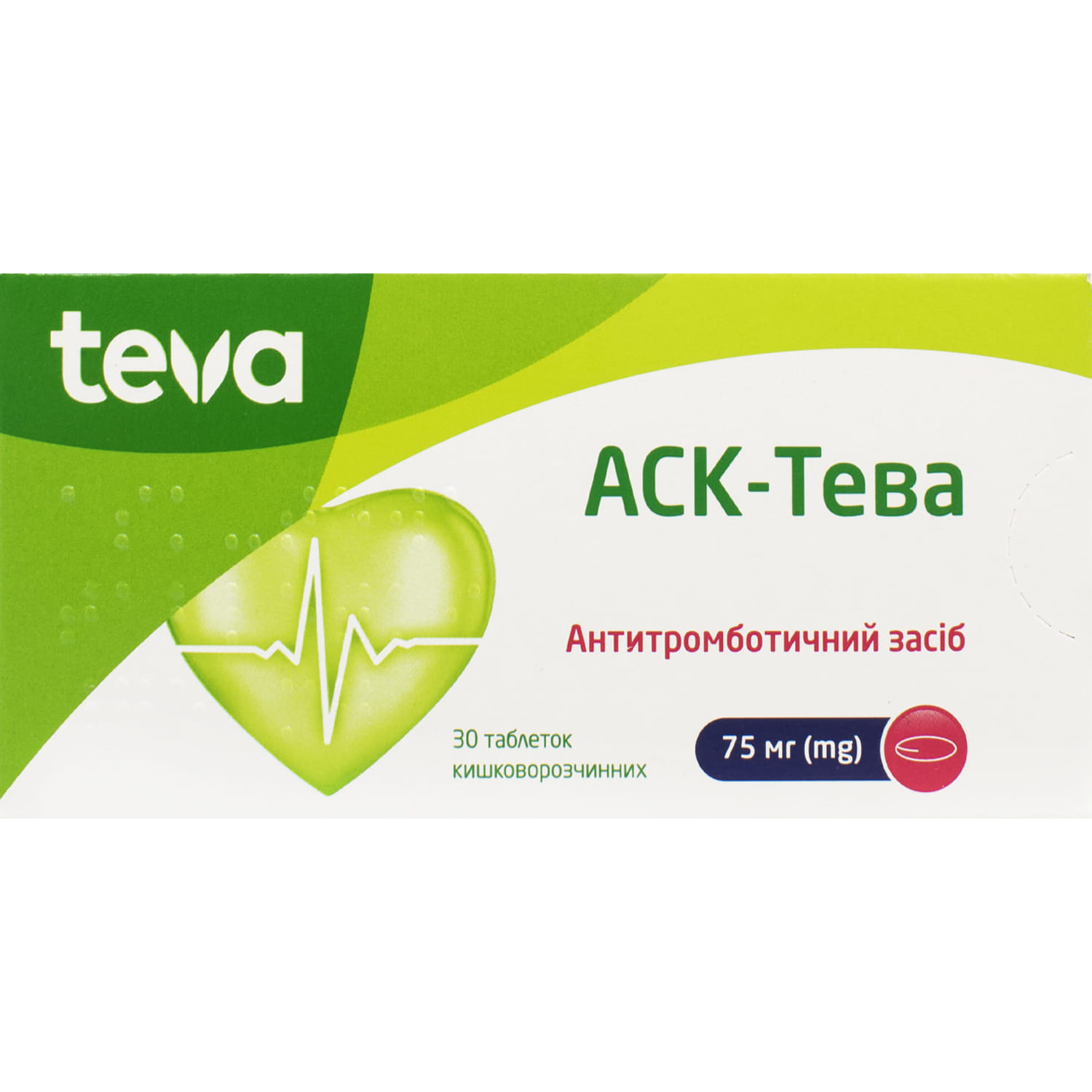
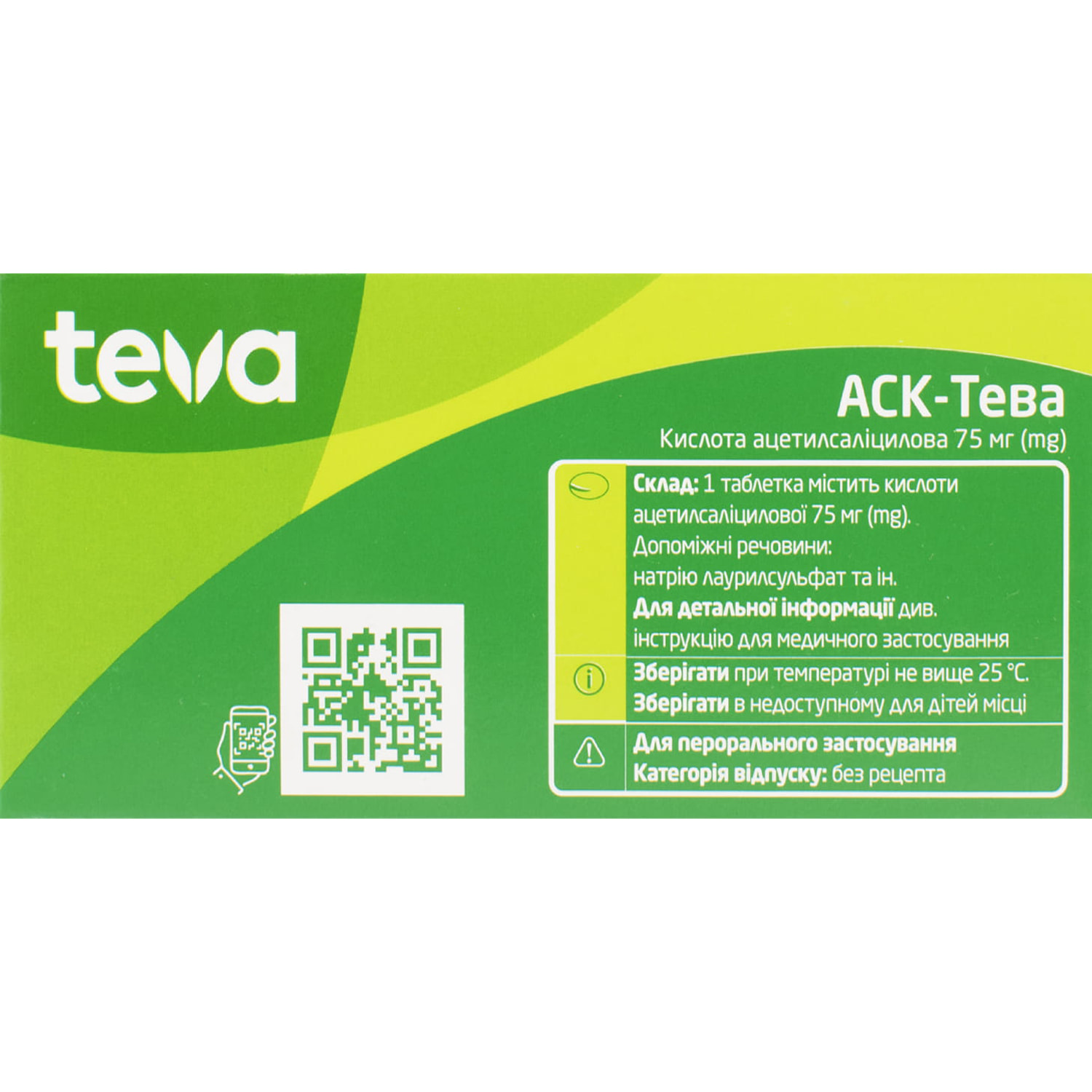
Please note: The product packaging may vary from the images shown. The contents, ingredients, and quality of the product remain unchanged.
ASK-Teva enteric-coated tablets 75 mg 3 blisters of 10 pcs.
$11.83
Free Worldwide Shipping
to: Australia, Belgium, Canada, Czechia, Denmark, Estonia, Finland, Greece, Hungary, Ireland, Israel, Italy, Japan, Kuwait, Latvia, Lithuania, Mexico, Moldova, Netherlands, Norway, Poland, Romania, Slovakia, South Korea, Switzerland, United Kingdom, United States and more
🏖️ Hello! We are on vacation!
We are still accepting orders on our website; however, order processing and shipping will resume after September 10. If you place an order during our vacation, we will contact you and remind you about the temporary shipping delay. Starting September 10, all orders received during this period will be processed and shipped in the order they were placed. If your order contains a product with less than one year remaining before its expiration date, we will notify you after September 10 and proceed according to your instructions. If you decide to cancel an order placed during our vacation, simply contact us through the contact form on our website, and we will be happy to assist you. Thank you for your understanding, and we apologize for any inconvenience caused.
In stock
Categories: Hematopoiesis and blood
Brand: Teva
Payment
PayPal, Debit or Credit card, Google Pay, Apple Pay
ASK-Teva tablets are indicated for secondary prevention of stroke.
To reduce risk:
- death in patients with suspected acute myocardial infarction;
- death in patients who have had a myocardial infarction;
- transient ischemic attacks (TIA) and stroke in patients with TIA;
- morbidity and mortality in stable and unstable angina.
For prevention:
- thrombosis and embolism after vascular surgery (percutaneous transluminal catheter angioplasty (PTCA), carotid endarterectomy, coronary artery bypass grafting (CABG), arteriovenous bypass grafting);
- deep vein thrombosis and pulmonary embolism after prolonged immobilization (after surgery);
- myocardial infarction in patients with a high risk of developing cardiovascular complications (diabetes mellitus, controlled arterial hypertension) and in individuals with a multifactorial risk of cardiovascular disease (hyperlipidemia, obesity, smoking, old age, etc.).
Composition
Active ingredient: acetylsalicylic acid.
1 tablet contains 75 mg or 100 mg of acetylsalicylic acid.
Excipients: microcrystalline cellulose (type 102), corn starch, colloidal anhydrous silicon dioxide, stearic acid.
Shell: methacrylate copolymer dispersion, polysorbate 80, sodium lauryl sulfate, triethyl citrate, talc.
Contraindication
- Hypersensitivity to acetylsalicylic acid, other salicylates or any component of the drug.
- Chronic asthma caused by a history of salicylates or nonsteroidal anti-inflammatory drugs.
- Acute peptic ulcers.
- Hemorrhagic diathesis.
- Severe renal failure.
- Severe liver failure.
- Severe heart failure.
- Combination with methotrexate at a dose of 15 mg/week or more.
Method of application
For oral use.
The tablets should be swallowed whole with sufficient liquid (1/2 glass of water). The tablets should not be crushed, cut or chewed, as the enteric coating of the tablet prevents the drug from irritating the intestines.
To reduce the risk of death in patients with suspected acute myocardial infarction, the drug should be used at a dose of 75-300 mg per day. For 30 days after the infarction, continue to take a maintenance dose of 75-300 mg per day. After 30 days, the issue of further prevention of recurrent myocardial infarction should be considered.
Application features
Pregnant women
Salicylates should be used with caution during the first and second trimesters of pregnancy. Salicylates are contraindicated during the third trimester of pregnancy.
Children
The medicine is not intended for use in children.
Drivers
No research was conducted.
Overdose
Symptoms of severe poisoning may develop slowly, for example within 12-24 hours after administration. After oral administration of ASK doses up to 150 mg/kg body weight, moderate intoxication may develop, and at doses >300 mg/kg body weight, severe intoxication may develop.
Chronic salicylate poisoning can be latent because its symptoms are nonspecific. Moderate chronic intoxication is usually observed only after repeated ingestion of large doses.
Acute intoxication is indicated by a pronounced change in acid-base balance, which may vary depending on the age of the patient and the severity of intoxication. Its most common manifestation in children is metabolic acidosis. The severity of the condition cannot be assessed solely on the basis of the concentration of salicylates in the blood plasma. The absorption of acetylsalicylic acid may be slowed down due to delayed gastric release, the formation of concrements in the stomach or when the drug is taken in the form of enteric-coated tablets.
Side effects
Spontaneous reports included information on other adverse reactions for all dosage forms of ASK, including during oral short-term and long-term therapy, therefore it is not possible to assign a frequency category according to CIOMS III.
Hemolysis and hemolytic anemia have been observed in patients with severe forms of glucose-6-phosphate dehydrogenase deficiency.
Due to its antiplatelet effect, the use of ASK may increase the risk of bleeding. Bleeding events such as perioperative bleeding, hematomas, epistaxis, urogenital bleeding, and gingival bleeding have been observed. Symptoms may persist for 4-8 days after discontinuation of acetylsalicylic acid.
Serious bleeding events, such as gastrointestinal bleeding and haemorrhagic stroke, have been observed rarely or very rarely, particularly in patients with uncontrolled hypertension and/or concomitant use of anticoagulants, which in some cases can be potentially life-threatening.
Interaction
When used with methotrexate at doses of 15 mg/week or more, the hematological toxicity of methotrexate increases (due to a decrease in the renal clearance of methotrexate by anti-inflammatory agents and displacement of methotrexate from plasma protein binding by salicylates). Therefore, the simultaneous use of methotrexate (at doses >15 mg/week) with acetylsalicylic acid is contraindicated.
Storage conditions
Store in a dry place, protected from light, at a temperature below 25 °C.
Keep out of reach of children.
You may also like