
🇦🇺 Australia
🇧🇪 Belgium
🇨🇦 Canada
🇨🇿 Czechia
🇩🇰 Denmark
🇪🇪 Estonia
🇫🇮 Finland
🇬🇷 Greece
🇭🇺 Hungary
🇮🇪 Ireland
🇮🇱 Israel
🇮🇹 Italy
🇯🇵 Japan
🇰🇼 Kuwait
🇱🇻 Latvia
🇱🇹 Lithuania
🇲🇽 Mexico
🇲🇩 Moldova
🇳🇱 Netherlands
🇳🇴 Norway
🇵🇱 Poland
🇷🇴 Romania
🇸🇰 Slovakia
🇰🇷 South Korea
🇨🇭 Switzerland
🇬🇧 United Kingdom
🇺🇸 United States of America
and more
🇦🇺 Australia
🇧🇪 Belgium
🇨🇦 Canada
🇨🇿 Czechia
🇩🇰 Denmark
🇪🇪 Estonia
🇫🇮 Finland
🇬🇷 Greece
🇭🇺 Hungary
🇮🇪 Ireland
🇮🇱 Israel
🇮🇹 Italy
🇯🇵 Japan
🇰🇼 Kuwait
🇱🇻 Latvia
🇱🇹 Lithuania
🇲🇽 Mexico
🇲🇩 Moldova
🇳🇱 Netherlands
🇳🇴 Norway
🇵🇱 Poland
🇷🇴 Romania
🇸🇰 Slovakia
🇰🇷 South Korea
🇨🇭 Switzerland
🇬🇧 United Kingdom
🇺🇸 United States of America
and more


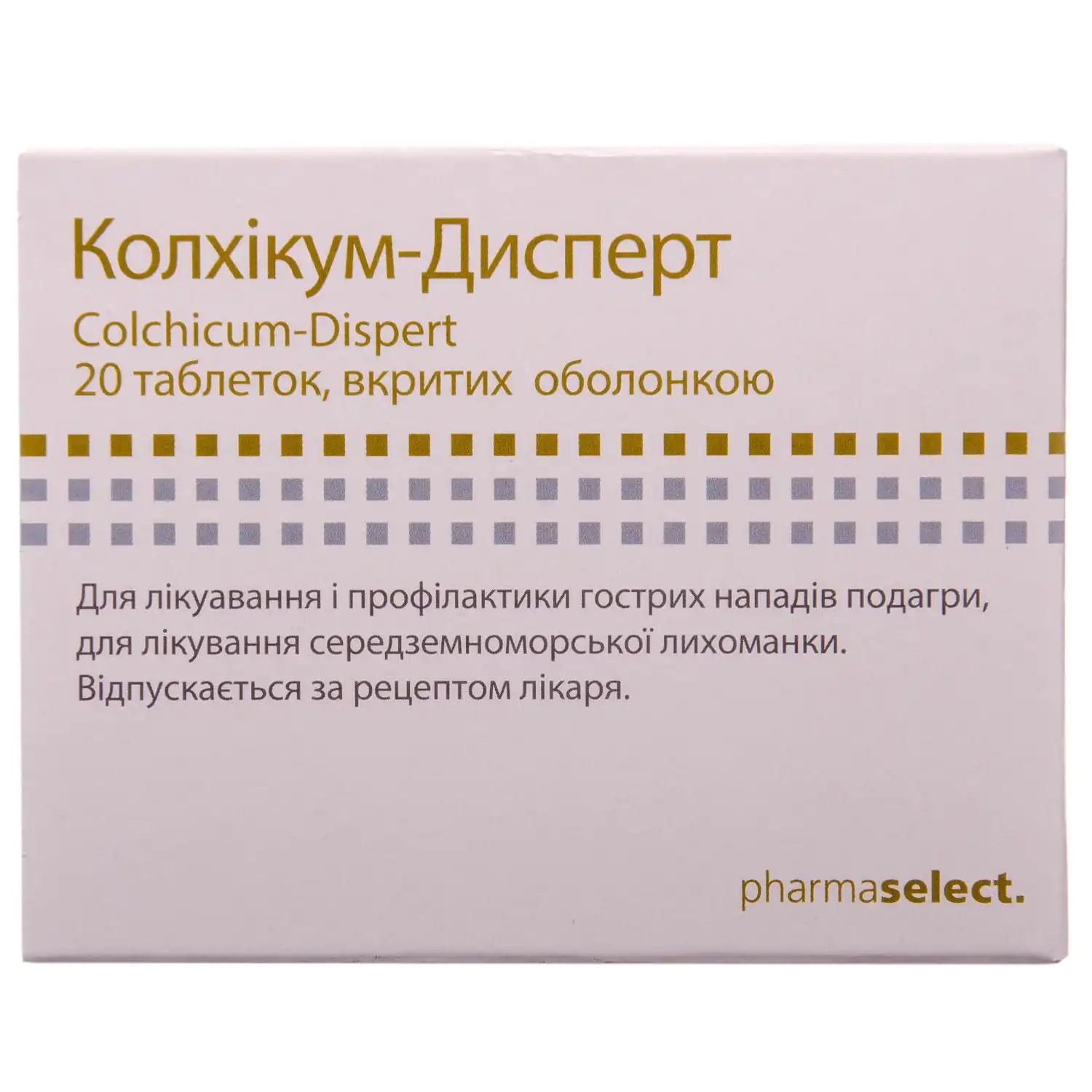
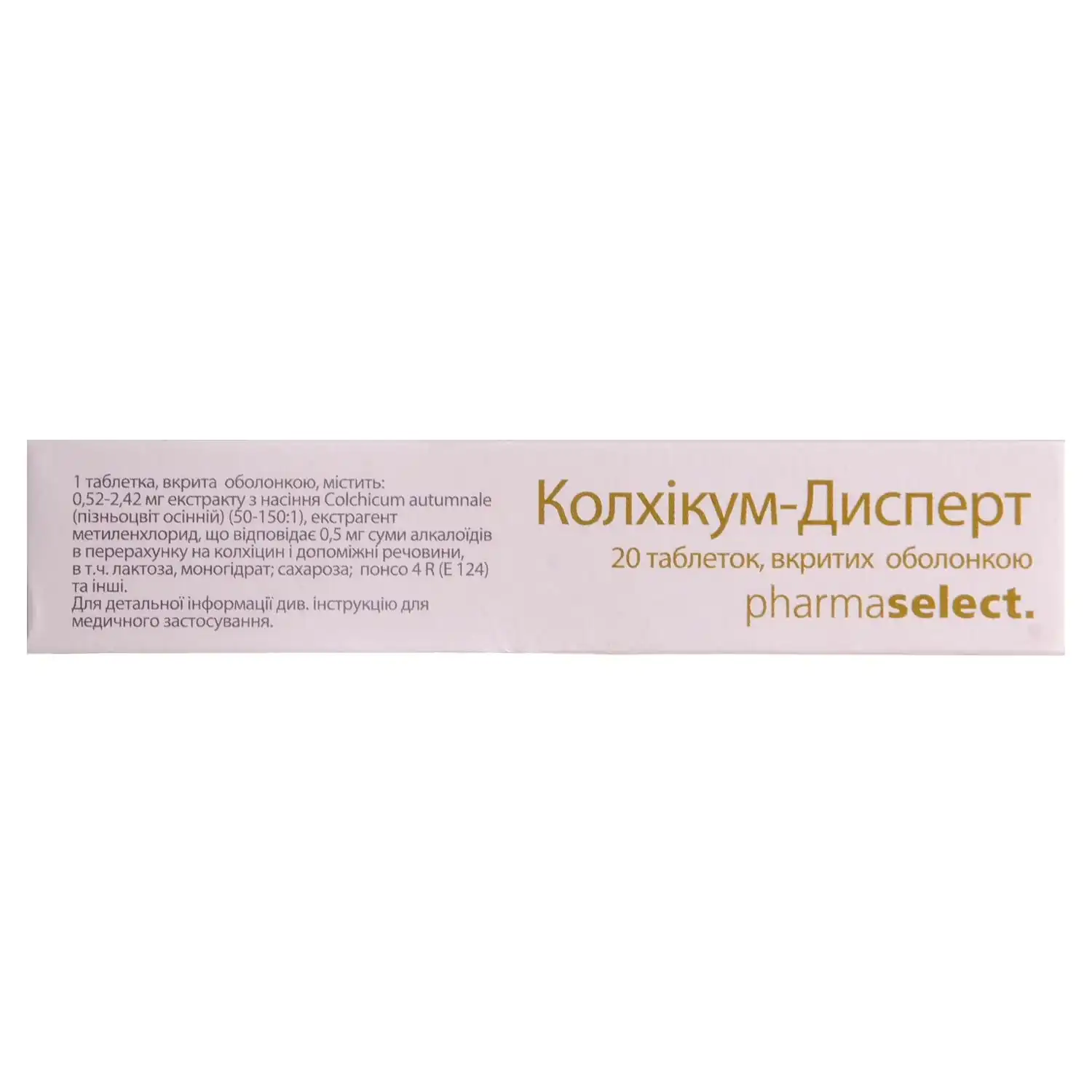
Colchicum-Dispert film-coated tablets 0.5 mg blister 20 pcs
$30.94
Free Worldwide Shipping
to: Australia, Belgium, Canada, Czechia, Denmark, Estonia, Finland, Greece, Hungary, Ireland, Israel, Italy, Japan, Kuwait, Latvia, Lithuania, Mexico, Moldova, Netherlands, Norway, Poland, Romania, Slovakia, South Korea, Switzerland, United Kingdom, United States and more
🏖️ Hello! We are on vacation!
We are still accepting orders on our website; however, order processing and shipping will resume after September 10. If you place an order during our vacation, we will contact you and remind you about the temporary shipping delay. Starting September 10, all orders received during this period will be processed and shipped in the order they were placed. If your order contains a product with less than one year remaining before its expiration date, we will notify you after September 10 and proceed according to your instructions. If you decide to cancel an order placed during our vacation, simply contact us through the contact form on our website, and we will be happy to assist you. Thank you for your understanding, and we apologize for any inconvenience caused.
In stock
Colchicum-Dispert tablets with colchicine for acute gout attacks and Mediterranean fever. Film-coated tablets for controlled dosing.
Payment
PayPal, Debit or Credit card, Google Pay, Apple Pay
Orders Temporarily Unavailable
Due to temporary postal service disruptions, we are currently unable to accept orders.
Colchicum-Dispert tablets are indicated for:
- Acute gout attack and prevention of acute gout attacks.
- Mediterranean fever.
Composition
Active ingredient: colchicine;
1 film-coated tablet contains 0.52-2.42 mg of Colchicum autumnale seed extract (50-150:1), extractant methylene chloride, corresponding to 0.5 mg of the sum of alkaloids in terms of colchicine;
Excipients: lactose monohydrate, microcrystalline cellulose, magnesium stearate, talc, copolyvidone; stearic acid 50; corn starch;
Shell: talc, povidone K 29, titanium dioxide (E 171), polyethylene glycol 6000, magnesium oxide, acacia, sucrose, shellac, croscarmellose sodium, Opalux AS 250000 (sucrose, ponceau 4R (E 124), quinoline yellow (E 104), titanium dioxide (E 171), povidone), carnauba wax.
Contraindication
Hypersensitivity to colchicine or to the components of the drug.
Contraindicated in patients requiring hemodialysis.
Severe renal impairment (creatinine clearance <10 ml/min).
Pregnancy, breastfeeding period.
Age up to 5 years.
Method of application
The tablets should be swallowed whole with sufficient liquid.
Treatment for acute gout attacks.
In acute attacks of gout, adults should take 2 tablets (1 mg), then 1 hour later – 1-2 tablets (0.5-1 mg). The maximum daily dose is 1.5-2 mg. Later, treatment can be continued with low doses of the drug, taking 1-2 tablets to relieve pain.
A repeated course of treatment is carried out no earlier than 3 days after the end of the previous course.
Application features
Pregnant women
Contraindicated.
Children
The drug is not recommended for use in children under 5 years of age due to insufficient data on safety and efficacy.
Overdose
At oral doses of less than 0.5 mg/kg, gastrointestinal disorders were observed, at 0.5-0.8 mg/kg, myelosuppression was observed, and at doses greater than 0.8 mg/kg, mortality was 100%. The first stage of acute colchicine poisoning begins within 24 hours of ingestion and includes dehydration, stomach pain, diarrhea, nausea, and vomiting, accompanied by electrolyte imbalance, leukocytosis, and hypotension.
Later, within 24 to 72 hours after ingestion, multiorgan failure, renal failure, confusion, coma, peripheral motor and sensory neuropathy, myocardial depression, pancytopenia, arrhythmia, respiratory failure, coagulopathy, hepatocellular damage, muscle damage, and cardiomyopathy may develop.
Death can occur due to respiratory and cardiovascular failure.
In the event that the patient survives, recovery of damaged organs may be accompanied by the return of leukocytosis and alopecia, which begins approximately one week after the initial overdose.
Fatal cases have been reported after taking colchicine at a dose of 7 mg, while much higher doses have been non-fatal.
Treatment: In case of colchicine overdose, gastric lavage should be performed, preferably for 60 minutes, and activated charcoal should be administered. Diarrhea should not be treated, as this is the primary route of elimination of colchicine.
Treatment is mainly symptomatic and supportive.
Side effects
The most common adverse reaction in the treatment of children with Mediterranean fever is diarrhea. The development of gastrointestinal adverse reactions is dose-dependent. Mild steatorrhea and enzyme inhibition (e.g. lactose malabsorption) lead to some gastrointestinal disorders (diarrhea). Neuropathy may be a sign of intoxication, but may also occur with the usual prophylactic dose.
Bone marrow changes (e.g., hemolytic or aplastic anemia, pancytopenia, neutropenia, and thrombocytopenia) have been reported in acute intoxication, but with adequate treatment, such reactions were rare.
Interaction
Colchicine may reduce the absorption of vitamin B12.
Concomitant use of colchicine with cyclosporine, hydroxymethylglutaryl-coenzyme A reductase inhibitors (statins), macrolide antibiotics, conazole fibrates, verapamil, diltiazem, ranolazine, digoxin, and some anti-HIV agents may cause bone marrow depression, agranulocytosis, neuromyopathy, myopathy, or rhabdomyolysis, especially in patients with renal insufficiency.
Cytochrome P450 inhibitors, such as cimetidine or erythromycin, as well as excessive consumption of grapefruit juice (1000 ml/day) can cause a severe increase in serum colchicine levels, which is life-threatening.
Storage conditions
At a temperature not exceeding 25 °C in a place protected from light.
Keep out of reach of children.
Shelf life – 5 years.
You may also like

Reviews
There are no reviews yet.