No products in the cart.
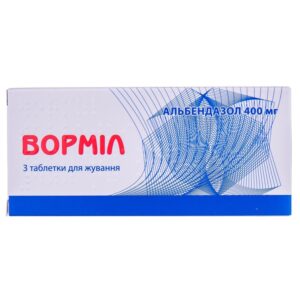
Albendazole 400 mg chewable tablets treat intestinal and systemic helminth infections; taken with food, dosage varies by condition and severity.

🇦🇺 Australia
🇨🇦 Canada
🇨🇿 Czechia
🇩🇰 Denmark
🇪🇪 Estonia
🇮🇪 Ireland
🇮🇱 Israel
🇮🇹 Italy
🇯🇵 Japan
🇱🇹 Lithuania🇲🇽 Mexico
🇳🇱 Netherlands🇵🇱 Poland
🇸🇰 Slovakia
🇰🇷 South Korea
🇨🇭 Switzerland
🇬🇧 United Kingdom
🇺🇸 United States of America
and more
🇦🇺 Australia
🇨🇦 Canada
🇨🇿 Czechia
🇩🇰 Denmark
🇪🇪 Estonia
🇮🇪 Ireland
🇮🇱 Israel
🇮🇹 Italy
🇯🇵 Japan
🇱🇹 Lithuania🇲🇽 Mexico
🇳🇱 Netherlands🇵🇱 Poland
🇸🇰 Slovakia
🇰🇷 South Korea
🇨🇭 Switzerland
🇬🇧 United Kingdom
🇺🇸 United States of America
and more
$21.09 Original price was: $21.09.$19.19Current price is: $19.19.
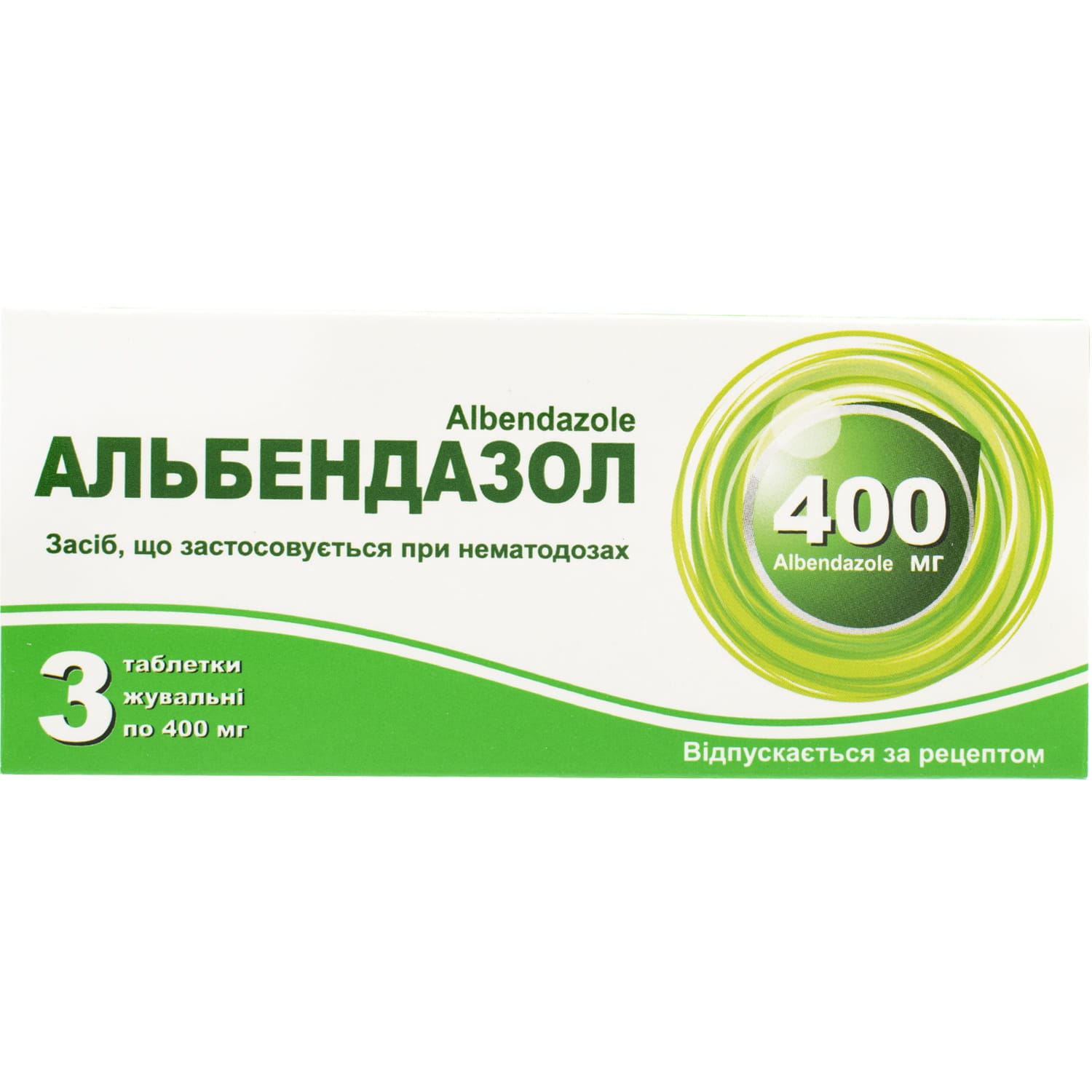
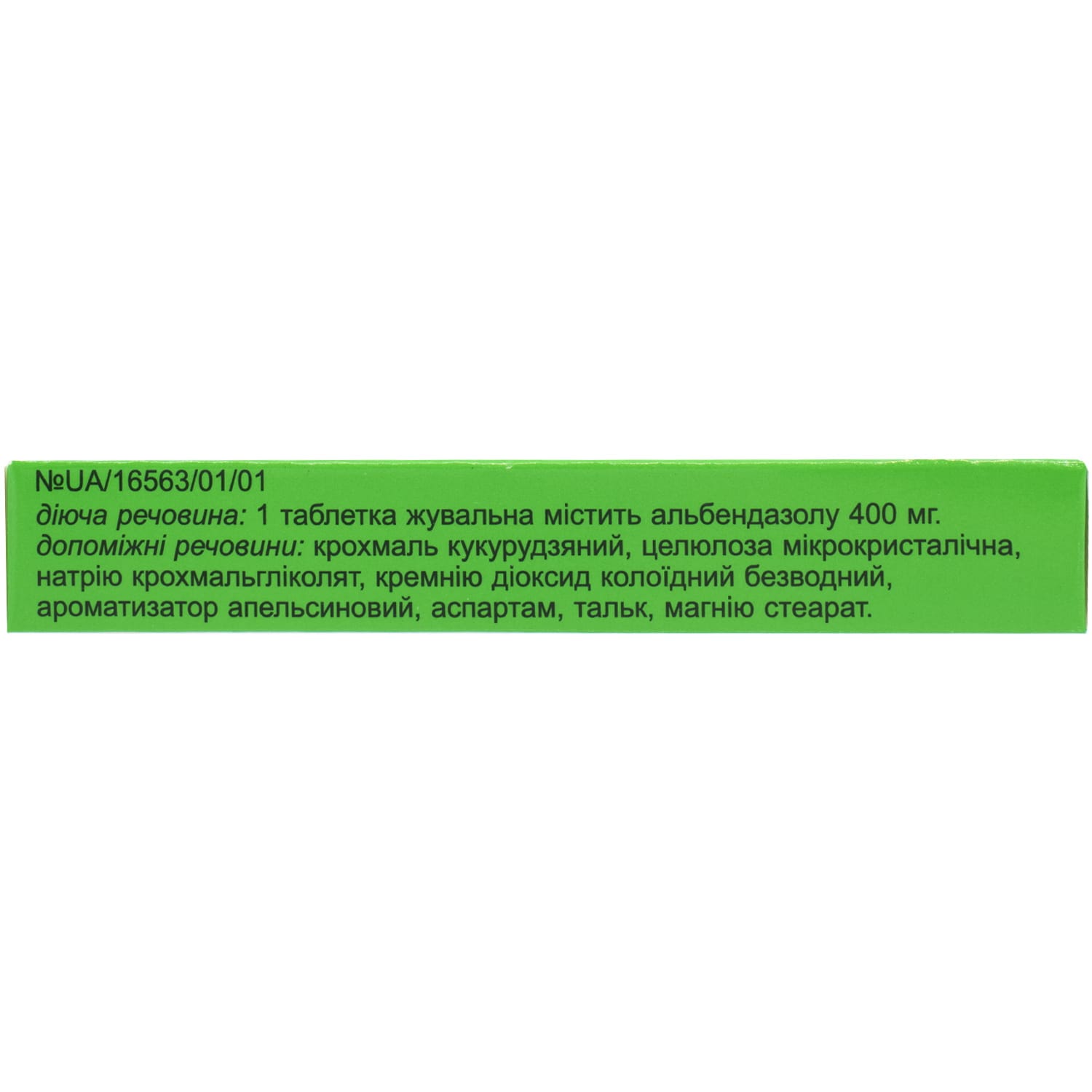
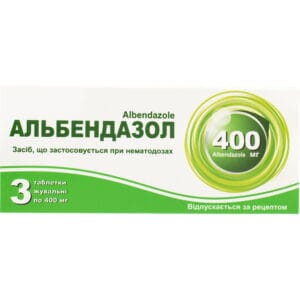
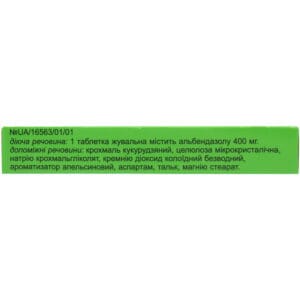
Please note: The product packaging may vary from the images shown. The contents, ingredients, and quality of the product remain unchanged.
$15.51
to: Australia, Canada, Czechia, Denmark, Estonia, Ireland, Israel, Italy, Japan, Lithuania, Mexico, Netherlands, Poland, Slovakia, South Korea, Switzerland, United Kingdom, United States and more
In stock
Albendazole 400 mg chewable tablets treat intestinal and systemic helminth infections; taken with food, dosage varies by condition and severity.
PayPal, Debit or Credit card, Google Pay, Apple Pay
Albendazole tablets are used for the indications listed below.
Intestinal forms of helminthiasis and cutaneous Larva Migrans syndrome (short-term treatment with low doses): enterobiasis, hookworm and necatoriasis, hymenolepidosis, teniasis, strongyloidiasis, ascariasis, trichocephalosis, clonorchiasis, opisthorchiasis, giardiasis in children.
Systemic helminth infections (long-term treatment with high doses):
Active ingredient: albendazole;
1 chewable tablet contains 400 mg of albendazole;
Excipients: corn starch, microcrystalline cellulose, sodium starch glycolate, colloidal anhydrous silicon dioxide, orange flavor, aspartame, talc, magnesium stearate.
The drug is taken with food. It is advisable to use it at the same time of day. If recovery does not occur after three weeks, a second course of treatment is prescribed.
The tablet can be chewed or crushed and taken with a small amount of water.
The drug is contraindicated during pregnancy or breastfeeding and for the treatment of women planning to become pregnant.
The drug is contraindicated for the treatment of children under 3 years of age in this dosage form.
Given the presence of such a side effect as dizziness, it is recommended to refrain from driving or operating other mechanisms during the period of use of albendazole.
Symptoms: nausea, vomiting, diarrhea, tachycardia, drowsiness, visual disturbances, visual hallucinations, speech disorders, loss of consciousness, liver enlargement, increased transaminase levels, jaundice; respiratory distress, brown-red or orange discoloration of the skin, urine, sweat, saliva, tears and feces in proportion to the dose of the drug.
Treatment: gastric lavage and symptomatic and supportive therapy are used.
When using albendazole with theophylline, it is necessary to monitor the level of theophylline in the blood.
The systemic effect is increased if the drug is taken with food.
Grapefruit juice also increases the plasma levels of albendazole sulfoxide.
Due to possible disruption of P450 activity, there is a theoretical risk of interaction with the following drugs: oral contraceptives, anticoagulants, oral hypoglycemic agents, theophylline.
Store in the original packaging at a temperature not exceeding 25ºС.
Keep out of reach of children.
Shelf life – 3 years.

UApothecary combines medicine search, online ordering, and pharmaceutical consultations. We provide up-to-date information about medications, updating data several times a day. We collaborate with doctors, pharmacists, and medical organizations to offer professional support. We guarantee the quality of medicines and convenient worldwide delivery. Our mission is to make quality medicines accessible to everyone.
This site is protected by reCAPTCHA and the Google
Privacy Policy and
Terms of Service apply.
Reviews
There are no reviews yet.