No products in the cart.
Amlodipine-Teva treats hypertension and angina, helping control blood pressure, reduce chest pain, and support cardiovascular health for daily therapy use.

🇦🇺 Australia
🇨🇦 Canada
🇨🇿 Czechia
🇩🇰 Denmark
🇪🇪 Estonia
🇮🇪 Ireland
🇮🇱 Israel
🇮🇹 Italy
🇯🇵 Japan
🇱🇹 Lithuania🇲🇽 Mexico
🇳🇱 Netherlands🇵🇱 Poland
🇸🇰 Slovakia
🇰🇷 South Korea
🇨🇭 Switzerland
🇬🇧 United Kingdom
🇺🇸 United States of America
and more
🇦🇺 Australia
🇨🇦 Canada
🇨🇿 Czechia
🇩🇰 Denmark
🇪🇪 Estonia
🇮🇪 Ireland
🇮🇱 Israel
🇮🇹 Italy
🇯🇵 Japan
🇱🇹 Lithuania🇲🇽 Mexico
🇳🇱 Netherlands🇵🇱 Poland
🇸🇰 Slovakia
🇰🇷 South Korea
🇨🇭 Switzerland
🇬🇧 United Kingdom
🇺🇸 United States of America
and more
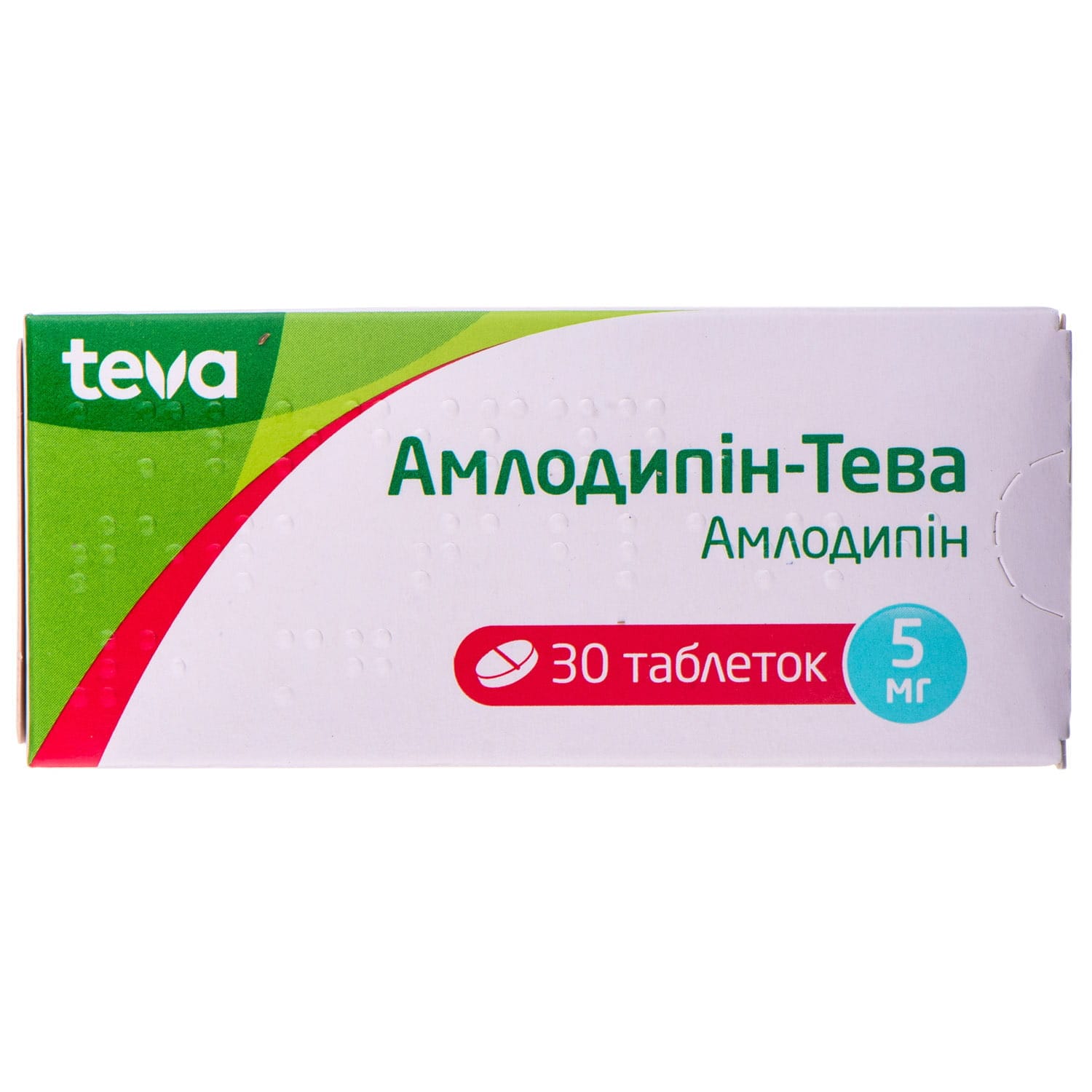
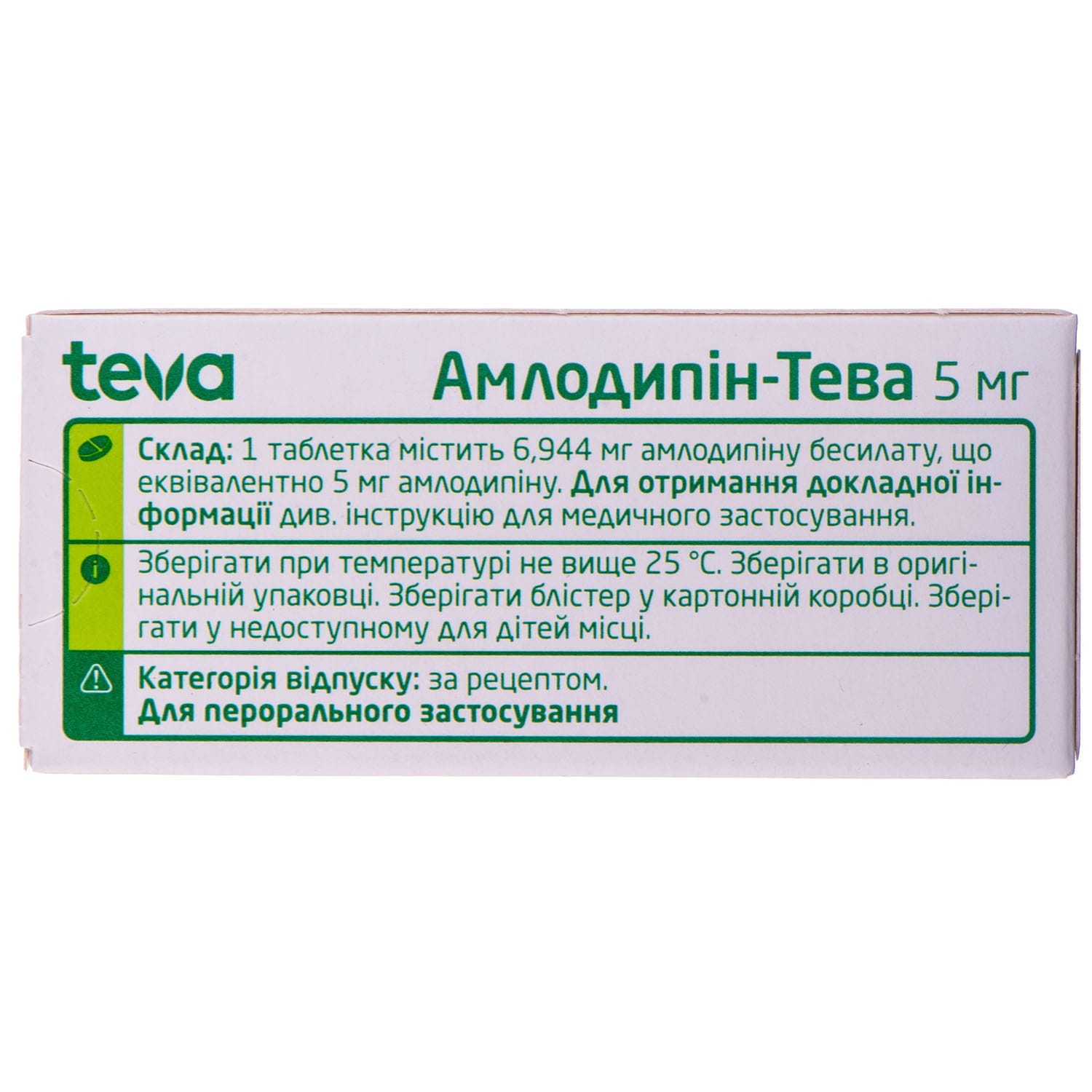
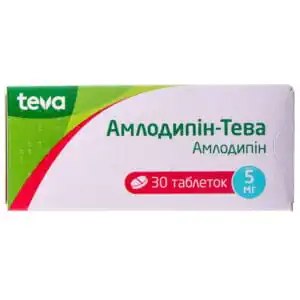
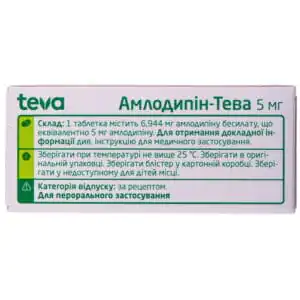
Please note: The product packaging may vary from the images shown. The contents, ingredients, and quality of the product remain unchanged.
$11.74
to: Australia, Canada, Czechia, Denmark, Estonia, Ireland, Israel, Italy, Japan, Lithuania, Mexico, Netherlands, Poland, Slovakia, South Korea, Switzerland, United Kingdom, United States and more
In stock
Amlodipine-Teva treats hypertension and angina, helping control blood pressure, reduce chest pain, and support cardiovascular health for daily therapy use.
PayPal, Debit or Credit card, Google Pay, Apple Pay
Amlodipine Teva is a drug that affects the cardiovascular system.
The most commonly reported adverse reactions with amlodipine are: drowsiness, dizziness, headache, palpitations, flushing, abdominal pain, nausea, leg swelling, edema, and fatigue.
For oral administration. The tablet can be divided into equal doses.
If your doctor has prescribed you to take ½ (half) tablet daily, you should not use any tablet-splitting devices.
For the treatment of hypertension and angina pectoris, the usual starting dose of amlodipine is 5 mg once daily. Depending on the patient’s response to therapy, the dose may be increased to a maximum dose of 10 mg once daily.
In patients with angina pectoris, the drug can be used as monotherapy or in combination with other antianginal drugs in case of resistance to nitrates and/or adequate doses of beta-blockers.
There is experience with the use of the drug in combination with thiazide diuretics, alpha-blockers, beta-blockers, or ACE inhibitors in patients with arterial hypertension.
There is no need to adjust the dose of the drug when used simultaneously with thiazide diuretics, beta-blockers and ACE inhibitors.
Children aged 6 years and older with arterial hypertension.
The recommended initial dose of amlodipine for this category of patients is 2.5 mg 1 time per day. If the desired blood pressure level is not achieved within 4 weeks, the dose can be increased to 5 mg per day. The use of the drug in doses higher than 5 mg in this category of patients has not been studied.
The safety of amlodipine for use in women during pregnancy has not been established.
The use of amlodipine during pregnancy is recommended only in cases where there is no safer alternative and the risk associated with the disease itself outweighs the possible harm from treatment for the pregnant woman and the fetus.
Amlodipine is excreted in human milk. The ratio of the dose received by the newborn from the mother is estimated in the interquartile range to be 3-7%, with a maximum of 15%. The effect of amlodipine on the infant is unknown. When making a decision on whether to continue breastfeeding or to use amlodipine, the benefit of breastfeeding for the child and the benefit of the drug for the mother should be weighed.
The drug can be used in children aged 6 years and over.
It is not known how amlodipine affects blood pressure in patients under 6 years of age.
Amlodipine may have minor or moderate influence on the ability to drive and use machines.
Reaction speed may be reduced in the presence of symptoms such as dizziness, headache, confusion or nausea.
Caution should be exercised, especially at the beginning of therapy.
Experience with intentional overdose of the drug is limited.
Symptoms: Available information suggests that a significant overdose of amlodipine will result in excessive peripheral vasodilation and possibly reflex tachycardia. Significant and possibly prolonged systemic hypotension, including shock with fatal outcome, has been reported.
Non-cardiogenic pulmonary edema has been reported rarely following amlodipine overdose, which may be delayed in onset (24-48 hours after ingestion) and may require mechanical ventilation. Early resuscitation measures (including fluid overload) to maintain perfusion and cardiac output may be precipitating factors.
Treatment: clinically significant arterial hypotension caused by amlodipine overdose requires active support of the cardiovascular system, including frequent monitoring of cardiac and respiratory functions, providing the patient with a horizontal position, raising the lower extremities, monitoring the volume of circulating fluid and urine output.
Vasoconstrictors can be used to restore vascular tone and blood pressure, making sure there are no contraindications to their use. Intravenous calcium gluconate may be useful for reversing the effects of calcium channel blockade.
Gastric lavage may be useful in some cases. Administration of activated charcoal to healthy volunteers within 2 hours of administration of 10 mg of amlodipine significantly reduced its absorption.
Since amlodipine is highly protein bound, the effect of dialysis is negligible.
Store at a temperature not exceeding 25 °C. Store in the original packaging. Keep the blister in the cardboard box. Keep out of the reach of children.

UApothecary combines medicine search, online ordering, and pharmaceutical consultations. We provide up-to-date information about medications, updating data several times a day. We collaborate with doctors, pharmacists, and medical organizations to offer professional support. We guarantee the quality of medicines and convenient worldwide delivery. Our mission is to make quality medicines accessible to everyone.
This site is protected by reCAPTCHA and the Google
Privacy Policy and
Terms of Service apply.