No products in the cart.

Dicloberl 100 diclofenac suppositories relieve pain and inflammation in rheumatic, gynecologic, postoperative conditions, migraine, gout,and ENT disorders.

🇦🇺 Australia
🇨🇦 Canada
🇨🇿 Czechia
🇩🇰 Denmark
🇪🇪 Estonia
🇮🇪 Ireland
🇮🇱 Israel
🇮🇹 Italy
🇯🇵 Japan
🇱🇹 Lithuania🇲🇽 Mexico
🇳🇱 Netherlands🇵🇱 Poland
🇸🇰 Slovakia
🇰🇷 South Korea
🇨🇭 Switzerland
🇬🇧 United Kingdom
🇺🇸 United States of America
and more
🇦🇺 Australia
🇨🇦 Canada
🇨🇿 Czechia
🇩🇰 Denmark
🇪🇪 Estonia
🇮🇪 Ireland
🇮🇱 Israel
🇮🇹 Italy
🇯🇵 Japan
🇱🇹 Lithuania🇲🇽 Mexico
🇳🇱 Netherlands🇵🇱 Poland
🇸🇰 Slovakia
🇰🇷 South Korea
🇨🇭 Switzerland
🇬🇧 United Kingdom
🇺🇸 United States of America
and more
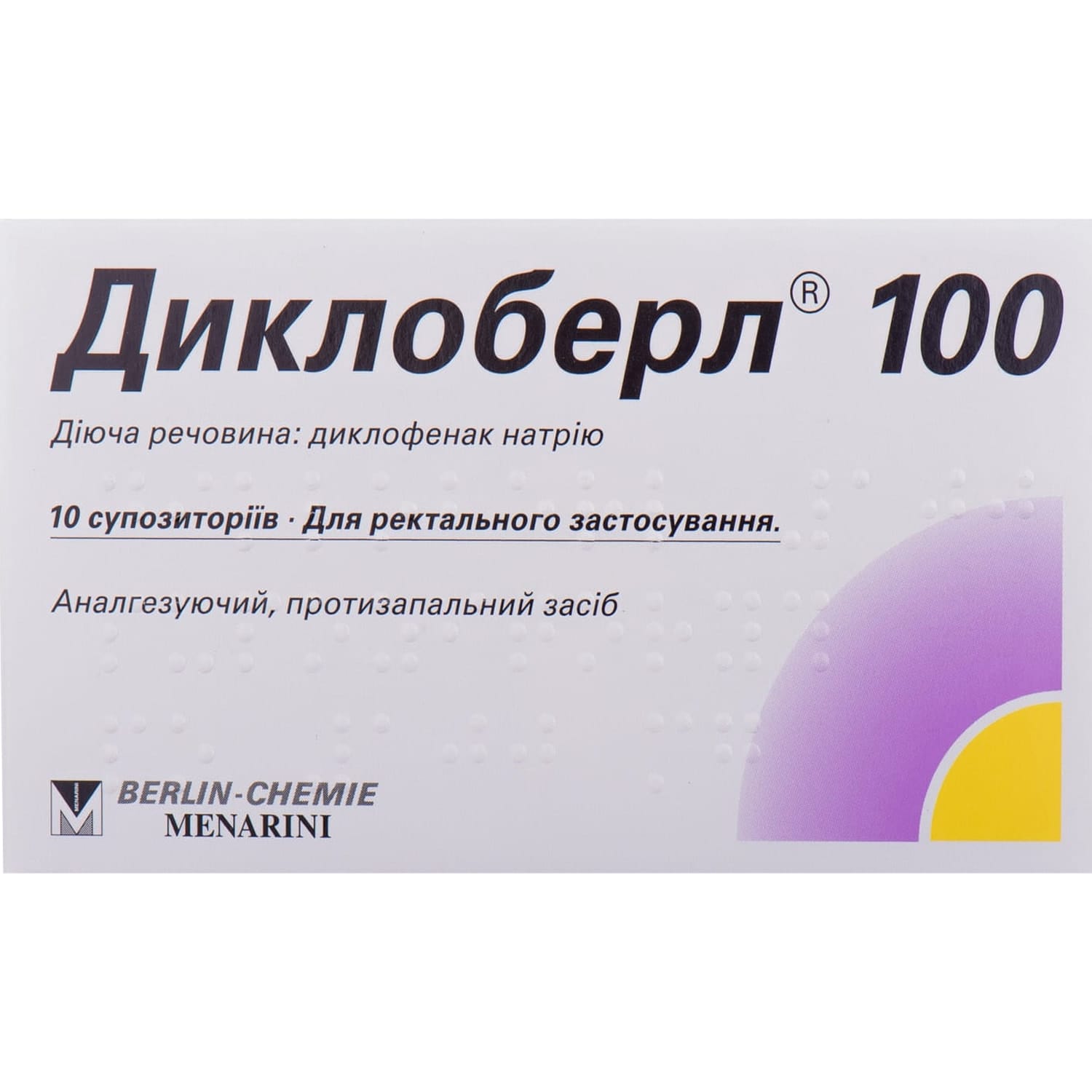


Please note: The product packaging may vary from the images shown. The contents, ingredients, and quality of the product remain unchanged.
$20.26
to: Australia, Canada, Czechia, Denmark, Estonia, Ireland, Israel, Italy, Japan, Lithuania, Mexico, Netherlands, Poland, Slovakia, South Korea, Switzerland, United Kingdom, United States and more
In stock
Dicloberl 100 diclofenac suppositories relieve pain and inflammation in rheumatic, gynecologic, postoperative conditions, migraine, gout,and ENT disorders.
PayPal, Debit or Credit card, Google Pay, Apple Pay
Dicloberl 100 is a nonsteroidal anti-inflammatory and antirheumatic agent.
Indications for use
According to general therapeutic principles, the underlying disease should be treated with basic therapy. Fever alone is not an indication for the use of the drug.
Dicloberl® 100 is not intended for use in children and adolescents under 18 years of age.
The most common adverse reactions are gastrointestinal.
Peptic ulcer, perforation or GI bleeding, sometimes fatal, especially in the elderly (see section 4.4). Nausea, vomiting, diarrhoea, bloating, constipation, dyspepsia, abdominal pain, melena, haematemesis, gastritis, ulcerative stomatitis, exacerbation of ulcerative colitis and Crohn’s disease have been reported following administration.
In particular, the risk of SC bleeding depends on the dose and duration of use.
Edema, hypertension, and heart failure have been reported in association with the use of NSAIDs.
Clinical trials and epidemiological data consistently indicate an increased risk of arterial thrombotic events (e.g. myocardial infarction or stroke) associated with the use of diclofenac, especially at high doses (150 mg per day) and with long-term treatment.
Undesirable effects can be minimized by using the lowest effective dose for the shortest period of time necessary to control symptoms.
Do not use internally, for rectal administration only.
Suppositories should be inserted into the rectum as deeply as possible, preferably after bowel cleansing.
The initial dose is usually 100-150 mg per day. With mild symptoms, as well as with long-term therapy, a dose of 75-100 mg per day is sufficient.
Divide the daily dose into 2-3 doses. To avoid night pain or morning stiffness, administer Dicloberl 100 in the form of rectal suppositories before bedtime (the daily dose of the drug should not exceed 150 mg).
In primary dysmenorrhea, the daily dose is selected individually, usually it is 50-150 mg per day. The initial dose may be 50-100 mg per day, but if necessary it can be increased over several menstrual cycles to a maximum of 150 mg per day. The drug should be started after the first painful symptoms appear and continued for several days, depending on the dynamics of symptom regression.
For the treatment of migraine attacks, the course should be started at a dose of 100 mg at the first signs of the onset of an attack. If necessary, a second suppository (100 mg of diclofenac) can be used on the same day. If necessary, the treatment can be continued on the following days (the daily dose of the drug should not exceed 150 mg, the dose should be divided into 2-3 applications).
During the first and second trimester of pregnancy, diclofenac should not be used unless clearly necessary.
Diclofenac is contraindicated during the third trimester.
Like other NSAIDs, diclofenac passes into breast milk in small amounts. Therefore, diclofenac should not be used by women during breastfeeding to avoid undesirable effects on the infant. If treatment is life-threatening, the child should be transferred to artificial feeding.
Dicloberl 100 suppositories should not be used in children and adolescents under 18 years of age.
Since the use of Dicloberl 100 in high doses may cause undesirable effects on the central nervous system, such as fatigue and dizziness, the ability to react and the ability to actively participate in traffic and operate machinery may be impaired in individual cases. This applies to a greater extent when the drug is used in combination with alcohol. Patients who experience such effects should refrain from driving or using machinery.
a) Symptoms of overdose
There is no typical clinical picture characteristic of diclofenac overdose. Central nervous system disorders such as headache, dizziness, vertigo, agitation, coma, drowsiness, tinnitus and loss of consciousness (also myoclonic convulsions in children), as well as abdominal pain, diarrhea, nausea and vomiting may occur as symptoms of overdose. In addition, gastrointestinal bleeding is possible, as well as impaired liver and kidney function, acute renal failure and liver damage are possible in case of severe intoxication. There may also be arterial hypotension, respiratory depression and cyanosis.
b) Therapeutic measures in case of overdose
There is no specific antidote.
Management of acute poisoning with NSAIDs, including diclofenac, consists essentially of supportive measures and symptomatic treatment. For complications such as hypotension, renal failure, convulsions, gastrointestinal disorders and respiratory depression, supportive measures and symptomatic treatment should be used.
Special measures such as forced diuresis, dialysis or haemoperfusion are unlikely to be helpful in eliminating NSAIDs, including diclofenac, due to high protein binding and active metabolism. The use of activated charcoal should be considered within one hour of ingestion of a potentially toxic amount of the drug. In addition, gastric lavage should be considered in adults within one hour of ingestion of a potentially toxic amount of the drug. In cases of frequent or prolonged convulsions, intravenous diazepam should be administered. Other measures may be indicated depending on the clinical condition of the patient.
Store at a temperature not exceeding 25 ° C. Keep the medicine out of the reach of children.

UApothecary combines medicine search, online ordering, and pharmaceutical consultations. We provide up-to-date information about medications, updating data several times a day. We collaborate with doctors, pharmacists, and medical organizations to offer professional support. We guarantee the quality of medicines and convenient worldwide delivery. Our mission is to make quality medicines accessible to everyone.
This site is protected by reCAPTCHA and the Google
Privacy Policy and
Terms of Service apply.