No products in the cart.

We deliver to:
🇦🇺 Australia
🇨🇦 Canada
🇨🇿 Czechia
🇩🇰 Denmark🇪🇪 Estonia
🇮🇪 Ireland
🇮🇱 Israel
🇮🇹 Italy
🇯🇵 Japan
🇲🇽 Mexico
🇵🇱 Poland
🇰🇷 South Korea
🇨🇭 Switzerland
🇬🇧 United Kingdom
🇺🇸 United States of Americaand more
We deliver to:
🇦🇺 Australia
🇨🇦 Canada
🇨🇿 Czechia
🇩🇰 Denmark🇪🇪 Estonia
🇮🇪 Ireland
🇮🇱 Israel
🇮🇹 Italy
🇯🇵 Japan
🇲🇽 Mexico
🇵🇱 Poland
🇰🇷 South Korea
🇨🇭 Switzerland
🇬🇧 United Kingdom
🇺🇸 United States of Americaand more
Enap tablets 5 mg 20 pcs.
$13.16


Troxevasin gel 2% tube 40 g
$20.89 Original price was: $20.89.$18.99Current price is: $18.99.

Please note: The product packaging may vary from the images shown. The contents, ingredients, and quality of the product remain unchanged.
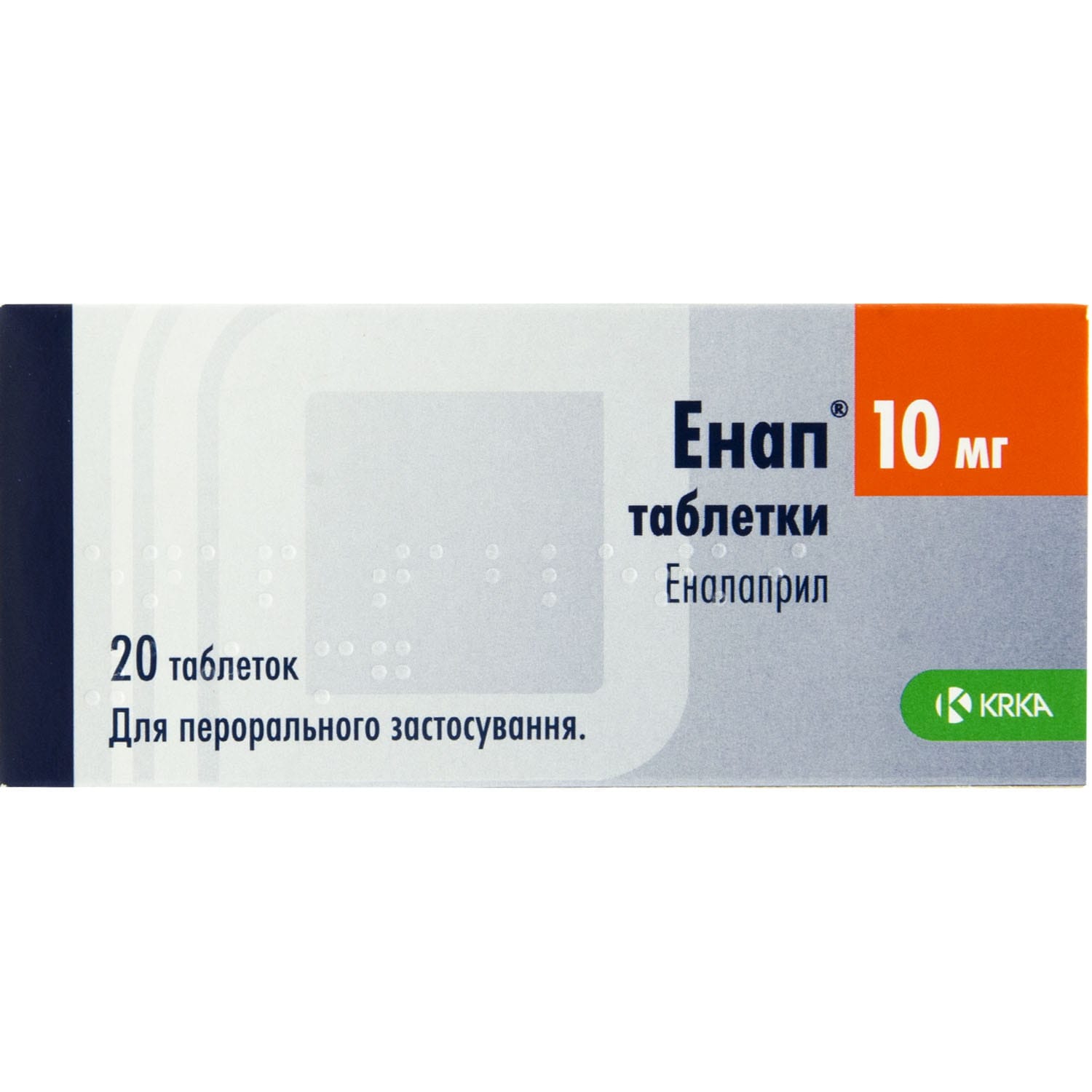
Enap tablets 10 mg 20 pcs.
$14.07
Free Worldwide Shipping
to: Australia, Canada, Czechia, Denmark, Estonia, Ireland, Israel, Italy, Japan, Mexico, Poland, South Korea, Switzerland, United Kingdom, United States and more
In stock
Enap tablets contain enalapril to treat hypertension and heart failure, helping lower blood pressure and reduce cardiovascular risks.
Categories: Heart and blood vessels, Hematopoiesis and blood
Brand: KRKA
Payment
PayPal, Debit or Credit card, Google Pay, Apple Pay
Enap tablets are used for the following indications:
- treatment of arterial hypertension;
- treatment of clinically pronounced heart failure;
- prevention of clinically significant heart failure in patients with asymptomatic left ventricular dysfunction (ejection fraction ≤ 35%).
Composition
Active ingredient: enalapril maleate;
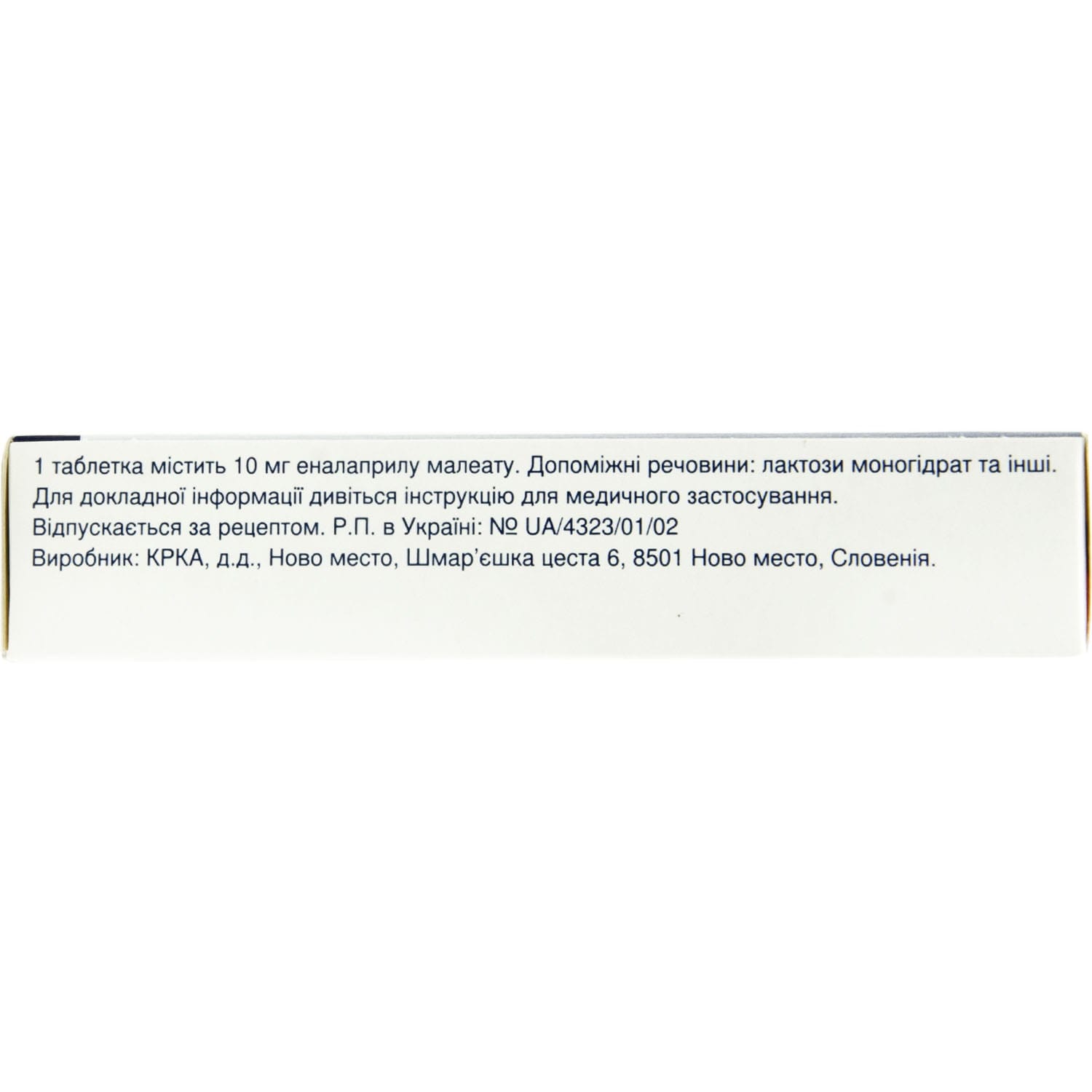
1 tablet contains 2.5 mg or 5 mg or 10 mg or 20 mg of enalapril maleate;
Excipients: tablets of 2.5 mg and 5 mg sodium bicarbonate, lactose, corn starch, hydroxypropyl cellulose, talc, magnesium stearate;
Tablets of 10 mg and 20 mg sodium bicarbonate, lactose, corn starch, talc, magnesium stearate, red iron oxide (E172), yellow iron oxide (E172) – only for tablets of 20 mg.
Contraindication
- hypersensitivity to enalapril or to any other components of the drug, or to other angiotensin-converting enzyme (ACE) inhibitors;
- history of angioedema associated with previous treatment with ACE inhibitors;
- hereditary or idiopathic angioedema;
- pregnant women or women planning to become pregnant;
- The drug “Enap” should not be used with drugs containing aliskiren, in patients with diabetes mellitus or with impaired renal function (GFR <60 ml / minute / 1.73 m 2).
Method of application
Food intake does not affect the absorption of these tablets. The dosage should be selected individually according to the condition of each patient and the blood pressure response.
Application features
Pregnant women
ACE inhibitors are contraindicated in pregnant women and women planning to become pregnant. Limited pharmacokinetic data indicate that very low concentrations of the drug are present in breast milk. Although these concentrations are considered clinically relevant, the use of this drug is not recommended during breastfeeding in premature infants and in the first few weeks after birth because of the hypothetical risk of cardiovascular and renal effects and because of the lack of experience. In older infants, use during breastfeeding may be considered if treatment is necessary for the mother and the infant is observed for any adverse effects.
Children
Use for children aged 6 and over.
Enap is not recommended for newborns and children with a glomerular filtration rate <30 ml/min/1.73 m2 due to lack of data.
Drivers
When driving or operating other machinery, the possible development of dizziness or increased fatigue should be taken into account.
Overdose
There are limited data on overdose in humans. The main signs of overdose, according to the available data, are pronounced arterial hypotension, which begins approximately 6 hours after taking the drug and coincides with the blockade of the renin-angiotensin system, and stupor. Symptoms associated with overdose with ACE inhibitors may include circulatory shock, electrolyte imbalance, renal failure, hyperventilation of the lungs, tachycardia, palpitations, bradycardia, dizziness, anxiety and cough. Plasma levels of enalaprilat, which exceed 100 and 200 times the maximum levels achieved with therapeutic doses, have been reported after taking 300 mg and 440 mg of enalapril, respectively.
For the treatment of overdose, intravenous infusions of isotonic solution are recommended. If hypotension occurs, the patient should be placed in a horizontal position. The need for infusions of angiotensin II and / or intravenous administration of catecholamines may be considered. If the drug has been taken recently, measures to eliminate enalapril maleate (such as artificial vomiting, gastric lavage, administration of absorbents and sodium sulfate) are recommended. Enalaprilat can be removed from the systemic circulation by hemodialysis. Pacemaker therapy is indicated for bradycardia that is resistant to therapeutic agents. Vital signs, electrolyte concentrations and serum creatinine levels should be monitored continuously.
Side effects
- From the blood and lymphatic system: anemia, neutropenia, decreased hemoglobin, decreased hematocrit, thrombocytopenia, agranulocytosis, bone marrow depression, pancytopenia, lymphadenopathy, autoimmune diseases.
- On the part of the endocrine system: syndrome of inappropriate antidiuretic hormone secretion.
- Metabolism and digestion: hypoglycemia in patients with diabetes taking oral hypoglycemic agents or insulin.
- From the nervous system and psyche: headache, depression, confusion, drowsiness, insomnia, nervousness, paresthesias, vertigo, abnormal dreams, sleep disorders.
- On the part of the organs of vision: blurred vision.
- Cardiovascular system: dizziness, hypotension, syncope, chest pain, cardiac arrhythmias, angina pectoris, tachycardia, orthostatic hypotension, palpitations, myocardial infarction or cerebrovascular stroke, possibly secondary to excessive hypotension in high-risk patients, Raynaud’s phenomenon.
- Respiratory, thoracic and mediastinal disorders: cough, dyspnoea, rhinorrhea, sore throat and hoarseness, pharyngitis, bronchospasm/asthma, pulmonary infiltrates, rhinitis, allergic alveolitis/eosinophilic pneumonia.
- Gastrointestinal: nausea, diarrhea, abdominal pain, taste perversion, intestinal obstruction, pancreatitis, vomiting, dyspepsia, constipation, anorexia, gastric irritation, dry mouth, peptic ulcers, stomatitis/aphthous ulcers, glossitis, angioedema of the gastrointestinal tract with simultaneous use of ACE inhibitors, including enalapril.
- From the liver and biliary tract: hepatic failure, hepatitis – hepatocellular or cholestatic, hepatonecrosis, cholestasis, including jaundice.
- Skin and subcutaneous tissue disorders: rash, hypersensitivity/angioedema; angioedema of the face, extremities, lips, tongue, glottis and/or larynx, sweating, itching, urticaria, alopecia, facial flushing, erythema multiforme, Stevens-Johnson syndrome, exfoliative dermatitis, toxic dermal necrolysis, pemphigus, erythroderma.
- Renal and urinary disorders: renal dysfunction, renal failure, proteinuria, oliguria.
- From the reproductive system and mammary glands: impotence, gynecomastia.
Interaction
Alcohol enhances the hypotensive effect of ACE inhibitors.
Sympathomimetics may reduce the antihypertensive effects of ACE inhibitors.
Storage conditions
Store at a temperature not exceeding 25 °C in the original packaging to protect from moisture.
Keep out of reach of children.
Shelf life – 3 years.
Be the first to review “Enap tablets 10 mg 20 pcs.” Cancel reply
You may also like


Reviews
There are no reviews yet.