No products in the cart.

We deliver to:
🇦🇺 Australia
🇨🇦 Canada
🇨🇿 Czechia
🇩🇰 Denmark🇪🇪 Estonia
🇮🇪 Ireland
🇮🇱 Israel
🇮🇹 Italy
🇯🇵 Japan
🇲🇽 Mexico
🇵🇱 Poland
🇰🇷 South Korea
🇨🇭 Switzerland
🇬🇧 United Kingdom
🇺🇸 United States of Americaand more
We deliver to:
🇦🇺 Australia
🇨🇦 Canada
🇨🇿 Czechia
🇩🇰 Denmark🇪🇪 Estonia
🇮🇪 Ireland
🇮🇱 Israel
🇮🇹 Italy
🇯🇵 Japan
🇲🇽 Mexico
🇵🇱 Poland
🇰🇷 South Korea
🇨🇭 Switzerland
🇬🇧 United Kingdom
🇺🇸 United States of Americaand more
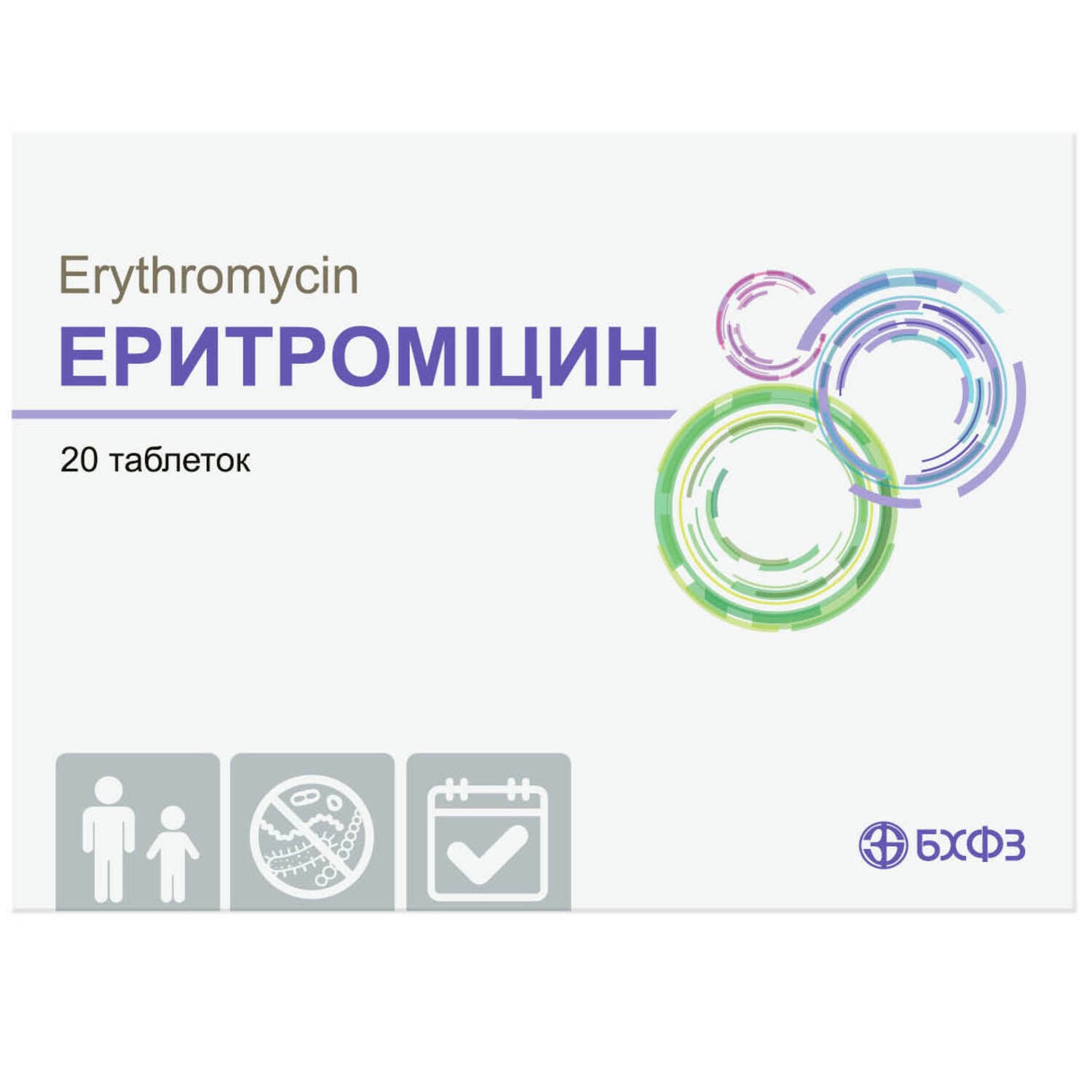

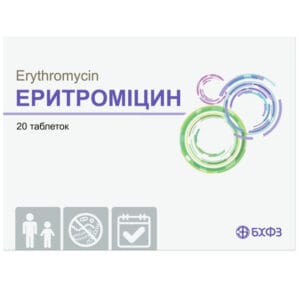
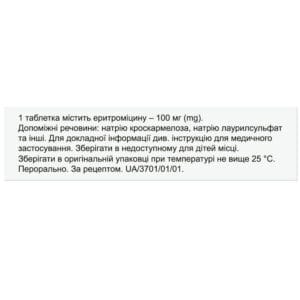
Please note: The product packaging may vary from the images shown. The contents, ingredients, and quality of the product remain unchanged.
Erythromycin tablets 100 mg blister 20 pcs.
$15.43
Free Worldwide Shipping
to: Australia, Canada, Czechia, Denmark, Estonia, Ireland, Israel, Italy, Japan, Mexico, Poland, South Korea, Switzerland, United Kingdom, United States and more
In stock
Erythromycin 100 mg tablets are a macrolide antibiotic for respiratory, ENT, skin and other bacterial infections caused by susceptible microorganisms.
Categories: Antimicrobials
Brand: BCPP
Payment
PayPal, Debit or Credit card, Google Pay, Apple Pay
Composition
Active ingredient: erythromycin;
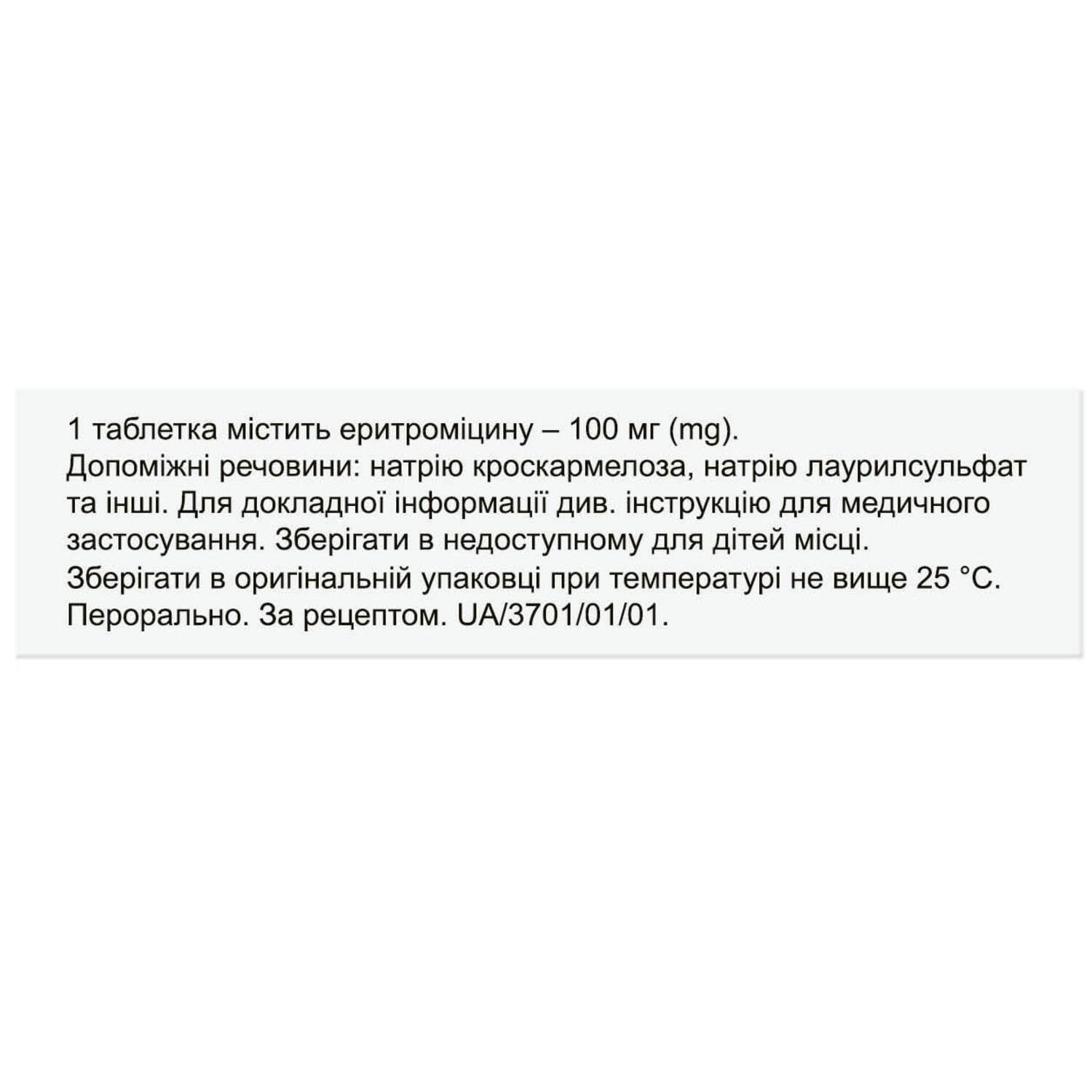
1 tablet contains erythromycin – 100 mg;
Excipients: microcrystalline cellulose, croscarmellose sodium, sodium lauryl sulfate, colloidal anhydrous silicon dioxide, magnesium stearate.
Dosage form
Tablets.
Main physicochemical properties: round tablets, white or almost white, or white with a yellowish tinge, with a biconvex surface. Faintly noticeable inclusions are allowed.
Pharmacotherapeutic group
Antibacterial agents for systemic use. macrolides. erythromycin.
ATS code J01F A01.
Pharmacological properties
Pharmacodynamics
Erythromycin is a macrolide antibiotic with bacteriostatic action. In high concentrations and against highly sensitive microorganisms, it can have a bactericidal effect. It penetrates the cell membrane of bacteria and reversibly binds to the 50S subunit of bacterial ribosomes; it inhibits the translocation of peptides from the acceptor site of the ribosome to the donor site, preventing further protein synthesis.
Active against gram-positive bacteria: Streptococcus pyogenes, Streptococcus viridans, Streptococcus pneumoniae, Staphylococcus aureus, Corynebacterium diphtheriae, Corynebacterium minutissimum, Listeria monocytogenes; gram-negative bacteria: Bordetella pertussis, Legionella pneumophila, some strains of Haemophilus influenzae, Mycoplasma pneumoniae, as well as against Entaemoeba hystolitica, Chlamydia trachomatis, Treponema pallidum.
Gram-negative bacilli are resistant to erythromycin: Escherichia coli, Pseudomonas aeruginosa, as well as Shigella and Salmonella.
Pharmacokinetics
Absorbed in the digestive tract, while the rate of absorption depends on the individual characteristics of the body. Bioavailability is 30-65%. The maximum concentration in the blood is reached 2 hours after administration. Distributed in most tissues and body fluids, penetrates the placental barrier and into breast milk.
Binding to plasma proteins is 70-90%. Metabolized in the liver, partially – with the formation of inactive metabolites. A significant part of erythromycin is excreted from the body with bile and only 2-5% – unchanged in the urine. The half-life is 1.4-2 hours with normal kidney function.
Indication
Respiratory tract infections, including atypical pneumonia, ENT infections (tonsillitis, otitis, sinusitis), purulent-inflammatory diseases of the skin and its appendages, erythrasma, diphtheria, gonorrhea, syphilis, listeriosis, Legionnaires’ disease, infections in dentistry and ophthalmology, infections caused by microorganisms resistant to beta-lactam antibiotics, penicillin, tetracycline, chloramphenicol, streptomycin.
Contraindication
Hypersensitivity to erythromycin or any other component of the drug, to macrolides; severe hepatic insufficiency; simultaneous use with terfenadine, astemizole, pimozide or cisapride, ergotamine and dihydroergotamine.
Interaction with other medicinal products and other types of interactions
The simultaneous use of erythromycin with:
- astemizole or terfenadine, cisapride, pimozide: increased risk of cardiotoxicity: prolongation of the QT interval, severe heart rhythm disturbances, including arrhythmias such as “torsade de pointes”, cardiac arrest;
- Ergotamine or dihydroergotamine: acute toxicity reactions with vasospasm, dysesthesia are possible (erythromycin inhibits the metabolism of ergotamine and dihydroergotamine, enhancing ergotamine-associated vasospasm).
Biotransformation of erythromycin occurs mainly in the liver with the participation of the cytochrome P450 system. Erythromycin, due to its effect on cytochrome P450 activity, interacts with the following drugs:
- theophylline, aminophylline, caffeine: increases their concentration in the blood serum and toxicity – it is necessary to reduce the doses of these drugs and monitor their concentration in the blood serum;
- digoxin: increases its absorption and concentration in blood serum;
- cyclosporine: increases concentration and enhances its nephrotoxicity;
- carbamazepine: capable of reducing its hepatic metabolism, which allows reducing the dose of carbamazepine by up to 50% with simultaneous use of the drugs;
- phenytoin, alfentanil, methylprednisolone, benzodiazepines (such as triazolam, alprazolam), hexobarbital, valproic acid, tacrolimus, rifabutin, zopiclone, bromocriptine, cabergoline: increases concentration and enhances their toxicity – dose adjustment of these drugs is necessary;
- disopyramide, quinidine, procainamide: may prolong the QT interval or cause ventricular tachycardia;
- oral contraceptives: increases the risk of their hepatotoxicity, reduces their effectiveness;
- antifungal drugs: possible increased risk of cardiotoxicity (QT prolongation, torsades de pointes) and, as a result, cardiac arrest. The use of this combination of drugs is contraindicated;
- anticoagulants (warfarin, acetocoumarol): enhances their effects, which are more
expressed in the elderly. Therefore, prothrombin time should be constantly monitored;
- HMG-CoA reductase inhibitors (e.g. lovastatin, simvastatin): increases their concentration in the blood – increases the risk of rhabdomyolysis, which can usually develop after the end of erythromycin treatment;
- sildenafil (Viagra): enhances its systemic effect – it is necessary to reduce the dose of sildenafil;
- Calcium channel blockers such as felodipine, verapamil: slows down their elimination and enhances their effect. There have been reports of hypotension, bradyarrhythmia, lactic acidosis when taken simultaneously with erythromycin;
- zafirlukast: reduces its concentration in blood plasma;
- sulfonamides, tetracycline, streptomycin: increased effect of erythromycin;
- colchicine, vinblastine: toxicity has been reported in interaction with erythromycin;
- cimetidine: leads to an increased risk of its toxicity, including reversible deafness;
- Levodopa (in combination with carbidopa): possible inhibition of carbidopa absorption and a decrease in levodopa plasma levels. With such a combination, clinical monitoring is necessary. Levodopa dose adjustment is possible;
- with lincomycin, clindamycin and chloramphenicol (antagonism), with drugs that increase the acidity of gastric juice, as well as with acidic drinks: cannot be used together, as they inactivate erythromycin.
The drug may affect the results of determining the level of catecholamines in urine, carried out by the fluorometric method.
Application features
Before using erythromycin, a detailed patient history should be taken regarding hypersensitivity reactions to erythromycin, other macrolides, or other allergens. If a hypersensitivity reaction develops in connection with the use of erythromycin, the drug should be discontinued immediately and symptomatic treatment should be initiated.
Before using the drug, it is advisable to identify the causative agent of the disease to reduce the risk of developing resistant forms of bacteria. However, treatment with erythromycin can be started before an antibiogram is performed, after which treatment can be continued or the drug can be replaced accordingly.
When using erythromycin preparations, liver function disorders have been reported, including increased levels of “liver” enzymes in the blood serum, hepatocellular and / or cholestatic hepatitis with / without jaundice. Erythromycin is excreted primarily by the liver, so it should be prescribed with caution to patients with impaired liver function, with a history of jaundice or to patients who are treated with potentially hepatotoxic drugs. During prolonged treatment with the drug or when taking high doses, it is necessary to monitor liver function.
In patients with renal and hepatic insufficiency, in elderly patients, taking into account age-related changes in liver and/or kidney function, the risk of developing an ototoxic effect increases.
Elderly patients are at increased risk of developing torsade de pointes-type arrhythmias during treatment with erythromycin; the effect of anticoagulant therapy is enhanced when used together with erythromycin.
When treating syphilis in pregnant women, it is necessary to take into account that the drug does not reach therapeutic concentrations in the fetus, therefore, after the birth of the child, penicillin should be prescribed to infants whose mothers used erythromycin.
Due to the risk of developing adverse reactions such as prolongation of the QT interval on the ECG, development of ventricular arrhythmias, including ventricular tachycardia and arrhythmias of the torsade de pointes type, the drug should be prescribed with caution to patients with a history of arrhythmias.
It is necessary to monitor patients with bronchial asthma who are taking theophylline and erythromycin, including assessing theophylline levels in the blood, to avoid intoxication.
The drug may exacerbate symptoms of the disease in patients with myasthenia gravis.
In severe patients receiving lovastatin concomitantly with erythromycin, cases of rhabdomyolysis with/without renal failure have been observed. Therefore, if it is necessary to prescribe combined treatment with lovastatin or other HMG-CoA reductase inhibitors and erythromycin, it is necessary to carefully assess the benefit/risk ratio, monitor for the appearance of symptoms such as muscle pain, weakness, and carefully monitor serum creatine kinase and transaminase levels.
Treatment with antibacterial drugs leads to a disruption of the normal flora of the large intestine and can cause overgrowth of resistant strains of Clostridium difficile, toxins of which are the main cause of pseudomembranous colitis. Pseudomembranous colitis occurs both directly during drug administration and within 2 months after the end of antibacterial therapy. Cases of pseudomembranous colitis, ranging from mild to life-threatening, have been reported with the use of almost all antibacterial drugs. Therefore, it is important to consider the possibility of pseudomembranous colitis in patients with diarrhea after taking antibacterial drugs. In mild cases, it is usually sufficient to stop taking the drug, in severe cases, metronidazole or vancomycin should be prescribed. The use of drugs that slow intestinal peristalsis is contraindicated.
Prolonged or repeated use of erythromycin, as with other antibacterial drugs, may result in overgrowth of nonsusceptible organisms, particularly fungi. If superinfection develops during treatment, erythromycin should be discontinued and appropriate measures taken.
The drug may distort the results of determining the level of catecholamines in urine, carried out by the fluorometric method.
Drugs that increase the acidity of gastric juice and acidic drinks inactivate erythromycin. Erythromycin should not be taken with milk and dairy products.
Use during pregnancy or breastfeeding
The drug crosses the placenta, but the concentration in the fetal serum is low. There are no adequate and well-controlled studies in pregnant women. Therefore, this drug should be used during pregnancy only if clearly needed, taking into account the risk/benefit ratio.
Erythromycin passes into breast milk, so breastfeeding should be discontinued during treatment.
Ability to influence reaction speed when driving vehicles or other mechanisms
Due to the presence of adverse reactions (dizziness, hallucinations, seizures, confusion, reversible hearing loss), during treatment with the drug, it is necessary to refrain from driving or operating other mechanisms.
Method of administration and doses
Set individually, depending on the localization and severity of the infection, and the sensitivity of the pathogen.
Administer orally 1-1.5 hours before or 2-3 hours after meals.
Adults 200-500 mg 4 times a day, the highest single dose is 500 mg, daily dose is 2 g.
Children: 30 to 50 mg/kg of body weight per day, divided into 4 doses every 6 hours;
from 3 to 6 years old – 500-700 mg per day;
from 6 to 8 years old – 700 mg per day;
from 8 to 14 years old – up to 1 g per day, dividing the daily dose into 4 doses;
from 14 years old – in an adult dose.
Elderly patients do not require a dosage adjustment; monitoring of liver function is recommended due to possible impairment in this age group.
The course of treatment is 5-14 days, after the symptoms of the disease disappear, the drug is used for another 2 days.
Children
The drug should be used in children from 3 years of age in accordance with the recommendations specified in the “Method of administration” section.
Overdose
Symptoms: nausea, vomiting, diarrhea and discomfort in the stomach; impaired liver function, possibly up to acute liver failure; hearing loss, tinnitus, dizziness (especially in patients with renal and/or hepatic failure).
Treatment: gastric lavage, administration of activated charcoal, symptomatic treatment. Hemodialysis, peritoneal dialysis and forced diuresis are ineffective.
Adverse reactions
Digestive system: nausea, vomiting, epigastric pain, diarrhea, anorexia, pseudomembranous colitis are possible. Rare cases of pancreatitis have been reported.
Hepatobiliary system: liver function disorders, including increased levels of “liver” enzymes in the blood serum, hepatocellular and / or cholestatic hepatitis with / without jaundice.
Sense organs: hearing loss and/or tinnitus, which disappears after drug withdrawal. There have been isolated reports of reversible hearing loss, mainly in patients with renal failure and in patients receiving high doses of erythromycin (more than 4 g/day).
Cardiovascular system: prolongation of the QT interval on the ECG, palpitations, ventricular arrhythmias, including ventricular tachycardia and torsade de pointes.
Nervous system: There have been isolated reports of transient adverse reactions while taking erythromycin preparations, such as confusion, hallucinations, convulsions, dizziness, and nightmares, but a causal relationship has not been reliably established.
Genitourinary system: parenchymal nephritis.
Immune system: allergic reactions including pruritus, urticaria, anaphylactic shock, skin rash, erythema multiforme, Stevens-Johnson syndrome, toxic epidermal necrolysis. If any of the above allergic reactions occur, the drug should be discontinued immediately.
Infections and parasitic diseases: During prolonged or repeated courses of treatment with erythromycin, superinfection caused by drug-resistant bacteria may develop.
Blood and lymphatic system: agranulocytosis, eosinophilia.
Other: effects caused by chemotherapeutic action: oral candidiasis, vaginal candidiasis; appearance of symptoms of myasthenic syndrome / exacerbation of existing myasthenia gravis; fever.
Expiration date
3 years.
Storage conditions
In the original packaging at a temperature not exceeding 25°C.
Keep out of reach of children.
Be the first to review “Erythromycin tablets 100 mg blister 20 pcs.” Cancel reply
You may also like


Reviews
There are no reviews yet.