No products in the cart.

We deliver to:
🇦🇺 Australia
🇨🇦 Canada
🇨🇿 Czechia
🇩🇰 Denmark🇪🇪 Estonia
🇮🇪 Ireland
🇮🇱 Israel
🇮🇹 Italy
🇯🇵 Japan
🇲🇽 Mexico
🇵🇱 Poland
🇰🇷 South Korea
🇨🇭 Switzerland
🇬🇧 United Kingdom
🇺🇸 United States of Americaand more
We deliver to:
🇦🇺 Australia
🇨🇦 Canada
🇨🇿 Czechia
🇩🇰 Denmark🇪🇪 Estonia
🇮🇪 Ireland
🇮🇱 Israel
🇮🇹 Italy
🇯🇵 Japan
🇲🇽 Mexico
🇵🇱 Poland
🇰🇷 South Korea
🇨🇭 Switzerland
🇬🇧 United Kingdom
🇺🇸 United States of Americaand more
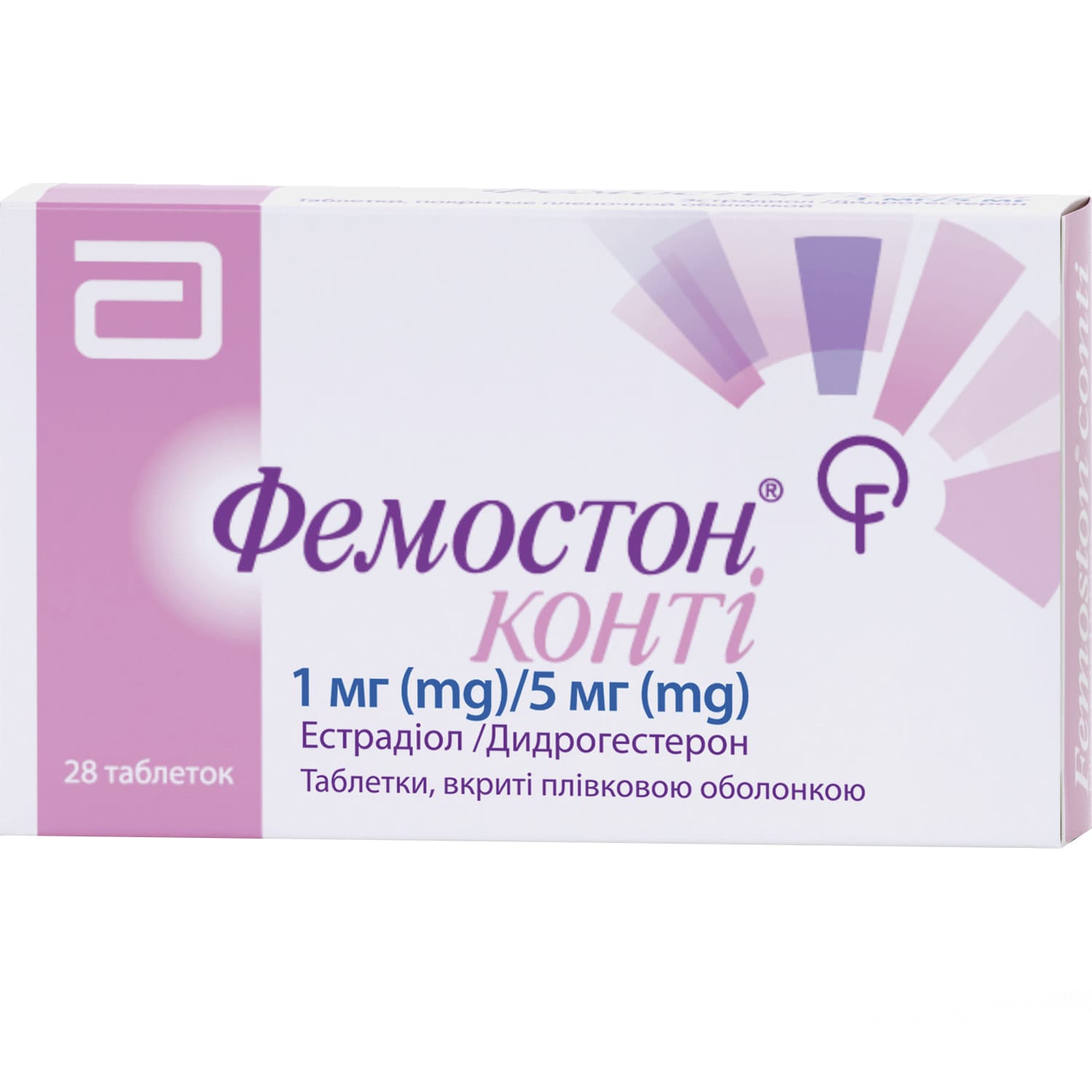
Please note: The product packaging may vary from the images shown. The contents, ingredients, and quality of the product remain unchanged.
Femoston conti film-coated tablets 1 mg/5 mg blister 28 pcs
$43.70
Free Worldwide Shipping
to: Australia, Canada, Czechia, Denmark, Estonia, Ireland, Israel, Italy, Japan, Mexico, Poland, South Korea, Switzerland, United Kingdom, United States and more
In stock
Femoston Conti tablets for hormone replacement therapy relieve menopausal symptoms and help prevent osteoporosis in postmenopausal women safely used now
Categories: Genitourinary system
Brand: Abbott
Payment
PayPal, Debit or Credit card, Google Pay, Apple Pay
Femoston conti tablets are used for the following indications:
- hormone replacement therapy (HRT) to eliminate symptoms caused by estrogen deficiency in women during menopause, no earlier than 12 months after the last menstruation;
- prevention of osteoporosis in postmenopausal women at high risk of fractures (“Femoston conti” should be used in patients only in case of intolerance or contraindications to the use of other drugs for the prevention of osteoporosis).
Composition
One tablet contains (active ingredients) estradiol hemihydrate, micronized, equivalent to estradiol 1 mg; dydrogesterone, micronized 5 mg.
Excipients: lactose monohydrate; hypromellose (HPMC 2910), corn starch, colloidal anhydrous silica, magnesium stearate.
Film coating: mixed film coating Orange I (polyethylene glycol 400, hypromellose (HPMC 2910), iron oxide yellow (E172), iron oxide red (E172), titanium dioxide (E171)).
Contraindication
- diagnosed in the past, present or suspected breast cancer;
- established or suspected estrogen-sensitive tumors (e.g. endometrial cancer);
- vaginal bleeding of unclear origin;
- untreated endometrial hyperplasia;
- active venous thromboembolism in history (deep vein thrombosis, pulmonary embolism);
- the presence of thrombophilic disorders (for example, protein C, protein S, or antithrombin deficiency);
- acute or recent thromboembolic arterial disease (e.g. angina pectoris, myocardial infarction);
- acute liver disease or a history of liver disease in which liver function tests have not returned to normal;
- porphyria;
- known hypersensitivity to the active substances or to any of the excipients of the drug.
Method of application
“Femoston conti” should be administered orally daily according to the continuous combined regimen as described below.
Take one tablet daily for each 28-day cycle. Each blister is intended for treatment for 28 days. After that, a new cycle should be started immediately. Such treatment cycles, which follow each other, are continuous.
For the treatment of estrogen deficiency in postmenopausal women, the lowest effective dose should be used as the initial and maintenance dose, and the duration of the treatment period should be as short as possible. Continuous combination treatment can be started with Femoston conti depending on the time elapsed since the onset of menopause and the severity of symptoms. Women who have had natural menopause can start treatment with the drug 12 months after the last menstruation. Women who have had surgical menopause can start treatment immediately. The dose should be selected individually depending on the clinical response.
In women not using hormone replacement therapy or in women switching from continuous combined hormone replacement therapy, treatment can be started on any convenient day. In women switching from cyclic or continuous sequential hormone replacement therapy, treatment should be started immediately on the day after the end of the previous cycle.
If a dose is missed, it should be taken as soon as possible. If more than 12 hours have passed, treatment is recommended to continue with the next tablet, without taking the missed tablet. In such cases, the missed tablet may increase the likelihood of breakthrough bleeding or spotting.
The drug can be taken regardless of meals.
Application features
Pregnant women
The drug is not indicated for use during pregnancy. If pregnancy occurs during treatment with Femoston conti, the drug should be discontinued immediately.
The drug is not indicated for use during breastfeeding.
“Femoston conti” is not indicated for use in women of reproductive age.
Children
The drug is not intended for use in children.
Drivers
The drug has no or negligible influence on the ability to drive or operate complex machinery.
Overdose
Both estradiol and dydrogesterone are substances with low toxicity. Symptoms of overdose may include nausea, vomiting, breast tenderness, dizziness, abdominal pain, drowsiness/fatigue and withdrawal bleeding. It is unlikely that any specific or symptomatic treatment will be required in case of overdose. The information described above also applies to cases of overdose in children.
Side effects
The most common adverse reactions in patients treated with estradiol/dydrogesterone in clinical trials were headache, abdominal pain, breast pain/tenderness, and back pain.
Storage conditions
Store in the original packaging at a temperature not exceeding 30 °C, out of the reach of children.
Shelf life – 3 years.
Be the first to review “Femoston conti film-coated tablets 1 mg/5 mg blister 28 pcs” Cancel reply
You may also like

Reviews
There are no reviews yet.