No products in the cart.

We deliver to:
🇦🇺 Australia
🇨🇦 Canada
🇨🇿 Czechia
🇩🇰 Denmark
🇪🇪 Estonia
🇮🇪 Ireland
🇮🇱 Israel
🇮🇹 Italy
🇯🇵 Japan
🇱🇹 Lithuania🇲🇽 Mexico
🇳🇱 Netherlands🇵🇱 Poland
🇸🇰 Slovakia
🇰🇷 South Korea
🇨🇭 Switzerland
🇬🇧 United Kingdom
🇺🇸 United States of America
and more
We deliver to:
🇦🇺 Australia
🇨🇦 Canada
🇨🇿 Czechia
🇩🇰 Denmark
🇪🇪 Estonia
🇮🇪 Ireland
🇮🇱 Israel
🇮🇹 Italy
🇯🇵 Japan
🇱🇹 Lithuania🇲🇽 Mexico
🇳🇱 Netherlands🇵🇱 Poland
🇸🇰 Slovakia
🇰🇷 South Korea
🇨🇭 Switzerland
🇬🇧 United Kingdom
🇺🇸 United States of America
and more
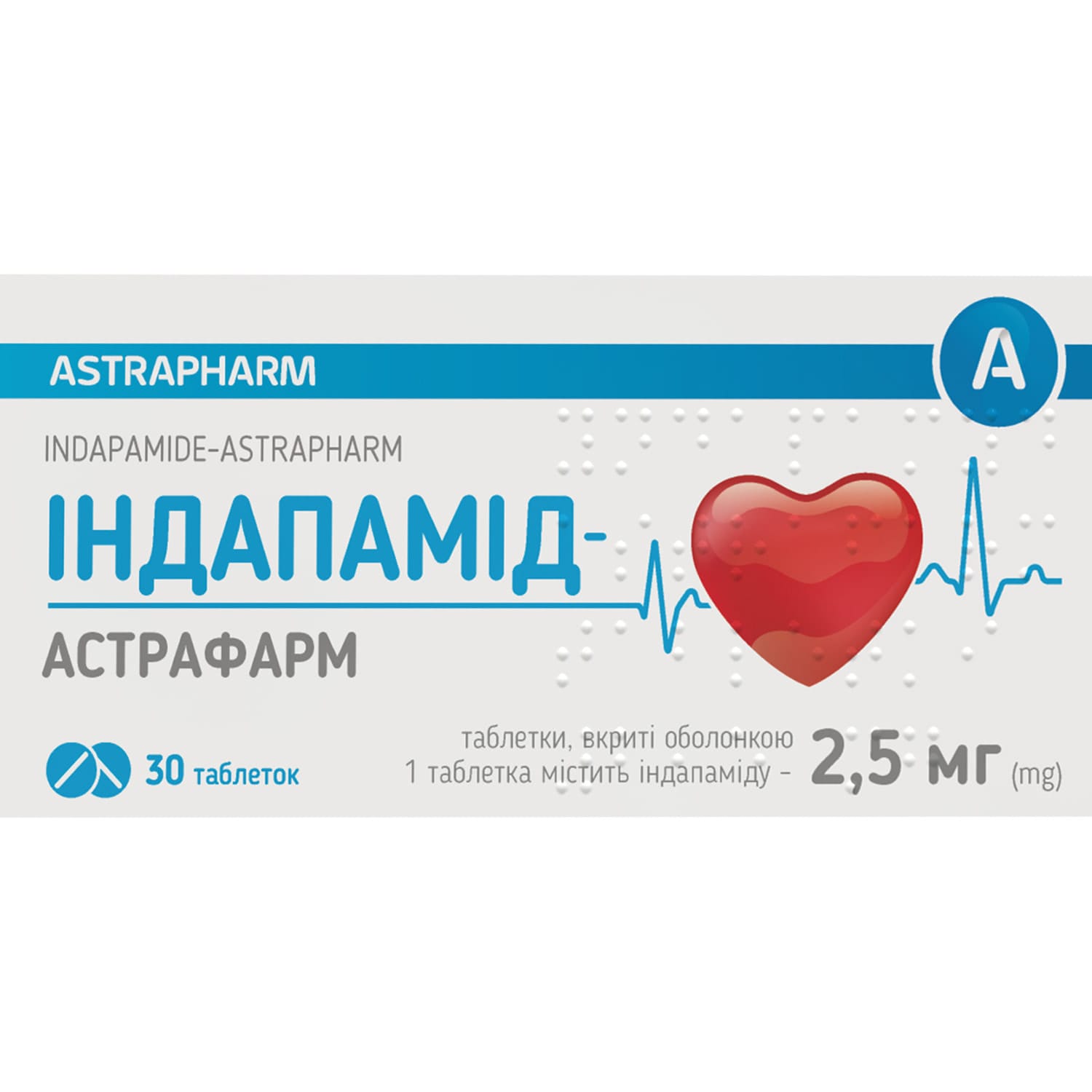
Please note: The product packaging may vary from the images shown. The contents, ingredients, and quality of the product remain unchanged.
Indapamide Astrapharm film-coated tablets 2.5 mg blister 30 pcs.
$16.38
Free Worldwide Shipping
to: Australia, Canada, Czechia, Denmark, Estonia, Ireland, Israel, Italy, Japan, Lithuania, Mexico, Netherlands, Poland, Slovakia, South Korea, Switzerland, United Kingdom, United States and more
In stock
Indapamide 2.5 mg film-coated tablets are used to treat essential hypertension, providing stable 24-hour blood pressure control with mild diuretic action.
Categories: Hematopoiesis and blood
Brand: Astrapharm
Payment
PayPal, Debit or Credit card, Google Pay, Apple Pay
Composition:
Active ingredient: indapamide;
1 tablet contains indapamide 2.5 mg;
excipients: corn starch; lactose, monohydrate; povidone; magnesium stearate; sodium lauryl sulfate; coating: hypromellose 2910, 5 cPz; PEG 6000, titanium dioxide (E 171).
Dosage form.
Film-coated tablets.
Main physicochemical properties: round tablets with a biconvex surface, covered with a white shell. Two layers are visible on the break.
Pharmacotherapeutic group.
Non-thiazide diuretics with moderate diuretic activity.
ATS code C03B A11.
Pharmacological properties.
Pharmacodynamics.
Indapamide is a sulfonamide diuretic that is pharmacologically related to thiazide diuretics. Indapamide inhibits sodium reabsorption in the cortical segment of the kidneys.
This increases the excretion of sodium and chlorides in the urine and to a lesser extent the loss of potassium and magnesium, thus increasing diuresis. The antihypertensive effect of indapamide is manifested at doses that produce a slight diuretic effect. Moreover, its antihypertensive effect is maintained even in hypertensive patients on hemodialysis.
Indapamide acts at the vascular level by:
- a decrease in the contractile ability of vascular smooth muscles, which is associated with changes in transmembrane ion exchange (mainly calcium);
- stimulation of the synthesis of prostaglandin PGE 2 and prostacyclin PGI 2 (vasodilator and platelet aggregation inhibitor).
Indapamide reduces left ventricular hypertrophy.
Moreover, as studies of various durations (short, medium and long) involving patients with arterial hypertension have shown, indapamide:
- does not affect the metabolism of lipids: triglycerides, low-density lipoprotein cholesterol and high-density lipoprotein cholesterol;
- does not affect carbohydrate metabolism, even in patients with hypertension and diabetes.
When the recommended dose is exceeded, the therapeutic effect of thiazides and thiazine-like diuretics does not increase, while the number of undesirable effects increases. If the treatment is not effective enough, increasing the dose is not recommended.
Pharmacokinetics.
Absorption.
The bioavailability of indapamide is high – 93%. The maximum concentration in the blood plasma is reached 1-2 hours after taking a dose of 2.5 mg.
Distribution.
Binding to plasma proteins is above 75%. The half-life is 14-24 hours (average 18 hours). With regular administration, the level of stable indapamide plasma concentration (plateau) increases compared to the plasma concentration of indapamide after a single dose. This plasma concentration level remains stable for a long time without cumulation.
Output.
Renal clearance accounts for 60-80% of total clearance. Indapamide is excreted mainly as metabolites, the part of the drug excreted by the kidneys unchanged is 5%. In patients with renal failure, pharmacokinetic parameters do not change.
Clinical characteristics.
Indication.
Essential hypertension.
Contraindication.
Hypersensitivity to indapamide, other sulfonamides or to any of the other components of the drug. Severe renal failure, hepatic encephalopathy or severe liver dysfunction, hypokalemia.
Interaction with other drugs and other types of interactions.
not recommended combinations
Lithium: Increased plasma lithium levels and symptoms of overdose may occur due to decreased lithium excretion (as with a salt-free diet). If a diuretic is required, careful monitoring of plasma lithium levels and dose adjustment are necessary.
Combinations requiring caution
Drugs that can cause torsades de pointes (paroxysmal ventricular tachycardia of the “pirouette” type):
- class Ia antiarrhythmic drugs (quinidine, hydroquinidine, disopyramide);
- class III antiarrhythmic drugs (amiodarone, sotalol, dofetilide, ibutilide);
- some antipsychotic drugs:
– phenothiazines (chlorpromazine, cyamemazine, levomepromazine, thioridazine, trifluoperazine);
– benzamides (amisulpride, sulpiride, sultopride, tiapride);
– butyrophenones (droperidol, haloperidol);
- other medications: bepridil, cisapride, diphemanil, intravenous erythromycin, halofantrine, mizolastine, pentamidine, sparfloxacin, moxifloxacin, intravenous vincamine.
The risk of ventricular arrhythmias, in particular torsades de pointes, is increased (hypokalemia is a risk factor).
Before prescribing such a combination, potassium levels should be checked and corrected if necessary. Patients should be monitored for clinical status, plasma electrolytes, and ECG. In the presence of hypokalemia, drugs that do not induce torsades de pointes should be prescribed.
Nonsteroidal anti-inflammatory drugs (for systemic use), including selective COX-2 inhibitors, high doses of salicylates (more than 3 g/day):
- may reduce the antihypertensive effect of indapamide;
- Dehydrated patients are at increased risk of acute renal failure (due to decreased glomerular filtration). Before starting treatment, it is necessary to restore water balance and check kidney function.
ACE inhibitors. Sudden hypotension and/or acute renal failure may occur in patients with low sodium levels (especially in patients with renal artery stenosis). In hypertensive patients in whom previous diuretic therapy has resulted in a decrease in sodium levels, it is necessary to: either discontinue diuretics for 3 days before starting treatment with an ACE inhibitor and then, if necessary, resume diuretic therapy; or start the ACE inhibitor at a low initial dose with subsequent gradual dose increases. In patients with congestive heart failure, the ACE inhibitor should be started at the lowest dose, and possibly after reducing the dose of the previously prescribed potassium-sparing diuretic.
In any case, renal function (plasma creatinine) should be monitored during the first weeks of treatment with an ACE inhibitor.
Drugs that may cause hypokalemia when administered concomitantly: gluco- and mineralocorticoids (systemic), amphotericin B (intravenous), tetracosactide, laxatives that stimulate peristalsis: increased risk of hypokalemia (additive effect). It is necessary to monitor and, if necessary, correct the level of potassium in the blood plasma, especially with concomitant therapy with cardiac glycosides. It is recommended to prescribe laxatives that do not stimulate peristalsis.
Cardiac glycosides: the presence of hypokalemia contributes to the cardiotoxicity of cardiac glycosides. Plasma potassium levels and ECG monitoring should be performed and therapy adjusted if necessary.
Baclofen enhances the antihypertensive effect of the drug. At the beginning of therapy, it is necessary to restore the patient’s water and electrolyte balance and monitor kidney function.
Combinations that require attention
Potassium-sparing diuretics (amiloride, spironolactone, triamterene)
This combination does not exclude the possibility of hypokalemia (especially in patients with diabetes mellitus or renal insufficiency) or hyperkalemia. Monitoring of plasma potassium levels and ECG monitoring should be carried out and, if necessary, therapy should be adjusted.
Metformin: The risk of lactic acidosis is increased in the event of functional renal failure due to diuretics, especially loop diuretics. Metformin should not be prescribed if the plasma creatinine level exceeds 15 mg/l (135 μmol/l) in men and 12 mg/l (110 μmol/l) in women.
Iodine contrast media: in case of dehydration caused by diuretics, the risk of acute renal failure increases, especially when using large doses of iodocontrast media. It is necessary to restore water balance before the administration of iodocontrast media.
Imipramine-like antidepressants, neuroleptics: increased risk of orthostatic hypotension due to antihypertensive effect (additive effect).
Calcium salts: hypercalcemia may occur due to decreased renal calcium elimination.
Cyclosporine, tacrolimus: possible increase in plasma creatinine without affecting the level of circulating cyclosporine, even in the absence of a decrease in water/sodium levels.
Corticosteroids, tetracosactide (systemic): reduction of the antihypertensive effect of indapamide due to water and sodium retention under the influence of corticosteroids.
Application features.
In patients with impaired liver function, the use of thiazide-like diuretics may cause encephalopathy, especially if there are electrolyte disturbances. In such cases, the use of diuretics should be discontinued immediately.
In elderly patients, plasma creatinine should be at a level appropriate for the age, weight and sex of the patients. Indapamide can be administered to elderly patients if renal function is not impaired or if renal function is only mild.
Renal insufficiency and diuretics. The use of the drug is contraindicated in patients with severe renal insufficiency (creatinine clearance less than 30 ml/min). Thiazide and related diuretics are most effective if renal function is not impaired or if the impairment is minor (plasma creatinine below 25 mg/l, i.e. 220 μmol/l in adults). Hypovolemia caused by water and sodium loss due to diuretics causes a decrease in glomerular filtration rate at the beginning of treatment. This may lead to an increase in blood urea and plasma creatinine. This transient functional renal insufficiency has no consequences for individuals with normal renal function, but may worsen existing renal insufficiency.
Photosensitivity: Photosensitivity reactions have been reported in patients taking thiazide and related diuretics. If such reactions occur, it is recommended that diuretic therapy be discontinued. If diuretic therapy is re-introduced, it is recommended that affected areas be protected from sunlight or artificial ultraviolet light sources.
Plasma potassium levels. A decrease in plasma potassium levels with the development of hypokalemia is the main risk with the use of thiazide and thiazide-like diuretics. The risk of hypokalemia (
Patients with congenital or iatrogenic QT prolongation are also at risk. In such patients, hypokalemia, like bradycardia, may predispose to serious arrhythmias, including torsades de pointes, which may be fatal.
In all of the above cases, more frequent monitoring of blood potassium levels is necessary. The first analysis should be performed within the first week of treatment. If hypokalemia occurs, its correction is necessary.
Blood glucose levels: In patients with diabetes, it is especially important to monitor blood glucose levels in the presence of hypokalemia.
Plasma sodium. Any diuretic can cause hyponatremia, which sometimes has serious consequences. Decreased plasma sodium may be asymptomatic initially, so regular monitoring is necessary. Monitoring should be performed more frequently in elderly patients and in patients with cirrhosis.
Plasma calcium levels. Thiazide and related diuretics may reduce urinary calcium excretion and lead to a slight and transient increase in plasma calcium levels. Marked hypercalcemia may be a consequence of previously undiagnosed hyperparathyroidism. Treatment should be discontinued and parathyroid function should be monitored.
Patients with gout: Patients with elevated uric acid levels may have a tendency to have more gout attacks.
The drug contains lactose, so it is not recommended for patients with congenital galactose intolerance, glucose-galactose malabsorption syndrome, or Lapp lactase deficiency.
In athletes, indapamide may cause a positive reaction during doping control.
Use during pregnancy or breastfeeding.
Diuretics should be avoided in pregnant women and should never be used to treat physiological edema in pregnant women. Diuretics can lead to fetoplacental ischemia with a risk of fetal growth retardation.
The use of indapamide during breastfeeding is not recommended due to data on its excretion into breast milk.
The ability to influence the reaction speed when driving vehicles or other mechanisms.
The drug does not impair attention, but in the event of symptoms associated with a decrease in blood pressure, especially at the beginning of treatment or when combined with another antihypertensive agent, it may affect the ability to drive a car or operate other mechanisms.
Method of administration and doses.
For oral use: 1 tablet per day, preferably in the morning. The tablet should be swallowed whole, without chewing, with water. The tablet cannot be divided.
The maximum daily dose is 1 tablet.
The use of higher doses of the drug does not lead to an increase in the antihypertensive effect, but the diuretic effect increases.
Kidney failure
Patients with severe renal insufficiency (creatinine clearance
old age
In elderly patients, the level of creatinine in the blood plasma should be appropriate for age, body weight and gender. Elderly patients can be prescribed Indapamide Astrafarm if renal function is not impaired or if the impairment is minor.
Patients with hepatic impairment
In case of severe liver dysfunction, treatment with the drug is contraindicated.
Children.
The drug is not used in children due to insufficient data on safety and efficacy for this group of patients.
Overdose.
First of all, there are manifestations of water and electrolyte disorders (hyponatremia, hypokalemia). Nausea, vomiting, arterial hypotension, convulsions, dizziness, drowsiness, polyuria or oliguria up to anuria (caused by hypovolemia), confusion may occur.
Treatment. First aid measures include rapid removal of the drug by gastric lavage and/or administration of activated charcoal, followed by restoration of water and electrolyte balance in a hospital setting.
Adverse reactions.
Most adverse effects, both clinical and laboratory, are dose-dependent.
From the blood system: thrombocytopenia, leukopenia, agranulocytosis, aplastic anemia, hemolytic anemia.
From the nervous system: dizziness (vertigo), increased fatigue, headache, paresthesia, fainting.
Cardiovascular system: arrhythmia; arterial hypotension; paroxysmal ventricular tachycardia of the “pirouette” type (torsades de pointes), which can be fatal (see sections “Special instructions” and “Interaction with other medicinal products and other types of interactions”).
Gastrointestinal tract: vomiting, nausea, constipation, dry mouth, pancreatitis.
From the urinary system: renal failure.
On the part of the hepatobiliary system: impaired liver function, with liver failure, hepatic encephalopathy, hepatitis may occur (see sections “Special instructions for use” and “Contraindications”).
Skin: hypersensitivity reactions, mainly of the skin, in patients prone to allergic and asthmatic reactions: maculopapular rash; purpura; angioedema and/or urticaria, toxic epidermal necrolysis, Stevens-Johnson syndrome; possible exacerbation of an existing acute systemic lupus erythematosus in history; cases of photosensitivity reactions have been reported (see section “Special instructions”).
Laboratory indicators: prolongation of the QT interval on the electrocardiogram (see sections “Peculiarities of use” and “Interaction with other medicinal products and other types of interactions”); increased levels of uric acid and glucose in the blood plasma during treatment with diuretics, the rationality of their administration should be carefully considered before prescribing to patients with gout or diabetes mellitus; increased levels of liver enzymes.
Metabolic: hypokalemia; decreased potassium levels with the development of hypokalemia, particularly severe, in a certain category of patients at high risk (see section “Special instructions for use”); hyponatremia with hypovolemia may lead to dehydration and orthostatic hypotension; concomitant loss of chloride ions may cause secondary compensatory metabolic alkalosis (the frequency and severity of this phenomenon are low).
Expiration date.
3 years.
Storage conditions.
Store in the original packaging at a temperature not exceeding 25 °C.
Keep out of reach of children.
Be the first to review “Indapamide Astrapharm film-coated tablets 2.5 mg blister 30 pcs.” Cancel reply
You may also like

Reviews
There are no reviews yet.