No products in the cart.

We deliver to:
🇦🇺 Australia
🇨🇦 Canada
🇨🇿 Czechia
🇩🇰 Denmark
🇪🇪 Estonia
🇮🇪 Ireland
🇮🇱 Israel
🇮🇹 Italy
🇯🇵 Japan
🇱🇹 Lithuania🇲🇽 Mexico
🇳🇱 Netherlands🇵🇱 Poland
🇸🇰 Slovakia
🇰🇷 South Korea
🇨🇭 Switzerland
🇬🇧 United Kingdom
🇺🇸 United States of America
and more
We deliver to:
🇦🇺 Australia
🇨🇦 Canada
🇨🇿 Czechia
🇩🇰 Denmark
🇪🇪 Estonia
🇮🇪 Ireland
🇮🇱 Israel
🇮🇹 Italy
🇯🇵 Japan
🇱🇹 Lithuania🇲🇽 Mexico
🇳🇱 Netherlands🇵🇱 Poland
🇸🇰 Slovakia
🇰🇷 South Korea
🇨🇭 Switzerland
🇬🇧 United Kingdom
🇺🇸 United States of America
and more

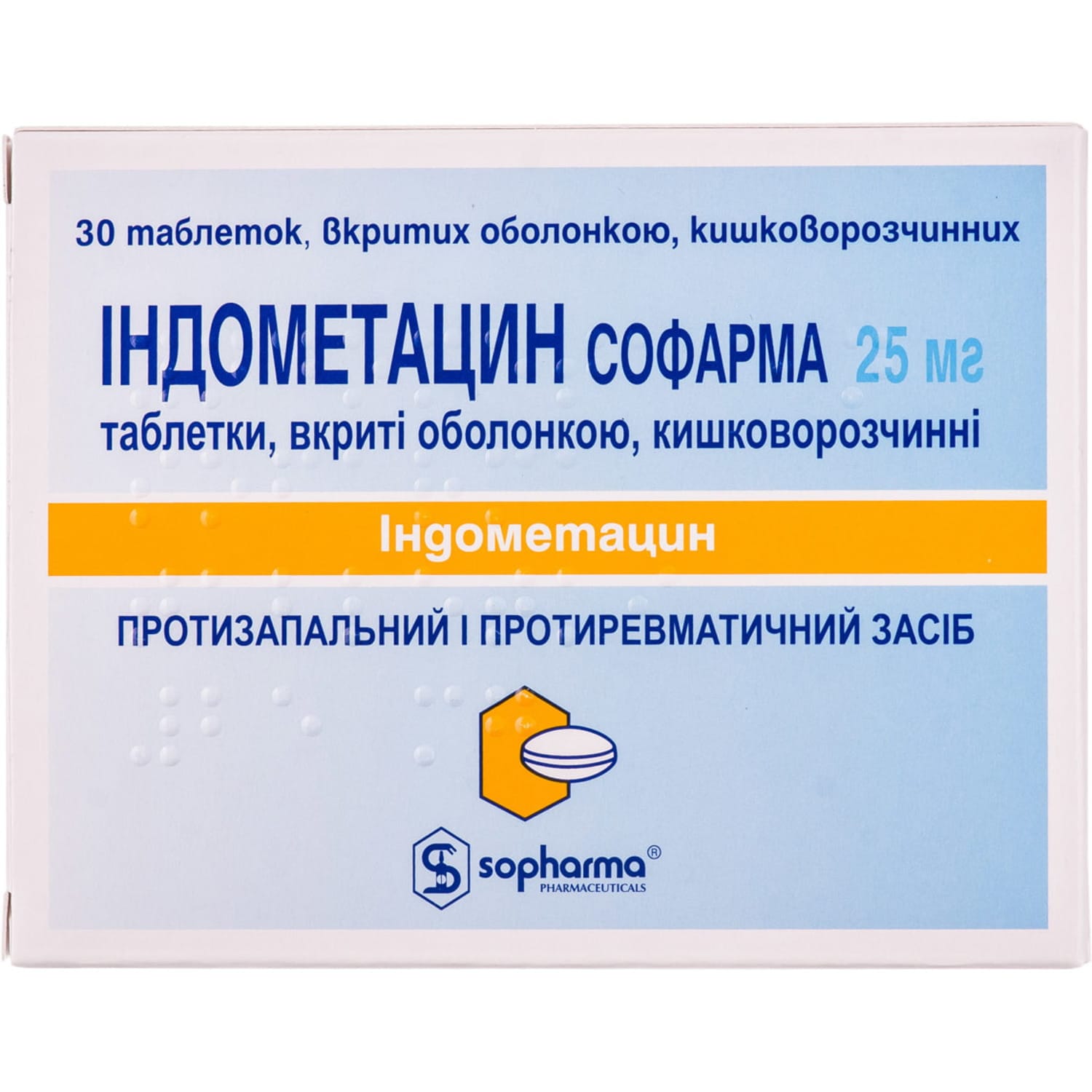
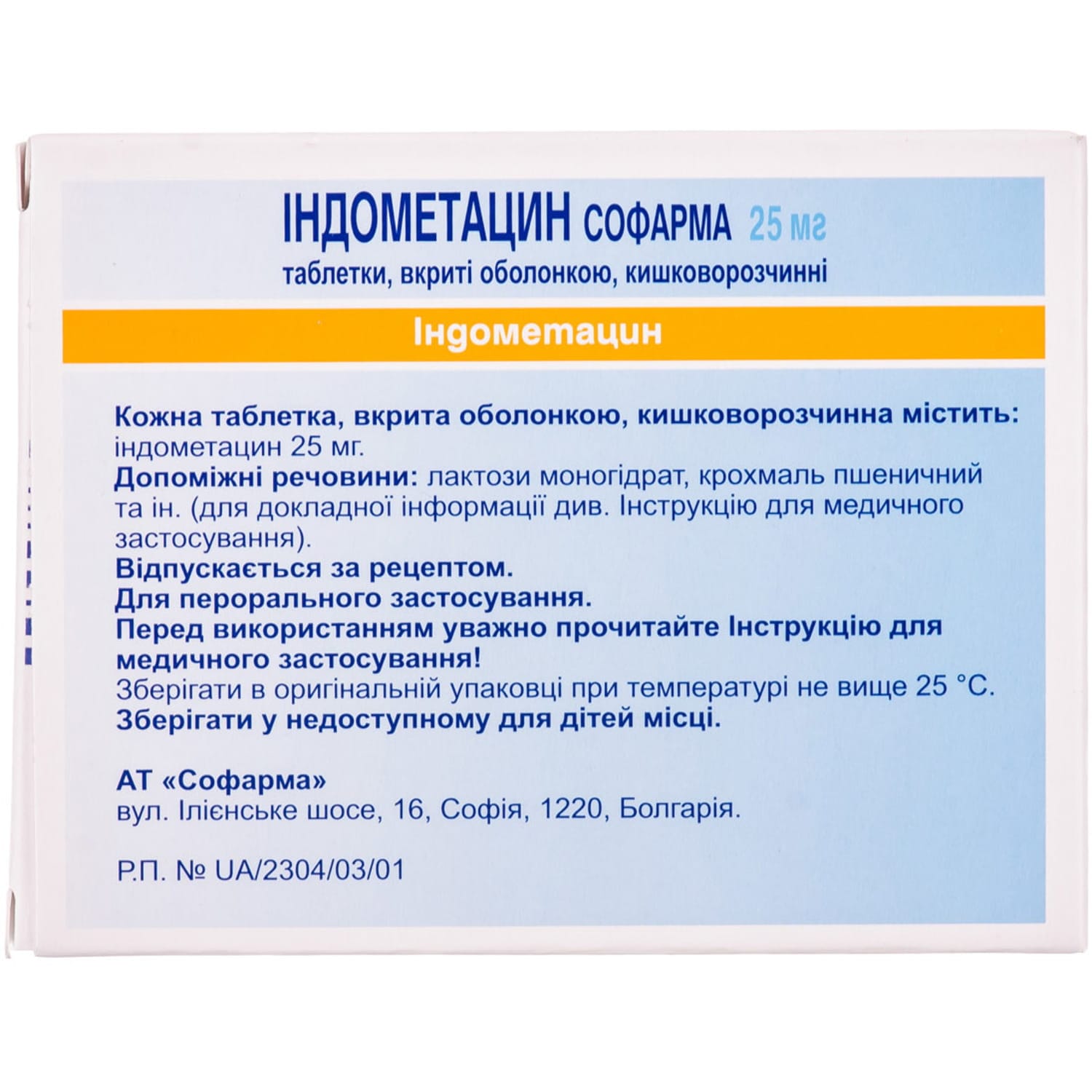
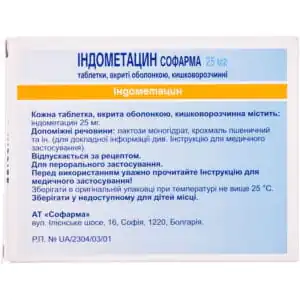
Please note: The product packaging may vary from the images shown. The contents, ingredients, and quality of the product remain unchanged.
Indomethacin Sopharma enteric-coated tablets 25 mg blister 30 pcs
$13.16
Free Worldwide Shipping
to: Australia, Canada, Czechia, Denmark, Estonia, Ireland, Israel, Italy, Japan, Lithuania, Mexico, Netherlands, Poland, Slovakia, South Korea, Switzerland, United Kingdom, United States and more
In stock
Indomethacin 25 mg enteric-coated tablets relieve pain and inflammation in arthritis, gout attacks, musculoskeletal disorders and dysmenorrhea.
Categories: Musculoskeletal system, Pain relief
Brand: Sopharma
Payment
PayPal, Debit or Credit card, Google Pay, Apple Pay
Indomethacin tablets are indicated for the efficacy of short-term symptomatic treatment with indomethacin in the following conditions:
- acute and chronic pain in inflammatory and degenerative diseases of the musculoskeletal system: rheumatoid arthritis; acute and in the acute stage of chronic ankylosing spondylitis (Bechterew’s disease); gout attack and gouty arthritis; osteoarthritis from moderate to severe form;
- diseases of the periarticular tissues: tendinitis, bursitis (acute painful shoulder), tendobursitis, tendovaginitis, pain syndrome and inflammation after injuries (including in athletes) and surgical interventions;
- discopathy, plesitis, radiculoneuritis;
- dysmenorrhea.
Composition
Active ingredient: indomethacin;
1 film-coated, enteric-coated tablet contains indomethacin 25 mg;
Excipients: lactose monohydrate, wheat starch, povidone K 25, microcrystalline cellulose, magnesium stearate, talc, colloidal anhydrous silicon dioxide;
Enteric coating: copolymer methacrylic acid: ethyl acrylate (1: 1) 30% dispersion (eudragit L 30 D-55), copolymer methyl acrylate: methyl methacrylate: methacrylic acid 30% dispersion (eudragit FS 30 D), sodium hydroxide, triethyl citrate, polysorbate 80, pigment suspension – brown WAS FS (talc, triethyl citrate, titanium dioxide (E 171), iron oxide yellow (E 172), iron oxide red (E 172), propane-1,2 diol alginate, potassium sorbate).
Contraindication
- hypersensitivity to the components of the drug;
- hypersensitivity to acetylsalicylic acid or other nonsteroidal anti-inflammatory drugs with clinical manifestations of asthmatic attack, angioedema, urticaria or rhinitis;
- active or recurrent gastric and duodenal ulcer (two or more cases of proven ulcers or bleeding), ulcerative colitis and/or enterocolitis;
- history of gastrointestinal bleeding or perforation associated with previous NSAID use;
- simultaneous use of other nonsteroidal anti-inflammatory drugs, including specific cyclooxygenase-2 inhibitors, due to an increased risk of undesirable effects;
- severe heart failure;
- severe liver and kidney failure;
- Pre- and postoperative pain during coronary artery bypass graft surgery.
Method of application
The drug should be taken orally, after meals. The tablet should be swallowed whole, with sufficient liquid.
Adults and children over 14 years of age. Initial dose – 25-50 mg (1-2 tablets) 2-4 times a day.
If the therapeutic effect is insufficient, the dose should be increased to 150 mg (6 tablets) per day, divided into 3 doses. The maximum daily dose is 200 mg (8 tablets). With long-term treatment, the daily dose should not exceed 75 mg (3 tablets).
Application features
Pregnant women
Contraindicated.
Children
Indomethacin is not recommended for children under 14 years of age.
Drivers
Indomethacin Sopharma may cause adverse reactions (tinnitus, dizziness, drowsiness, hearing and visual disturbances) that may impair active attention and reflexes and affect the ability to drive vehicles and operate other mechanisms.
Overdose
Symptoms: nausea, vomiting, abdominal pain, severe headache, dizziness, memory impairment, confusion, disorientation or lethargy. There are reports of paresthesia, stiffness and convulsions.
Treatment: symptomatic and supportive.
Gastric lavage should be performed as soon as possible if the drug has been taken recently. If there is no spontaneous vomiting, vomiting should be induced by administering ipecacuanha to the patient. After gastric emptying, 25 g or 50 g of activated charcoal may be administered. Continuous medical and nursing care may be necessary depending on the patient’s condition. The patient should be observed for several days, as gastrointestinal ulceration and bleeding have been reported as side effects of indomethacin. Antacids may be useful. Indomethacin cannot be removed from the body by hemodialysis.
Side effects
The most common adverse reactions are gastrointestinal disorders. Ulceration, perforation or gastrointestinal bleeding (sometimes fatal) may occur, mainly in elderly patients.
Interaction
- The simultaneous use of zalcitabine and indomethacin causes changes in their pharmacodynamics.
- Concomitant use of zidovudine and indomethacin increases the risk of hematological toxicity.
- The risk of indomethacin toxicity is increased when used with ritonavir.
- Caution should be exercised when used concomitantly with antiepileptic drugs due to increased effects of phenytoin.
- Concomitant use with haloperidol increases drowsiness.
- When taken simultaneously with benzodiazepines, the risk of dizziness increases.
- Indomethacin increases the bioavailability of diphosphonates when used simultaneously with tiludronic acid.
- When taken simultaneously with desmopressin, the effect of the latter is enhanced.
- Nonsteroidal anti-inflammatory drugs should be avoided for 8-12 days after mifepristone administration.
- Indomethacin is able to reduce the rate of elimination of baclofen, thus increasing the level of its toxic effect.
Storage conditions
Keep out of reach of children.
Store in the original packaging at a temperature not exceeding 25 °C.
Shelf life – 5 years.
Be the first to review “Indomethacin Sopharma enteric-coated tablets 25 mg blister 30 pcs” Cancel reply
You may also like

Reviews
There are no reviews yet.