No products in the cart.

We deliver to:
🇦🇺 Australia
🇨🇦 Canada
🇨🇿 Czechia
🇩🇰 Denmark
🇪🇪 Estonia
🇮🇪 Ireland
🇮🇱 Israel
🇮🇹 Italy
🇯🇵 Japan
🇱🇹 Lithuania🇲🇽 Mexico
🇳🇱 Netherlands🇵🇱 Poland
🇸🇰 Slovakia
🇰🇷 South Korea
🇨🇭 Switzerland
🇬🇧 United Kingdom
🇺🇸 United States of America
and more
We deliver to:
🇦🇺 Australia
🇨🇦 Canada
🇨🇿 Czechia
🇩🇰 Denmark
🇪🇪 Estonia
🇮🇪 Ireland
🇮🇱 Israel
🇮🇹 Italy
🇯🇵 Japan
🇱🇹 Lithuania🇲🇽 Mexico
🇳🇱 Netherlands🇵🇱 Poland
🇸🇰 Slovakia
🇰🇷 South Korea
🇨🇭 Switzerland
🇬🇧 United Kingdom
🇺🇸 United States of America
and more
Anaferon children’s tabl...
$20.99 Original price was: $20.99.$19.09Current price is: $19.09.
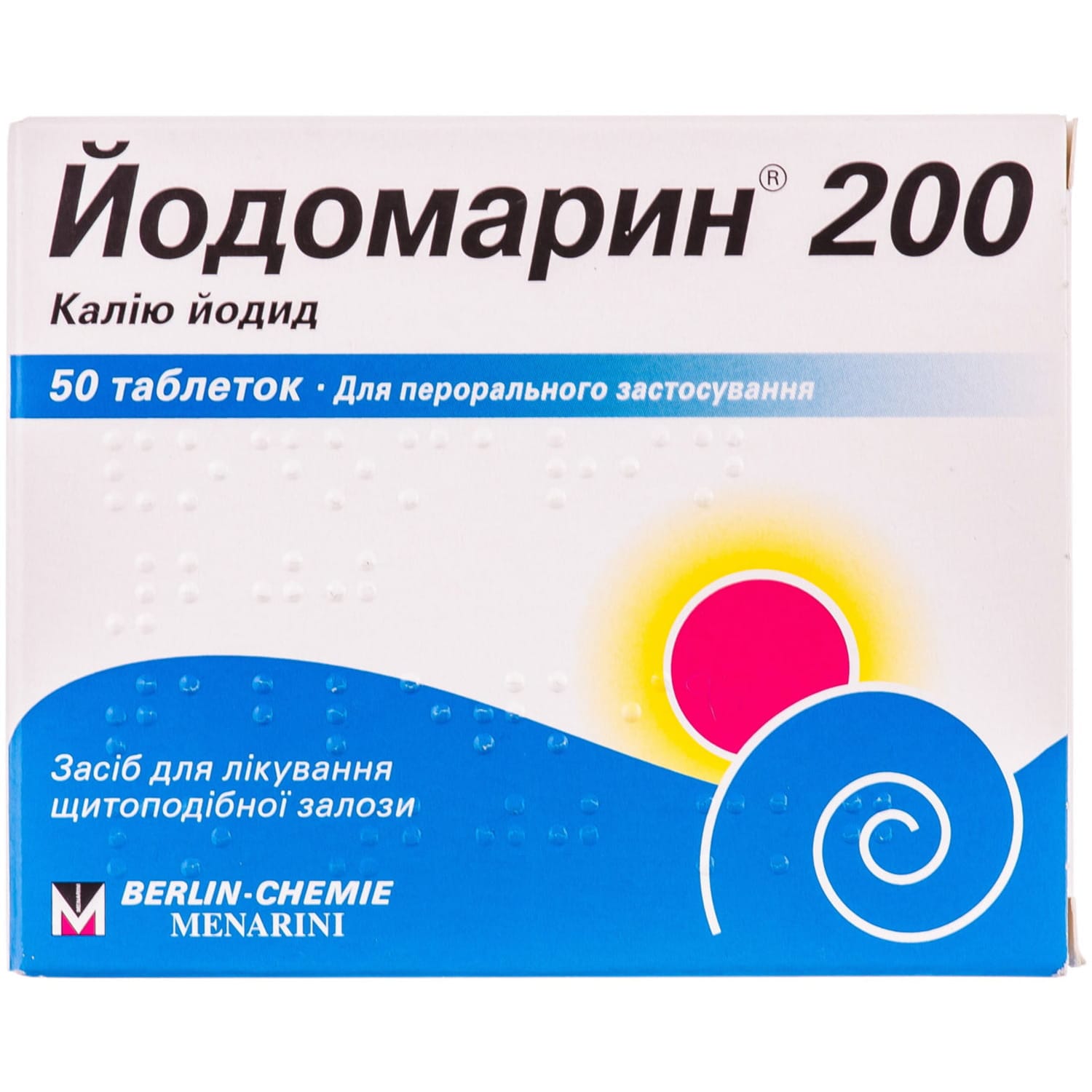
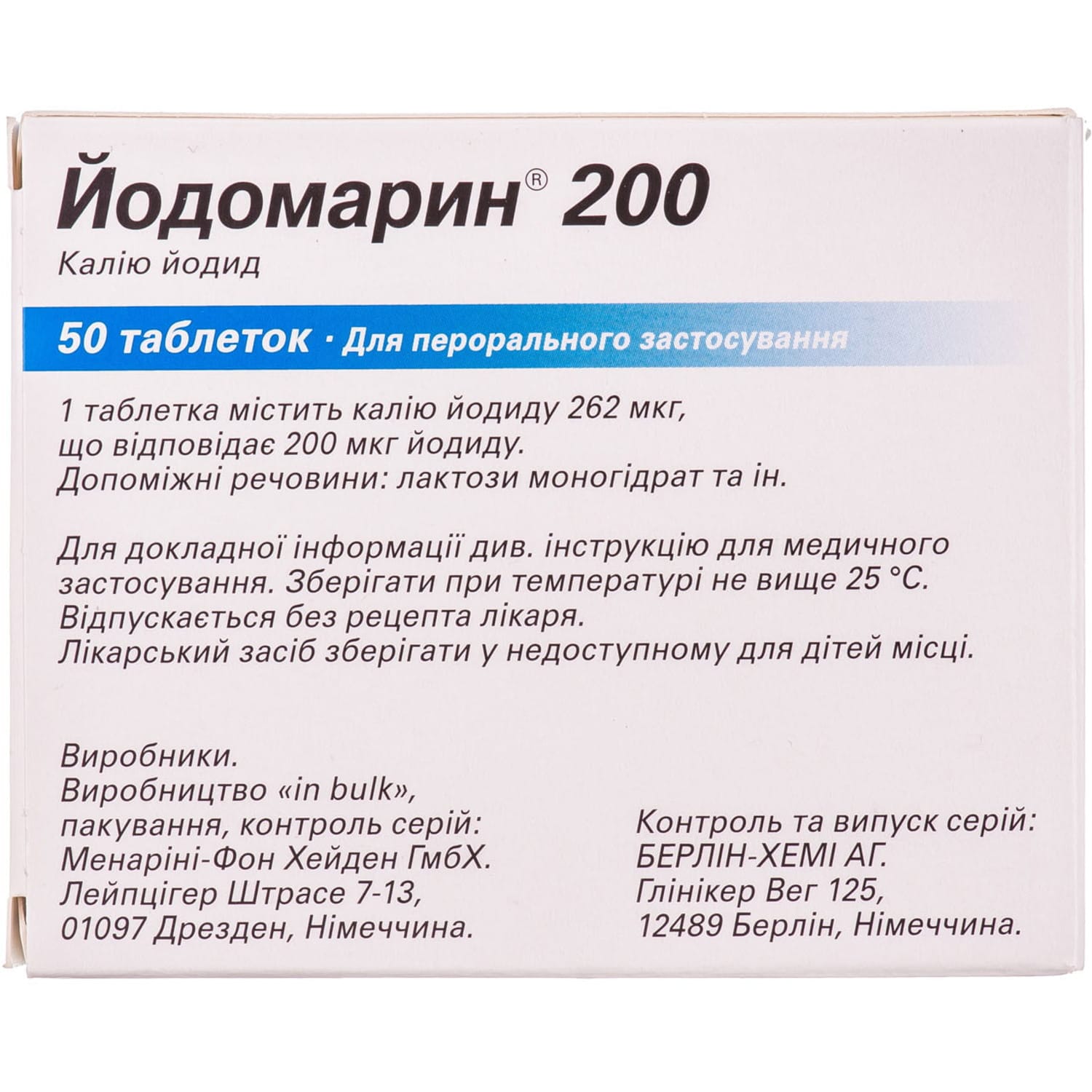
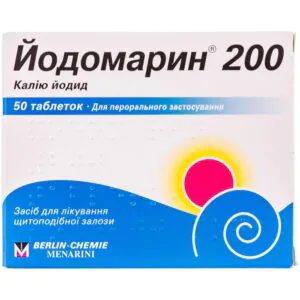
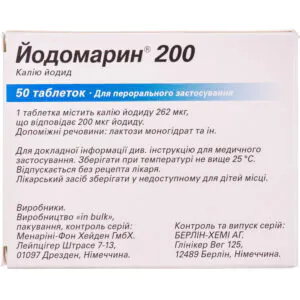
Please note: The product packaging may vary from the images shown. The contents, ingredients, and quality of the product remain unchanged.
Iodomarin tablets 200 mcg 50 pcs.
$17.48
Free Worldwide Shipping
to: Australia, Canada, Czechia, Denmark, Estonia, Ireland, Israel, Italy, Japan, Lithuania, Mexico, Netherlands, Poland, Slovakia, South Korea, Switzerland, United Kingdom, United States and more
In stock
Iodomarin supports thyroid function and prevents iodine deficiency. Helps maintain hormone balance and reduce risk of goiter in all age groups.
Categories: Antitumor, Immunity
Brand: Berlin-Chemie
Payment
PayPal, Debit or Credit card, Google Pay, Apple Pay
Pharmacological properties
Pharmacodynamics. Iodomarin is a drug of inorganic iodine. Iodine is a vital trace element that is part of the thyroid hormones – thyroxine (T4) and triiodothyronine (T3) and ensures its normal functioning.
When iodides enter the cells of the thyroid follicle epithelium, under the influence of the enzyme iodide peroxidase, iodine is oxidized to form elemental iodine. The substance enters into a substitution reaction with the aromatic ring of tyrosine, resulting in the formation of thyronines: 3,5-iodo derivatives (thyroxine hormone – T 4) and 3-iodo derivatives (triiodothyronine hormone T3). Thyronines form a complex with the protein thyroglobulin, which is deposited in the colloid of the thyroid follicle and remains in this state for several days and weeks. With iodine deficiency, this process is disrupted. Iodine, which enters the body in physiological quantities, prevents the development of endemic goiter; normalizes the size of the thyroid gland in newborns, children, adolescents and adult patients; affects the T 3 / T 4 ratio, TSH level.
Pharmacokinetics. After oral administration, inorganic iodine is almost completely absorbed in the small intestine. Within 2 hours after absorption, iodine is distributed in the intercellular space; accumulates in the thyroid gland, kidneys, stomach, mammary and salivary glands. The volume of distribution in a healthy person is on average 23 l (38% of body weight). The concentration in blood plasma after the use of a standard dose is 10-50 ng / ml, while the iodine content in breast milk, saliva, gastric juice is 30 times higher than the concentration in blood plasma. The thyroid gland contains ¾ (10-20 mg) of all iodine in the body. Iodine is excreted mainly in the urine, to a lesser extent – with feces and exhaled air. When a stable concentration level is reached, the amount of iodine excreted is proportional to the daily intake with food.
Indication
Prevention of iodine deficiency, including during pregnancy or breastfeeding.
Prevention of recurrence of iodine deficiency goiter after surgical treatment, as well as after completion of complex treatment with thyroid hormone preparations.
Treatment of diffuse euthyroid iodine deficiency goiter in children, including newborns and infants, and young adults.
Application
Prevention of iodine deficiency and endemic goiter in cases where the intake of iodine in the body of an adult is 150-200 mcg/day. it is necessary to additionally apply the following amount:
- newborns, infants and children under 12 years of age: 50-100 mcg of iodine per day (½-1 tablet of Iodomarin 100 or ½ tablet of Iodomarin 200);
- children over 12 years of age and adults: 100-200 mcg of iodine per day (1-2 tablets of Iodomarin 100 or ½-1 tablet of Iodomarin 200);
- pregnancy and breastfeeding: 200 mcg of iodine per day (2 tablets of Iodomarin 100 or 1 tablet of Iodomarin 200).
Prevention of recurrence of iodine deficiency goiter after surgical treatment, as well as after completion of complex treatment with thyroid hormone preparations: children and adults – 100-200 mcg of iodine per day (1-2 tablets of Iodomarin 100 or ½-1 tablet of Iodomarin 200).
Treatment of diffuse euthyroid iodine deficiency goiter:
- newborns, infants and children: 100-200 mcg of iodine per day (1-2 tablets of Iodomarin 100 or ½-1 tablet of Iodomarin 200);
- young adults: 300-500 mcg of iodine per day (3-5 tablets of Iodomarin 100 or 1½-2½ tablets of Iodomarin 200).
Method of application. Tablets should be taken after meals and washed down with a sufficient amount of liquid, for example, a glass of water. Children of infant age and under 3 years of age can be given the drug in crushed form. The drug is used for preventive purposes, as a rule, for several months or years, and more often – for life. In most cases, 2-4 weeks are enough to treat goiter in newborns and infants, and 6-12 months or more in children and adults. The dosage and duration of use of the drug for preventive measures or for the treatment of thyroid diseases is decided by the doctor individually.
Children. The drug is used in children of any age if indicated.
Contraindication
Hypersensitivity to the active substance or any of the excipients. severe hyperthyroidism. In case of latent hyperthyroidism, it is contraindicated to use the drug in doses exceeding 150 mcg of iodine per day. In case of autonomous adenoma, as well as focal and diffuse autonomous foci of the thyroid gland, it is contraindicated to use the drug in a dose of 300 to 1000 mcg of iodine per day (except for preoperative iodine therapy for the purpose of blockade of the thyroid gland according to Plummer). pulmonary tuberculosis. hemorrhagic diathesis. Duhring’s herpetiform dermatitis (Duhring-Brock syndrome).
Side effects
With prophylactic use of iodide in patients of any age, as well as with therapeutic use in newborns, infants and children, side effects are usually not noted. However, in the presence of large autonomous foci of the thyroid gland and when iodine is prescribed in daily doses exceeding 150 mcg, it is impossible to completely exclude the appearance of pronounced hyperthyroidism.
The following adverse reactions occurred with the following frequency: very common (≥1/10); common (≥1/100 to 1/10); uncommon (≥1/1000 to 1/100); rare (≥1/10,000 to 1/1000); very rare (1/10,000); unknown (cannot be estimated from the available data).
On the part of the immune system: very rarely – hypersensitivity reactions (for example, iodine-induced rhinitis, bullous or tuberous iododerma, exfoliative dermatitis, angioedema, fever, acne and swelling of the salivary glands).
On the part of the endocrine system: very rarely – during the treatment of diffuse euthyroid iodine-deficient goiter in adults, in some cases, the development of iodine-induced hyperthyroidism is possible. In the vast majority of cases, the prerequisite for this is the presence of diffuse or limited autonomous foci of the thyroid gland. This primarily concerns elderly patients with long-term goiter.
Also possible: manifestations of iodism (including symptoms such as swelling of the nasal mucosa, urticaria, angioedema, skin rash, itching, in rare cases – anaphylactic shock), eosinophilia, tachycardia, tremor, irritability, sleep disturbances, increased sweating, discomfort in the epigastric region, diarrhea. When using the drug in high doses, in some cases, the development of goiter and hypothyroidism is possible.
Reporting of suspected adverse reactions. Reporting of suspected adverse reactions after the marketing authorisation of a medicinal product plays an important role. This allows for continued monitoring of the benefit-risk balance of the medicinal product. Healthcare professionals should report any suspected adverse reactions via the national reporting system.
Special instructions
The drug should not be used in hypothyroidism, except in cases where hypothyroidism is caused by iodine deficiency. Iodine administration should be avoided in case of radioactive iodine therapy, presence or suspicion of thyroid cancer. It should be taken into account that during drug therapy in patients with renal failure, hyperkalemia may develop.
Iodomarin contains lactose. Patients with rare hereditary forms of galactose intolerance, lactase deficiency or glucose-galactose malabsorption syndrome should not take Iodomarin.
Use during pregnancy and breastfeeding. During pregnancy and breastfeeding, the need for iodine is increased, so a sufficient intake of iodine (250 mcg/day) is especially important. Due to the ability of iodine to penetrate the placenta and the sensitivity of the fetus to pharmacologically active doses of iodine, it should be used only in recommended doses. This also applies to breastfeeding, since the concentration of iodine in breast milk is 30 times higher than in blood plasma.
The exception is high-dose iodine prophylaxis, which is carried out after nuclear accidents.
The ability to influence the reaction speed when driving vehicles or working with mechanisms. Does not affect.
Interactions
Iodine deficiency enhances the response to thyreostatic therapy, while iodine excess reduces it, so before or during treatment of hyperthyroidism, iodine intake should be avoided if possible. Thyreostatic drugs, in turn, inhibit the transition of iodine to organic compounds in the thyroid gland and, thus, can cause goiter formation.
Substances that are taken up by the thyroid gland by the same uptake mechanism as iodine can inhibit iodine uptake by the thyroid gland by a competitive mechanism (e.g., perchlorate, which also inhibits iodide recirculation within the thyroid gland). Inhibition is also possible by drugs that are not themselves absorbed, such as thiocyanate at concentrations exceeding 5 mg/dL.
Iodine uptake by the thyroid gland and iodine metabolism in the gland are stimulated by endogenous and exogenous TSH.
Simultaneous treatment with high doses of iodine, which suppress the secretion of thyroid hormones, and lithium salts can lead to the development of goiter and hypothyroidism.
High doses of potassium iodide in combination with potassium-sparing diuretics may cause hyperkalemia.
With simultaneous use, the effect of quinidine on the heart increases due to an increase in the concentration of potassium in the blood plasma.
Simultaneous use with plant alkaloids and heavy metal salts may lead to the formation of an insoluble precipitate and inhibition of iodine absorption.
Overdose
Symptoms of intoxication: brown discoloration of the mucous membranes, reflex vomiting (blue discoloration in the presence of starch in food), abdominal pain, diarrhea (possible presence of blood in the stool), dehydration and shock. In rare cases, the formation of esophageal stenosis has been observed. Fatal cases have been noted. In some cases, chronic overdose leads to the development of the so-called iodism, i.e. iodine intoxication: metallic taste in the mouth, swelling and inflammation of the mucous membranes (runny nose, conjunctivitis, gastroenteritis, bronchitis). Iodide can activate latent inflammatory processes, such as tuberculosis. The development of edema, erythema, acne-like and bullous rashes, hemorrhages, fever and nervous excitement is possible.
Treatment. Therapy for acute intoxication: gastric lavage with a solution of starch, protein or 5% sodium thiosulfate solution until all traces of iodine are removed. Symptomatic therapy to eliminate water and electrolyte balance disorders, and if necessary, anti-shock therapy.
Therapy for chronic intoxication: iodine withdrawal.
Hypothyroidism caused by iodine intake: discontinuation of iodine, administration of thyroid hormones to normalize metabolism.
Hyperthyroidism caused by iodine intake: This is not an overdose in the literal sense, because hyperthyroidism can also occur from amounts of iodine that are considered physiological in other countries.
Treatment according to the course: mild forms usually do not require treatment, severe forms require thyreostatic therapy (the effectiveness of which is delayed in time). In severe cases (thyrotoxic crisis), intensive therapy, plasmapheresis or thyroidectomy are necessary.
Storage conditions
Iodomarin 100: at a temperature not exceeding 30 °C.
Iodomarin 200: the package containing PVC/aluminum blister should be stored at a temperature not exceeding 25 °C. No special storage conditions are required for the package containing aluminum/aluminum blister.
Be the first to review “Iodomarin tablets 200 mcg 50 pcs.” Cancel reply
You may also like

Reviews
There are no reviews yet.