No products in the cart.

We deliver to:
🇦🇺 Australia
🇨🇦 Canada
🇨🇿 Czechia
🇩🇰 Denmark
🇪🇪 Estonia
🇮🇪 Ireland
🇮🇱 Israel
🇮🇹 Italy
🇯🇵 Japan
🇱🇹 Lithuania🇲🇽 Mexico
🇳🇱 Netherlands🇵🇱 Poland
🇸🇰 Slovakia
🇰🇷 South Korea
🇨🇭 Switzerland
🇬🇧 United Kingdom
🇺🇸 United States of America
and more
We deliver to:
🇦🇺 Australia
🇨🇦 Canada
🇨🇿 Czechia
🇩🇰 Denmark
🇪🇪 Estonia
🇮🇪 Ireland
🇮🇱 Israel
🇮🇹 Italy
🇯🇵 Japan
🇱🇹 Lithuania🇲🇽 Mexico
🇳🇱 Netherlands🇵🇱 Poland
🇸🇰 Slovakia
🇰🇷 South Korea
🇨🇭 Switzerland
🇬🇧 United Kingdom
🇺🇸 United States of America
and more
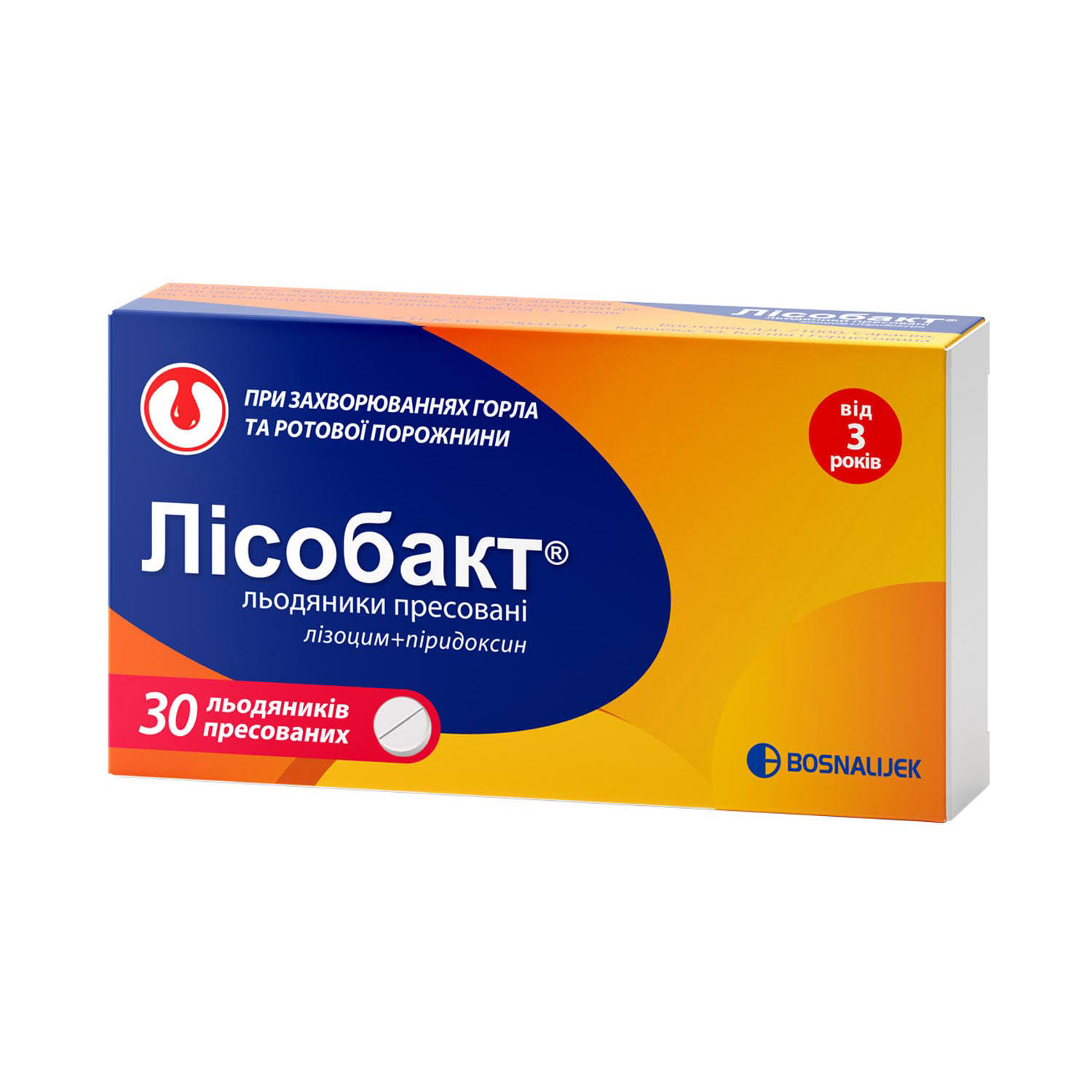
Please note: The product packaging may vary from the images shown. The contents, ingredients, and quality of the product remain unchanged.
Lysobact pressed lollipops 30 pieces
$25.08
Free Worldwide Shipping
to: Australia, Canada, Czechia, Denmark, Estonia, Ireland, Israel, Italy, Japan, Lithuania, Mexico, Netherlands, Poland, Slovakia, South Korea, Switzerland, United Kingdom, United States and more
In stock
Lysobact is a local antiseptic lozenge with lysozyme and pyridoxine for throat and oral infections, stomatitis, and tonsillitis.
Categories: Cold and flu
Brand: Bosnalijek
Payment
PayPal, Debit or Credit card, Google Pay, Apple Pay
Pharmacological properties
Lysobact is an antiseptic used for local treatment in dentistry and otolaryngology.
Lysozyme is a mucopolysaccharide effective against gram-positive bacteria due to its ability to convert insoluble polysaccharides of the cell membrane into soluble mucopeptides. It is also effective against gram-negative bacteria, viruses and fungi. Lysozyme has a local anti-inflammatory effect and increases the body’s nonspecific resistance.
Pyridoxine has a protective effect on the oral mucosa and exhibits an anti-aphthous effect.
Pyridoxine is rapidly absorbed in the gastrointestinal tract, its biologically active form binds to blood plasma proteins and is deposited in muscles, liver, CNS and other tissues of the body. Pyridoxine penetrates the placental barrier and is excreted in breast milk. It is metabolized in the liver and excreted in the urine in the form of 4-pyridoxic acid.
Lysozyme, after metabolic disintegration, is excreted from the body in the urine.
Indication
Infectious-inflammatory diseases of the mucous membrane of the oral cavity and throat: Vincent’s tonsillitis, acute and chronic tonsillitis, pharyngitis, stomatitis, aphthous stomatitis, herpetic stomatitis, erosions of the mucous membrane of the oral cavity of various etiologies; in the postoperative period (after tonsillectomy, cryodestruction of the palatine tonsils).
Application
Tablets should be dissolved like lozenges, keeping them in the mouth as long as possible. Children aged 3-7 years: dissolve 1 tablet 3 times a day; 7-12 years: 1 tablet 4 times a day. Adults and children over 12 years: 2 tablets 3-4 times a day. Duration of treatment – 8 days. If necessary, after consulting a doctor, treatment can be continued.
Contraindication
Hypersensitivity to any component of the drug.
Side effects
In some cases, allergic reactions are possible.
Immune system disorders: anaphylactic shock, anaphylactic reaction, angioedema.
Skin: urticaria, rash, itching, photosensitivity.
Special instructions
If an allergic reaction to the drug occurs, its use should be discontinued. Lysobact is intended for resorption, the resorption tablet should not be swallowed. The drug contains lactose, therefore patients with a rare hereditary form of galactose intolerance, lactase deficiency or glucose-galactose malabsorption syndrome should not use the drug.
Pregnancy and breastfeeding. Lysobact can be used during pregnancy and breastfeeding.
Children. The drug is not used in children under 3 years of age.
Does not affect the reaction speed when driving or working with other mechanisms.
Interactions
It has been proven that the therapeutic effect of antibacterial drugs is enhanced when used simultaneously with Lysobacter. Lysozyme increases the effectiveness of such antibacterial drugs as penicillin and chloramphenicol.
Isoniazid, penicillamine, pyrazinamide, hydralazine, immunosuppressants, estrogens (including oral contraceptives containing estrogens) may increase the need for pyridoxine, since they act as antagonists of the latter or enhance its renal excretion.
Pyridoxine hydrochloride enhances the decarboxylation of levodopa in peripheral tissues and reduces its effectiveness in the treatment of Parkinson’s disease.
Overdose
Not described. Symptoms of overdose (peripheral neuropathy, myodystrophy, increased manifestations of adverse reactions) may occur after the use of pyridoxine in high doses, which significantly exceed therapeutic ones.
Storage conditions
At a temperature not exceeding 25 °C.
Be the first to review “Lysobact pressed lollipops 30 pieces” Cancel reply
You may also like

Ascophen Darnytsia tablets in a pack of 10 pcs
Reviews
There are no reviews yet.