No products in the cart.
Nifuroxazide 200 mg tablets treat infectious diarrhea and intestinal disorders, acting locally with antibacterial effect without systemic absorption.

🇦🇺 Australia
🇨🇦 Canada
🇨🇿 Czechia
🇩🇰 Denmark
🇪🇪 Estonia
🇮🇪 Ireland
🇮🇱 Israel
🇮🇹 Italy
🇯🇵 Japan
🇱🇹 Lithuania🇲🇽 Mexico
🇳🇱 Netherlands🇵🇱 Poland
🇸🇰 Slovakia
🇰🇷 South Korea
🇨🇭 Switzerland
🇬🇧 United Kingdom
🇺🇸 United States of America
and more
🇦🇺 Australia
🇨🇦 Canada
🇨🇿 Czechia
🇩🇰 Denmark
🇪🇪 Estonia
🇮🇪 Ireland
🇮🇱 Israel
🇮🇹 Italy
🇯🇵 Japan
🇱🇹 Lithuania🇲🇽 Mexico
🇳🇱 Netherlands🇵🇱 Poland
🇸🇰 Slovakia
🇰🇷 South Korea
🇨🇭 Switzerland
🇬🇧 United Kingdom
🇺🇸 United States of America
and more
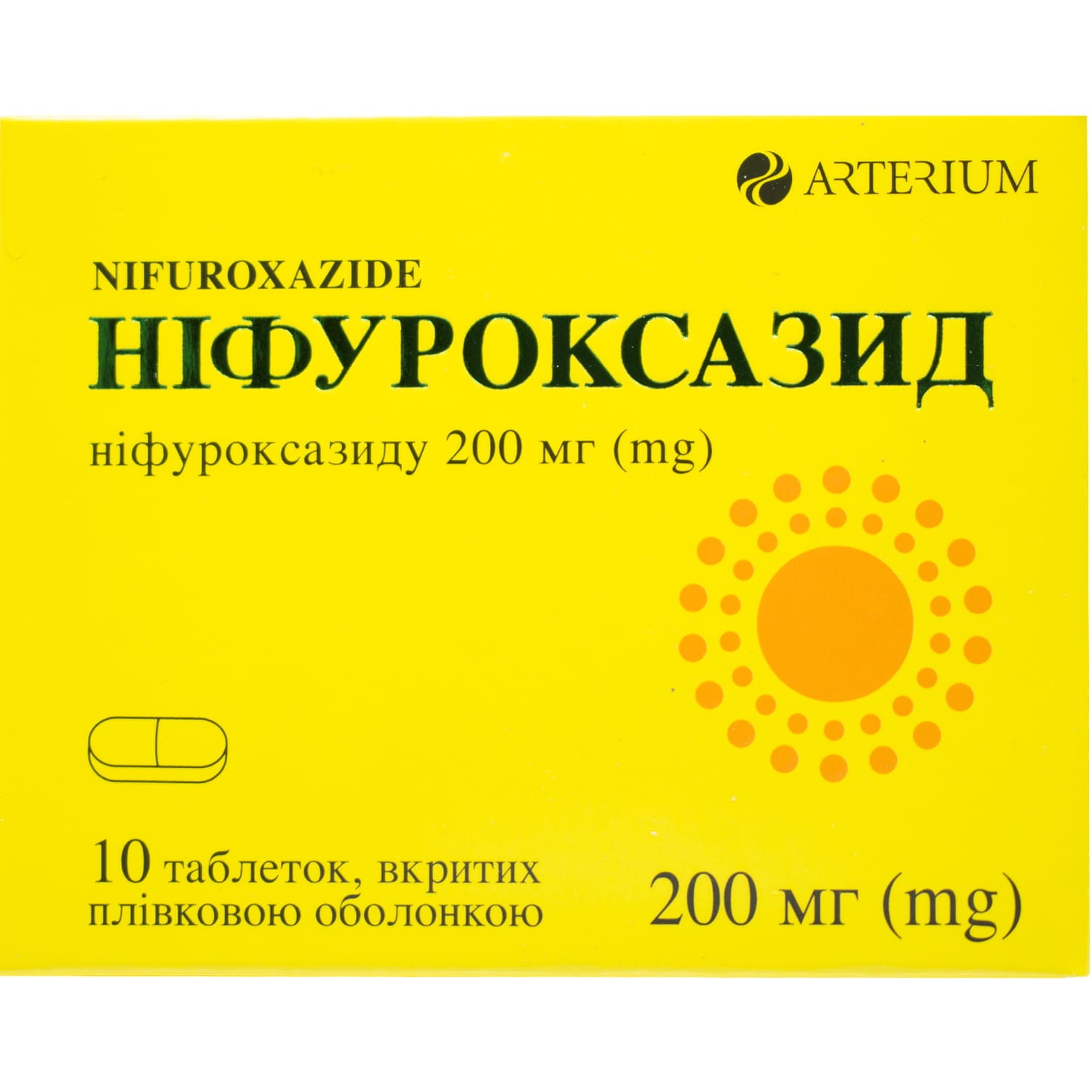
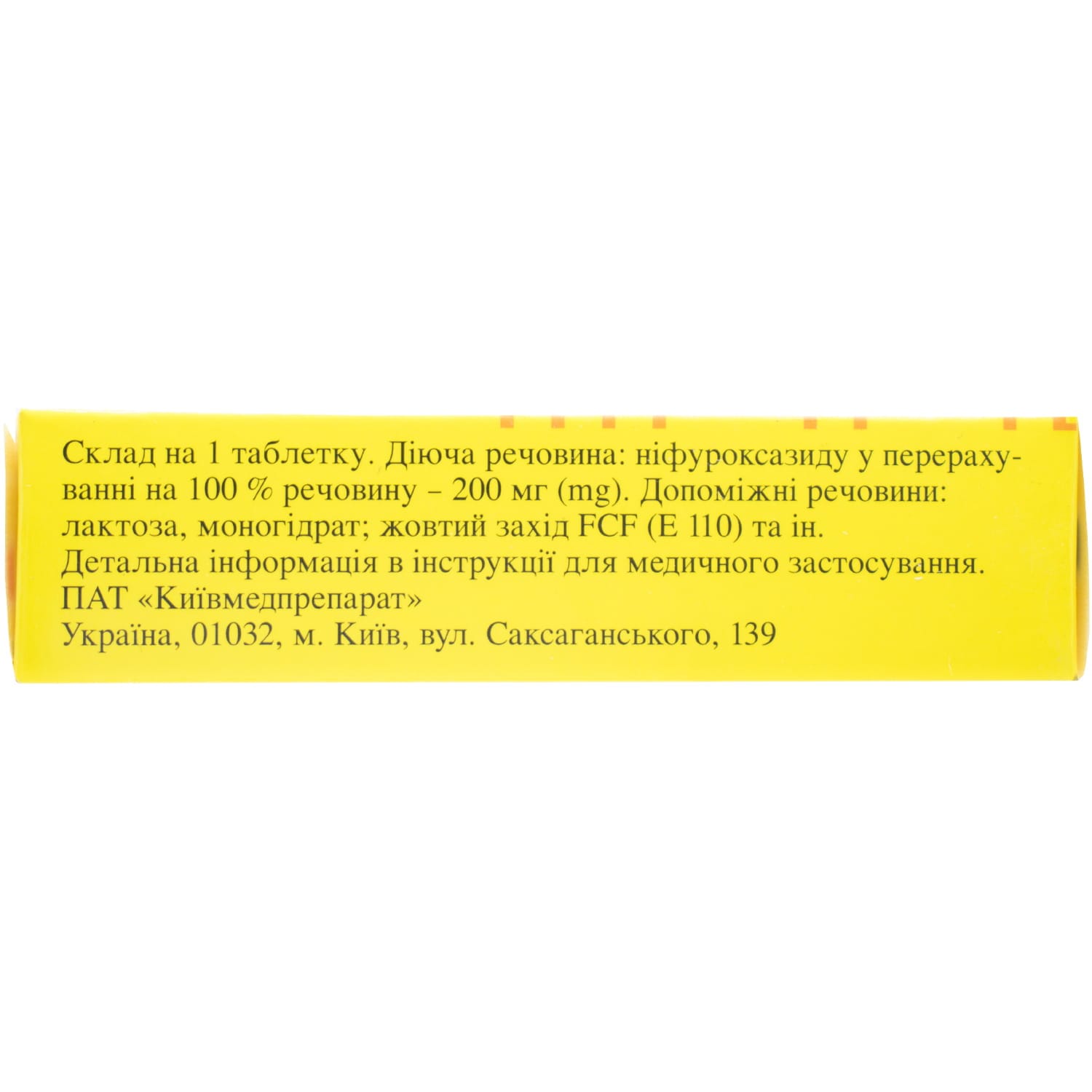
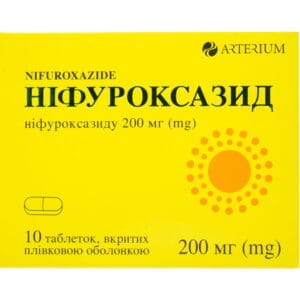
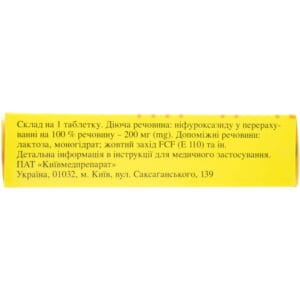
Please note: The product packaging may vary from the images shown. The contents, ingredients, and quality of the product remain unchanged.
$19.98
to: Australia, Canada, Czechia, Denmark, Estonia, Ireland, Israel, Italy, Japan, Lithuania, Mexico, Netherlands, Poland, Slovakia, South Korea, Switzerland, United Kingdom, United States and more
In stock
Nifuroxazide 200 mg tablets treat infectious diarrhea and intestinal disorders, acting locally with antibacterial effect without systemic absorption.
PayPal, Debit or Credit card, Google Pay, Apple Pay
active ingredient: nifuroxazide;
1 tablet contains nifuroxazide in terms of 100% substance – 200 mg;
excipients: microcrystalline cellulose; povidone; lactose, monohydrate; calcium stearate; coating mixture “Opadry II Yellow” 33G22623, containing: hypromellose; lactose, monohydrate; titanium dioxide (E 171); polyethylene glycol 3000 (macrogol); triacetin; quinoline yellow (E 104); sunset yellow FCF (E 110); iron oxide yellow (E 172); indigo carmine (E 132).
Film-coated tablets.
Pharmacodynamics. Nifuroxazide is an antimicrobial drug of the 5-nitrofuran group, belongs to intestinal antiseptics. Blocks the activity of dehydrogenases, inhibits the processes of cellular respiration, the tricarboxylic acid cycle, and also disrupts protein synthesis in the microbial cell. Reduces the production of toxins by microorganisms. In medium therapeutic doses, it exhibits bacteriostatic activity, and in higher doses, it acts bactericidal.
The drug is active against gram-positive microorganisms of the Staphylococcus family and gram-negative microorganisms of the Enterobacteruaceae family (Escherichia, Enterobacter, Salmonella, Shigella). It is inactive against bacteria of the genus Pseudomonas and the genus Proteus (species Proteus inconstans), as well as strains of subgroup A of the Providentia alcalifaciens species.
Pharmacokinetics. After oral administration, nifuroxazide is not absorbed in the gastrointestinal tract, providing a high concentration of the active substance in the intestine. Trace concentrations of the drug are determined in blood plasma; a small amount is found in the urine in unchanged form. It is excreted in the feces. The rate of excretion depends on the dose of the drug taken and the motility of the digestive tract.
Infectious diarrhea, chronic colitis and enterocolitis of infectious etiology, as part of the complex treatment of intestinal dysbiosis syndrome; prevention of infectious complications of the gastrointestinal tract during surgical interventions.
Hypersensitivity to 5-nitrofuran derivatives and/or other components of the drug.
Orally, regardless of meals. Adults and children over 7 years old – 1 tablet (200 mg) 3-4 times a day (daily dose – 600-800 mg). The course of treatment is no more than 7 days.
Nifuroxazide is not recommended for use for longer than 7 days. In the case of diarrhea lasting more than 3 days from the start of treatment, we require enhanced diagnostics to determine the cause of the symptoms. Antibiotic therapy may be necessary.
The drug should not be prescribed as monotherapy for the treatment of intestinal infections complicated by septicemia. If there are symptoms of dehydration, rehydration should be carried out in conjunction with the use of nifuroxazide.
In case of severe invasive diarrhea, an antibiotic should be used, as nifuroxazide is not absorbed in the gastrointestinal tract.
In case of hypersensitivity reactions (shortness of breath, skin rashes, itching), nifuroxazide should be discontinued.
During treatment, you should follow a certain diet: exclude juices, fresh vegetables and fruits, spicy and difficult-to-digest foods.
This medicine contains lactose. Patients with rare hereditary problems of galactose intolerance, the Lapp lactase deficiency or glucose-galactose malabsorption should not take this medicine.
Do not exceed the recommended dose of the drug.
The use of the drug during pregnancy is possible if the expected positive effect for the mother outweighs the potential risk to the fetus.
It is known that nifuroxazide is not absorbed in the gastrointestinal tract and does not penetrate into breast milk, but due to the lack of sufficient clinical data, caution should be exercised when prescribing the drug during breastfeeding.
Nifuroxazide tablets 200 mg are used in children aged 7 and over. Children under 7 years of age are prescribed nifuroxazide in a different dosage form.
Nifuroxazide does not affect the reaction rate when driving or working with mechanisms.
Symptoms of overdose are unknown. In case of overdose, gastric lavage and symptomatic treatment are recommended.
Sometimes there may be disorders of organs and systems:
Hematopoietic and lymphatic system disorders: one case of granulocytopenia has been described.
Gastrointestinal tract: individual hypersensitivity reactions to nifuroxazide are manifested by abdominal pain, nausea, vomiting and exacerbation of diarrhea. In the event of the development of such symptoms of minor intensity, there is no need for special therapy or discontinuation of nifuroxazide, since the symptoms disappear quickly. If the reactions are severe, nifuroxazide should be discontinued. In the future, the patient should avoid taking nifuroxazide and other nitrofuran derivatives.
Allergic reactions, usually of the skin type (rash, itching, urticaria, pustulosis), are possible. In rare cases, shortness of breath, severe hypersensitivity reactions, including angioedema and anaphylactic shock, may occur.
The drug contains the dye sunset yellow FCF (E110), which may cause allergic reactions.
During treatment with Nifuroxazide, it is contraindicated to consume alcohol and drugs containing it due to the possibility of developing disulfiram-like reactions, which are manifested by a feeling of heat, skin hyperemia, tinnitus, difficulty breathing, tachycardia, and a feeling of fear.
Simultaneous (at the same time) administration of other oral medications should be avoided due to the pronounced adsorption properties of nifuroxazide.
In the original packaging at a temperature not exceeding 25 °C.

UApothecary combines medicine search, online ordering, and pharmaceutical consultations. We provide up-to-date information about medications, updating data several times a day. We collaborate with doctors, pharmacists, and medical organizations to offer professional support. We guarantee the quality of medicines and convenient worldwide delivery. Our mission is to make quality medicines accessible to everyone.
This site is protected by reCAPTCHA and the Google
Privacy Policy and
Terms of Service apply.
Reviews
There are no reviews yet.