No products in the cart.

We deliver to:
🇦🇺 Australia
🇨🇦 Canada
🇨🇿 Czechia
🇩🇰 Denmark
🇪🇪 Estonia
🇮🇪 Ireland
🇮🇱 Israel
🇮🇹 Italy
🇯🇵 Japan
🇱🇹 Lithuania🇲🇽 Mexico
🇳🇱 Netherlands🇵🇱 Poland
🇸🇰 Slovakia
🇰🇷 South Korea
🇨🇭 Switzerland
🇬🇧 United Kingdom
🇺🇸 United States of America
and more
We deliver to:
🇦🇺 Australia
🇨🇦 Canada
🇨🇿 Czechia
🇩🇰 Denmark
🇪🇪 Estonia
🇮🇪 Ireland
🇮🇱 Israel
🇮🇹 Italy
🇯🇵 Japan
🇱🇹 Lithuania🇲🇽 Mexico
🇳🇱 Netherlands🇵🇱 Poland
🇸🇰 Slovakia
🇰🇷 South Korea
🇨🇭 Switzerland
🇬🇧 United Kingdom
🇺🇸 United States of America
and more
Minox 2 Women’s Lotion f...
$30.07

Please note: The product packaging may vary from the images shown. The contents, ingredients, and quality of the product remain unchanged.
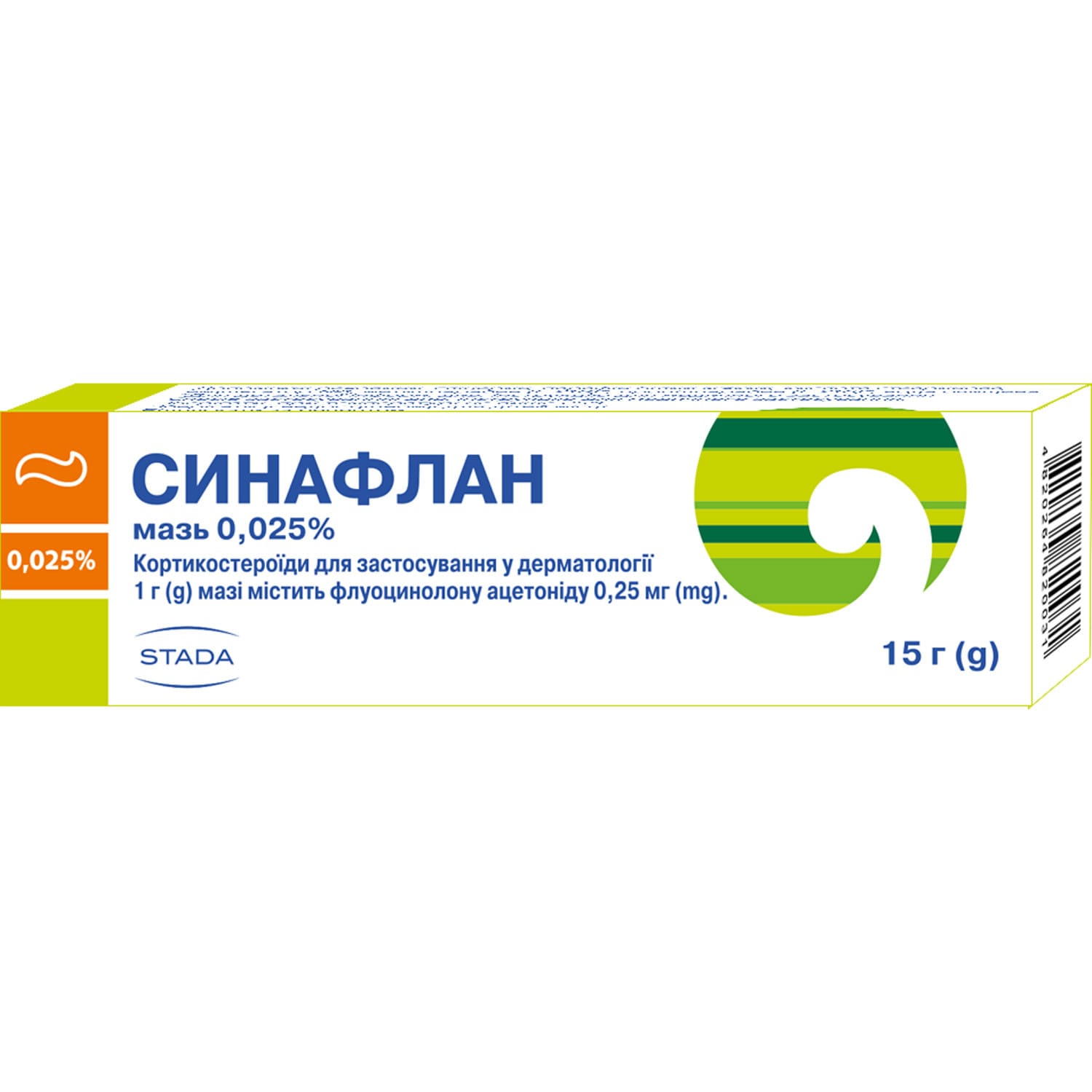
Sinaflan ointment 0.025% tube 15 g
$17.25
Free Worldwide Shipping
to: Australia, Canada, Czechia, Denmark, Estonia, Ireland, Israel, Italy, Japan, Lithuania, Mexico, Netherlands, Poland, Slovakia, South Korea, Switzerland, United Kingdom, United States and more
In stock
Sinaflan ointment with fluocinolone acetonide treats allergic and inflammatory skin conditions like eczema, psoriasis, and dermatitis.
Categories: Dermatology
Brand: Stada
Payment
PayPal, Debit or Credit card, Google Pay, Apple Pay
Sinaflan – corticosteroids for use in dermatology.
Indications for use
Allergic and inflammatory skin diseases of non-microbial etiology (seborrheic dermatitis, eczema of various genesis and localization, psoriasis).
Composition
- active ingredient: fluocinolone acetonide;
- 1 g of ointment contains fluocinolone acetonide 0.25 mg;
- excipients: propylene glycol, paraffin, lanolin, ceresin.
Contraindication
Individual hypersensitivity to any components of the drug.
Confirmed hypersensitivity to other glucocorticosteroids, multiple psoriatic plaques, perianal and genital itching, thrombophlebitis, common acne. Bacterial, viral, fungal diseases. Anogenital itching, perioral dermatitis, pyoderma, chickenpox, herpes, actinomycosis, blastomycosis, sporotrichosis, skin tumors. Infectious skin diseases, skin manifestations of syphilis, skin tuberculosis, diaper dermatitis, rosacea; trophic ulcers associated with varicose veins; erosive-ulcerative lesions of the gastrointestinal tract, wounds at the application sites, skin cancer, nevus, atheroma, melanoma, hemangioma, xanthoma, sarcoma. Do not use after vaccination. The drug should not be used on large areas of skin, especially on wounds that do not heal for a long time, such as deep burn wounds. Do not use in ophthalmology.
Adverse reactions
Skin and subcutaneous tissue. Rash, acne-like lesions. Epidermal growth inhibition. Atrophy of subcutaneous tissue. Exacerbation of existing disorders, urticaria, allergic contact dermatitis, skin irritation, atrophic stripes, maculopapular rash, skin maceration at the application site, skin integrity disorders, hyperkeratosis, perioral dermatitis, furunculosis. Development of secondary infectious skin lesions and atrophic changes in it is possible (burning, skin itching, dry skin, steroid acne, folliculitis). With prolonged use, skin atrophy, local hirsutism, telangiectasias, purpura, pigmentation disorders, discoloration, skin hyperpigmentation, utricle rashes, exacerbation of eczema, purpura, including steroid, hypertrichosis, alopecia, especially in women.
From the digestive tract. When applied to large areas of skin, gastritis and steroid stomach ulcers are possible.
On the part of the endocrine system. Hyperglycemia. When applied to large areas of the skin, systemic manifestations are possible: adrenal insufficiency, Itsenko-Cushing’s syndrome, steroid diabetes mellitus, glucosuria, displacement of the hypothalamic-pituitary-adrenal axis.
On the part of the immune system. Hypersensitivity reactions, decreased immunity of the body. With prolonged use, the following are possible: secondary immunodeficiency (exacerbation of chronic infectious diseases, generalization of the infectious process, development of opportunistic infections), slowing down of reparative processes.
Cardiovascular system: Arterial hypertension, possible development of edema.
Method of application
The drug is intended for topical use only. Apply a small amount of ointment 1–2 times a day and rub in lightly. The duration of treatment depends on the nature of the disease and is usually 5–10 days, with a long course of the disease – no longer than 2 weeks. Children over 2 years of age should use with caution once a day under the supervision of a doctor. The ointment should not be used under an occlusive dressing – only in the case of psoriasis is it allowed to use the drug under a closed dressing, which should be changed every day. It should not be used on the skin of the face for longer than 1 day. The ointment is mainly recommended for use in dry forms of dermatoses. The duration of administration to children should not exceed 5 days.
Application features
Use during pregnancy or breastfeeding
Do not use the medicine during pregnancy or breastfeeding.
Children
The medicine should be used with caution in children over 2 years of age under the supervision of a physician only once a day on a small area of skin; do not apply to the child’s face.
Ability to influence reaction speed when driving vehicles or other mechanisms
No effect.
Overdose
With prolonged use on large areas of the skin, symptoms of overdose may appear, manifested by increased side effects (edema, arterial hypertension, decreased body resistance to infections). Itching, burning at the site of ointment application, hyperglycemia, glucosuria, Itsenko-Cushing syndrome are possible. Treatment is symptomatic against the background of gradual withdrawal of the drug.
Interaction with other medicinal products and other types of interactions
Systemic glucocorticosteroid drugs increase the effectiveness of the drug, but at the same time increase the likelihood of side effects. Concomitant use with nonsteroidal anti-inflammatory drugs increases the risk of systemic and local side effects. The drug can be used with antimicrobial drugs of local and systemic action. Reduces the activity of hypotensive, diuretic, antiarrhythmic drugs, potassium preparations. Diuretic drugs (except potassium-sparing) increase the risk of hypokalemia. The drug may enhance the effect of immunosuppressive drugs and inhibit the effect of immunostimulating drugs.
During treatment, it is not recommended to get vaccinated against smallpox, as well as to carry out other types of immunizations (especially with prolonged use on large areas of skin) due to the possible lack of an adequate immunological response in the form of the production of appropriate antibodies.
Storage conditions
Store at a temperature not exceeding 25 ºС.
Keep out of reach of children.
Be the first to review “Sinaflan ointment 0.025% tube 15 g” Cancel reply

Reviews
There are no reviews yet.