No products in the cart.
Tanakan 40 mg tablets with Ginkgo biloba extract support memory, concentration and cerebral circulation, helping relieve tinnitus and vertigo.

🇦🇺 Australia
🇨🇦 Canada
🇨🇿 Czechia
🇩🇰 Denmark
🇪🇪 Estonia
🇮🇪 Ireland
🇮🇱 Israel
🇮🇹 Italy
🇯🇵 Japan
🇲🇽 Mexico
🇵🇱 Poland
🇸🇰 Slovakia🇰🇷 South Korea
🇨🇭 Switzerland
🇬🇧 United Kingdom
🇺🇸 United States of America
and more
🇦🇺 Australia
🇨🇦 Canada
🇨🇿 Czechia
🇩🇰 Denmark
🇪🇪 Estonia
🇮🇪 Ireland
🇮🇱 Israel
🇮🇹 Italy
🇯🇵 Japan
🇲🇽 Mexico
🇵🇱 Poland
🇸🇰 Slovakia🇰🇷 South Korea
🇨🇭 Switzerland
🇬🇧 United Kingdom
🇺🇸 United States of America
and more
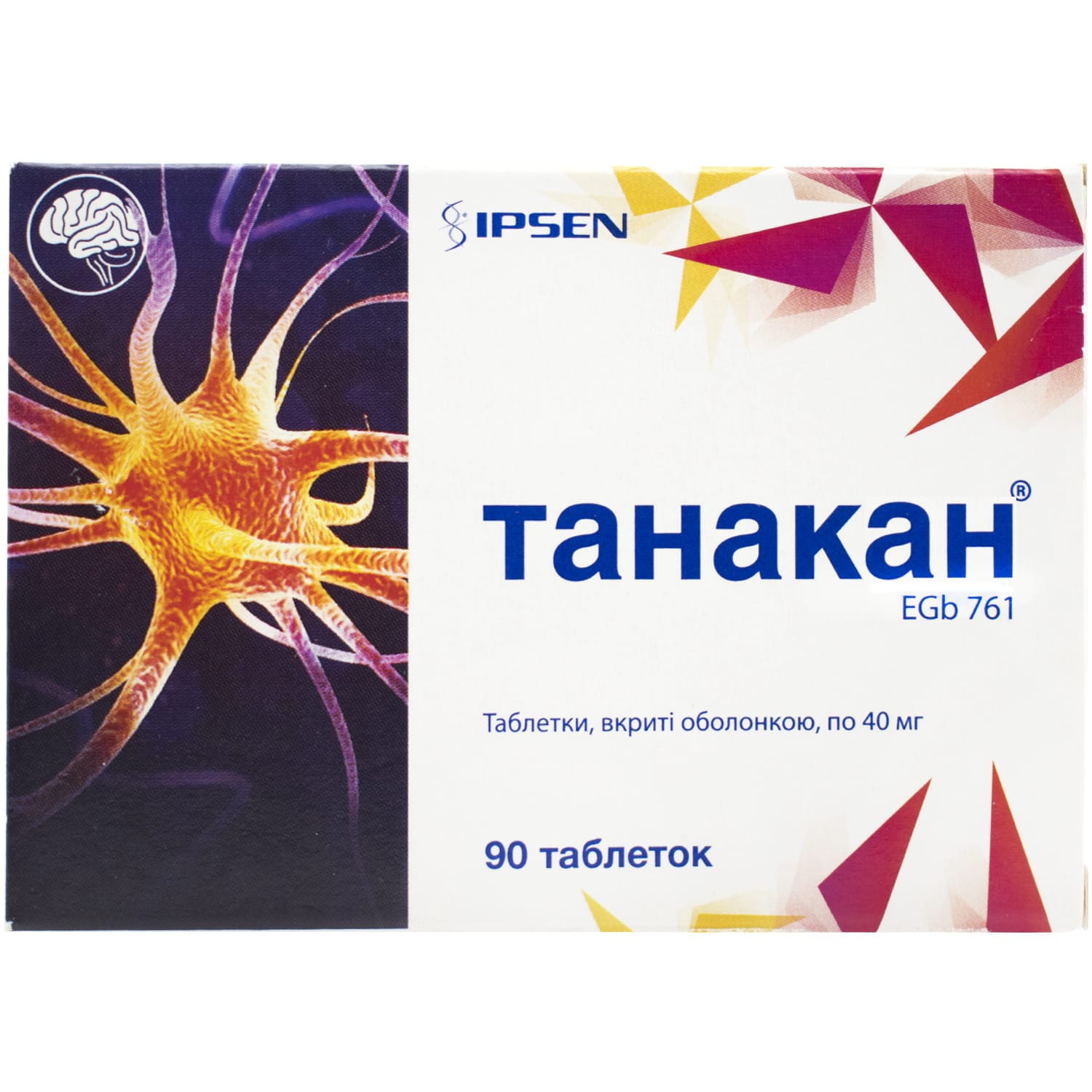
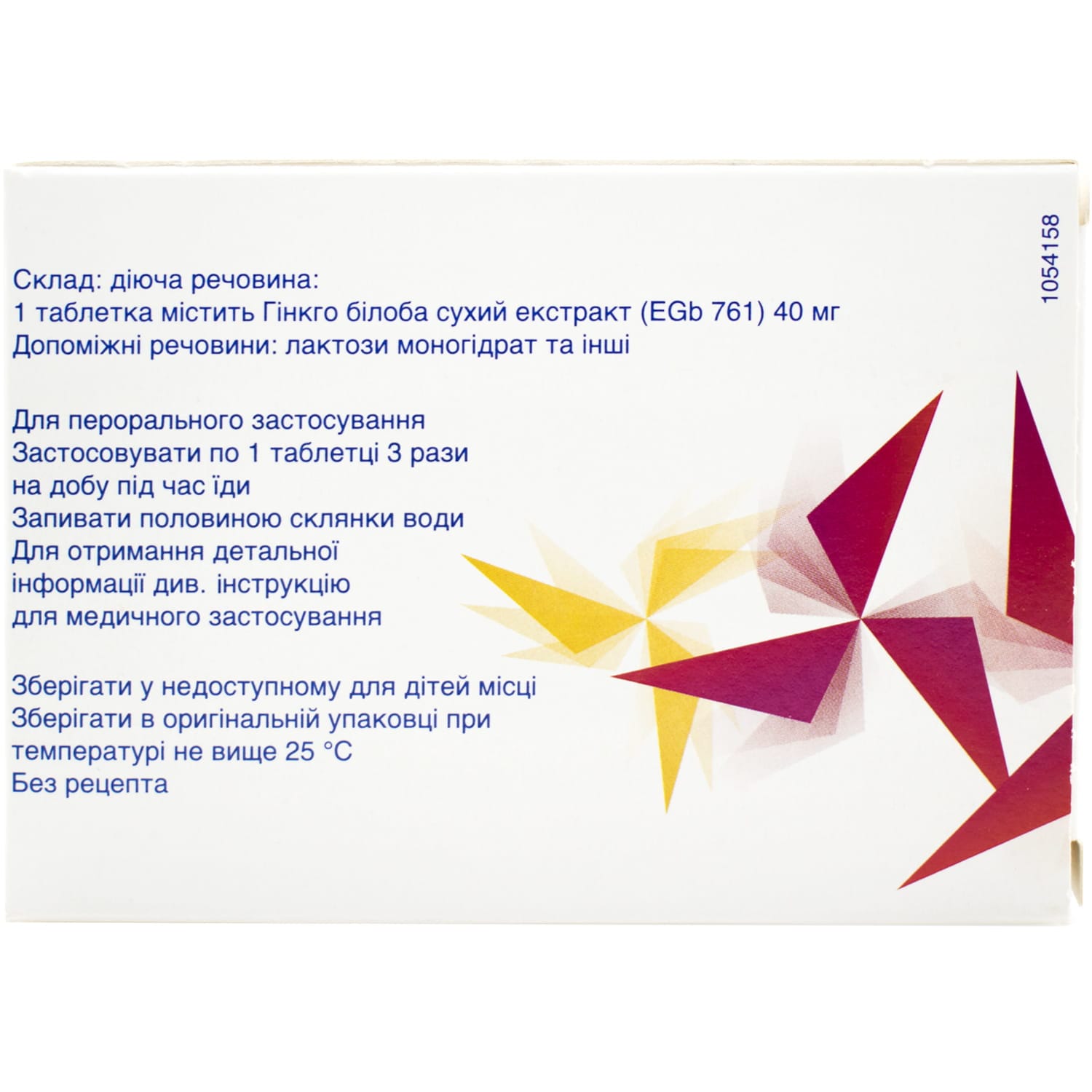
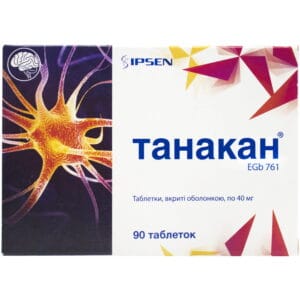
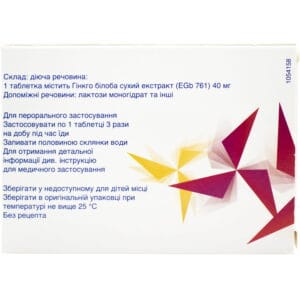
Please note: The product packaging may vary from the images shown. The contents, ingredients, and quality of the product remain unchanged.
$57.59
to: Australia, Canada, Czechia, Denmark, Estonia, Ireland, Israel, Italy, Japan, Mexico, Poland, Slovakia, South Korea, Switzerland, United Kingdom, United States and more
In stock
Tanakan 40 mg tablets with Ginkgo biloba extract support memory, concentration and cerebral circulation, helping relieve tinnitus and vertigo.
PayPal, Debit or Credit card, Google Pay, Apple Pay
The numerous mechanisms underlying the therapeutic effect have not yet been studied in humans.
The active substance is a standardized Ginkgo biloba extract containing 24% flavone glycosides and 6% di- and sesquiterpenes (ginkgolides A, B, and C, and bilobalide).
In humans, only the pharmacokinetic parameters of the terpene fractions have been described.
The oral bioavailability of ginkgolides A, B, and bilobalide is 80–90%. Maximum plasma concentration (Cmax) is reached 1–2 hours after administration. The half-life (T½) is approximately 4 hours for bilobalide and ginkgolides A, and about 10 hours for ginkgolide B.
These substances are not metabolized in the body and are almost completely excreted in the urine, with a small amount eliminated in the feces.
Symptomatic treatment of cognitive impairment in elderly patients, excluding patients with confirmed dementia, Parkinson’s disease, cognitive disorders of iatrogenic origin, or those resulting from complications of depression, vascular disorders, or metabolic disorders; adjunctive treatment of vestibular vertigo in combination with vestibular rehabilitation; symptomatic treatment of tinnitus.
For oral use. Take 1 tablet 3 times daily with meals, swallowing with half a glass of water.
Use the dosing device: 1 dose = 1 ml of oral solution = 40 mg of pure extract.
Take 1 dose of the solution 3 times daily with meals. The dose should be diluted in half a glass of water.
The duration of treatment is determined individually by the physician.
Hypersensitivity to the components of the medicinal product.
Rarely, the following reactions may occur:
Careful monitoring is recommended in patients concomitantly taking medicinal products metabolized by cytochrome P450 3A4. There are no data on abuse of Ginkgo biloba (EGb 761). According to its pharmacological properties, Ginkgo biloba extract (EGb 761) has no abuse potential.
The medicinal product contains lactose; therefore, patients with rare hereditary galactose intolerance, lactase deficiency, or glucose-galactose malabsorption should not use this product.
Warning: The alcohol content of the medicinal product is 57% (i.e., 0.45 g of alcohol per dose). The product may be harmful to patients with alcoholism. The ethanol content should be taken into account when used in pregnant or breastfeeding women, children, and high-risk patients, such as those with liver disease or epilepsy.
This medicinal product is intended primarily for elderly patients, in whom the risk of pregnancy is absent. Due to the lack of adequate clinical data, use during pregnancy and breastfeeding is not recommended.
Not recommended for use in children.
Studies on the effects on the ability to drive vehicles or operate machinery have not been conducted. However, dizziness may impair the ability to drive or use machinery.
Clinical interaction studies with Ginkgo biloba (EGb 761) have demonstrated potentiation or inhibition of cytochrome P450 isoenzymes. Changes in midazolam plasma levels after concomitant administration of Ginkgo biloba (EGb 761) suggest a possible interaction via CYP3A4. Therefore, medicinal products that are primarily metabolized by CYP3A4 and have a narrow therapeutic index should be used with caution.
Because the product contains alcohol (0.45 g per dose), compatibility should be considered with:
No information on overdose is available.
Store in the original packaging at a temperature not exceeding 25 °C. Keep out of reach of children.

UApothecary combines medicine search, online ordering, and pharmaceutical consultations. We provide up-to-date information about medications, updating data several times a day. We collaborate with doctors, pharmacists, and medical organizations to offer professional support. We guarantee the quality of medicines and convenient worldwide delivery. Our mission is to make quality medicines accessible to everyone.
This site is protected by reCAPTCHA and the Google
Privacy Policy and
Terms of Service apply.