No products in the cart.

We deliver to:
🇦🇺 Australia
🇨🇦 Canada
🇨🇿 Czechia
🇩🇰 Denmark
🇪🇪 Estonia
🇮🇪 Ireland
🇮🇱 Israel
🇮🇹 Italy
🇯🇵 Japan
🇱🇹 Lithuania🇲🇽 Mexico
🇳🇱 Netherlands🇵🇱 Poland
🇸🇰 Slovakia
🇰🇷 South Korea
🇨🇭 Switzerland
🇬🇧 United Kingdom
🇺🇸 United States of America
and more
We deliver to:
🇦🇺 Australia
🇨🇦 Canada
🇨🇿 Czechia
🇩🇰 Denmark
🇪🇪 Estonia
🇮🇪 Ireland
🇮🇱 Israel
🇮🇹 Italy
🇯🇵 Japan
🇱🇹 Lithuania🇲🇽 Mexico
🇳🇱 Netherlands🇵🇱 Poland
🇸🇰 Slovakia
🇰🇷 South Korea
🇨🇭 Switzerland
🇬🇧 United Kingdom
🇺🇸 United States of America
and more
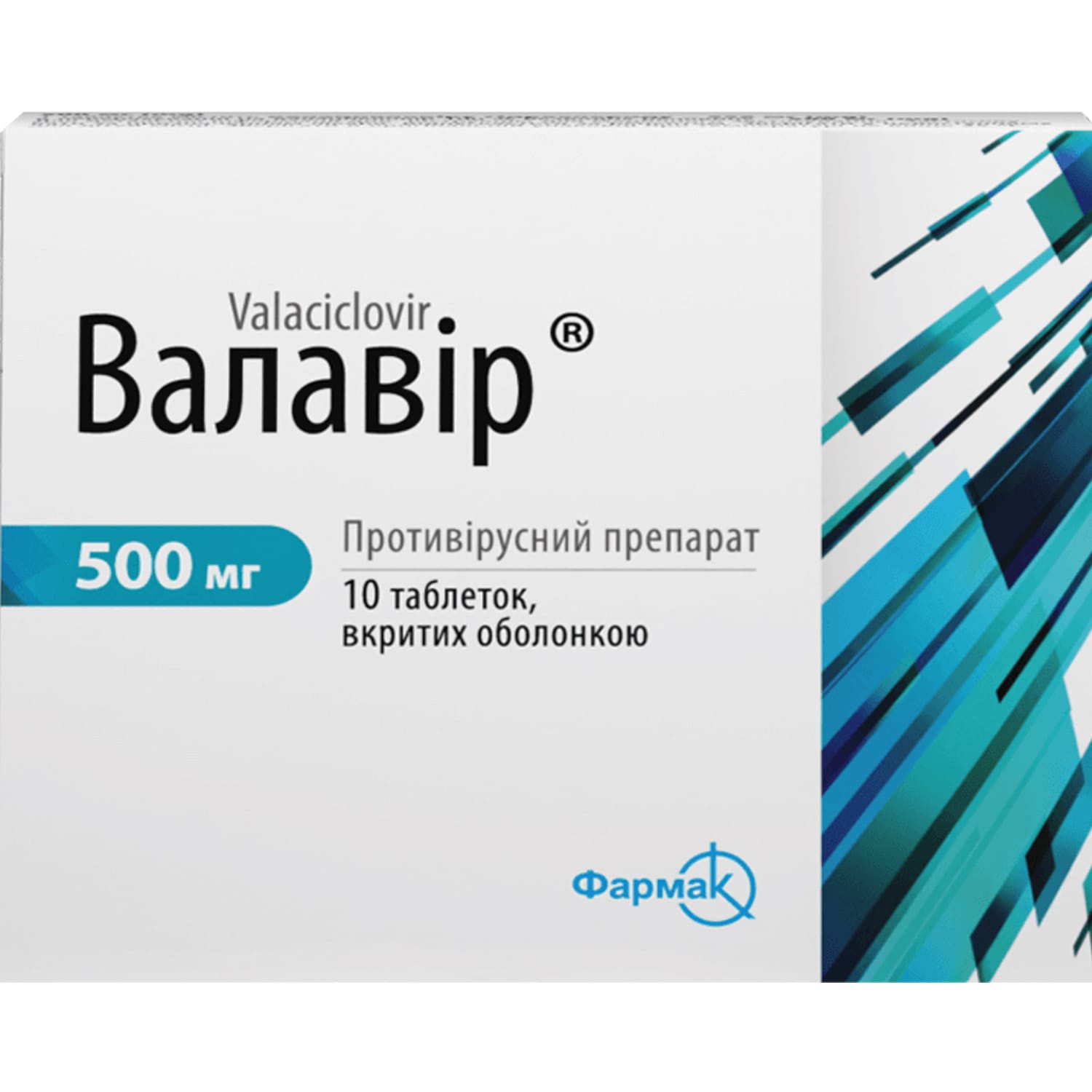
Please note: The product packaging may vary from the images shown. The contents, ingredients, and quality of the product remain unchanged.
Valavir film-coated tablets 500 mg blister 10 pcs.
$23.31
Free Worldwide Shipping
to: Australia, Canada, Czechia, Denmark, Estonia, Ireland, Israel, Italy, Japan, Lithuania, Mexico, Netherlands, Poland, Slovakia, South Korea, Switzerland, United Kingdom, United States and more
In stock
Valavir tablets treat herpes infections, including shingles and genital herpes, reduce recurrence risk, and help prevent CMV after transplantation.
Categories: Antimicrobials
Brand: Farmak
Payment
PayPal, Debit or Credit card, Google Pay, Apple Pay
Valavir tablets are indicated for:
- Treatment of herpes zoster.
- Treatment of infections of the skin and mucous membranes caused by the herpes simplex virus, including primary and recurrent genital herpes.
- Treatment of labial herpes (cold sores).
- Preventive treatment (suppression) of recurrences of skin and mucous membrane infections caused by the herpes simplex virus, including genital herpes.
- Reducing the transmission of genital herpes virus to a healthy partner when using Valavir as suppressive therapy in combination with safe sex.
- Prevention of cytomegalovirus infection and disease after organ transplantation.
Composition
Active ingredient: valaciclovir;
1 tablet contains valacyclovir hydrochloride 556 mg, equivalent to valacyclovir 100% anhydrous substance 500 mg;
Excipients: microcrystalline cellulose (101), povidone, colloidal anhydrous silica, crospovidone, magnesium stearate;
Shell composition: Sepifilm 050 (methylhydroxypropylcellulose, microcrystalline cellulose, acetylated (or ester acetates) mono- and diglycerides), candurin.
Contraindication
Valavir is contraindicated in patients with hypersensitivity to valacyclovir, acyclovir, or any component of the drug.
Method of application
Treatment of herpes zoster: adults should be prescribed 1000 mg (2 tablets) of Valavir 3 times a day for 7 days.
Treatment of infections caused by the herpes simplex virus. Patients with normal immunity (adults): 500 mg (1 tablet) of the drug 2 times a day.
Application features
Pregnant women
Can only be used when the potential benefit of treatment for the mother outweighs the possible risk to the fetus.
Children
It is used in children from 12 years of age to prevent cytomegalovirus infection and disease.
Drivers
With caution.
Overdose
Symptoms. Acute renal failure and neurological symptoms, including confusion, hallucinations, agitation, decreased mental capacity, and coma, have been reported with valaciclovir overdose. Nausea and vomiting may occur. Caution should be exercised to avoid accidental overdose. Many cases of overdose have been associated with the use of the drug in patients with renal insufficiency and in elderly patients in whom the dose was not reduced accordingly.
Treatment: Patients should be closely monitored for signs of toxicity. Hemodialysis significantly accelerates the removal of acyclovir from the blood and may therefore be considered the optimal treatment for symptomatic overdose.
Side effects
Among the more serious adverse reactions were reports of thrombotic thrombocytopenic purpura/hemolytic uremic syndrome, acute renal failure, and neurological disorders.
Interaction
No clinically significant forms of interaction were identified.
Patients receiving higher doses of Valavir (4 g or more per day) should be careful when co-administering drugs that compete with acyclovir for excretion routes, as this may lead to an increase in the plasma levels of one or both drugs and their metabolites. When used simultaneously with mycophenolate mofetil (an immunosuppressive drug used after organ transplantation), the plasma levels of acyclovir and the inactive metabolite of mycophenolate mofetil increase.
Caution should also be exercised (with monitoring of changes in renal function) when simultaneously prescribing high doses of Valavir (4 g or more) and other drugs that affect renal function (e.g. cyclosporine, tacrolimus).
Storage conditions
Store in the original packaging at a temperature not exceeding 25 °C.
Keep out of reach of children.
Shelf life – 3 years.
Be the first to review “Valavir film-coated tablets 500 mg blister 10 pcs.” Cancel reply
You may also like

Reviews
There are no reviews yet.