
No products in the cart.
We deliver to:
🇦🇺 Australia
🇨🇦 Canada
🇨🇿 Czechia
🇩🇰 Denmark
🇪🇪 Estonia
🇮🇪 Ireland
🇮🇱 Israel
🇮🇹 Italy
🇯🇵 Japan
🇱🇹 Lithuania🇲🇽 Mexico
🇳🇱 Netherlands🇵🇱 Poland
🇸🇰 Slovakia
🇰🇷 South Korea
🇨🇭 Switzerland
🇬🇧 United Kingdom
🇺🇸 United States of America
and more
We deliver to:
🇦🇺 Australia
🇨🇦 Canada
🇨🇿 Czechia
🇩🇰 Denmark
🇪🇪 Estonia
🇮🇪 Ireland
🇮🇱 Israel
🇮🇹 Italy
🇯🇵 Japan
🇱🇹 Lithuania🇲🇽 Mexico
🇳🇱 Netherlands🇵🇱 Poland
🇸🇰 Slovakia
🇰🇷 South Korea
🇨🇭 Switzerland
🇬🇧 United Kingdom
🇺🇸 United States of America
and more
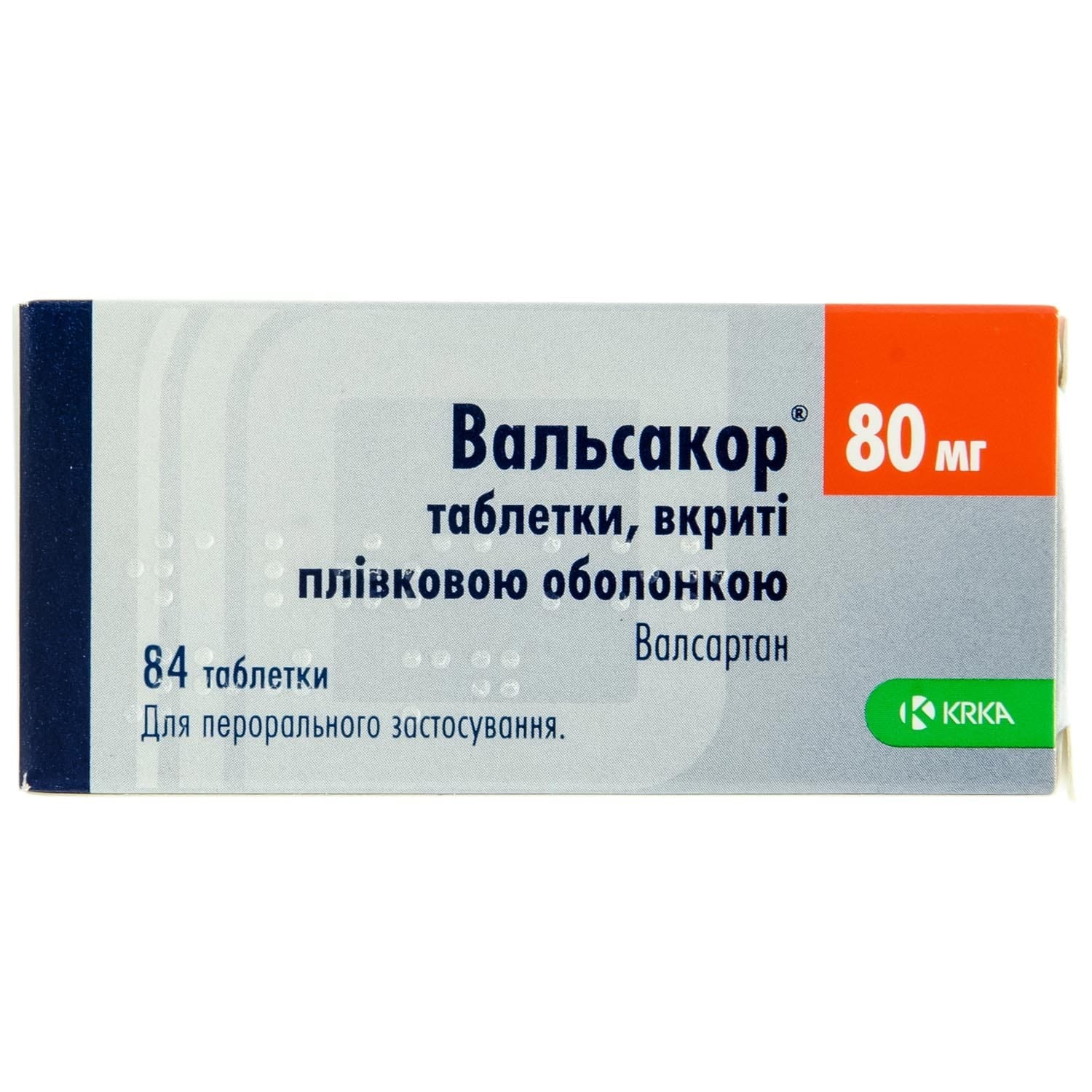
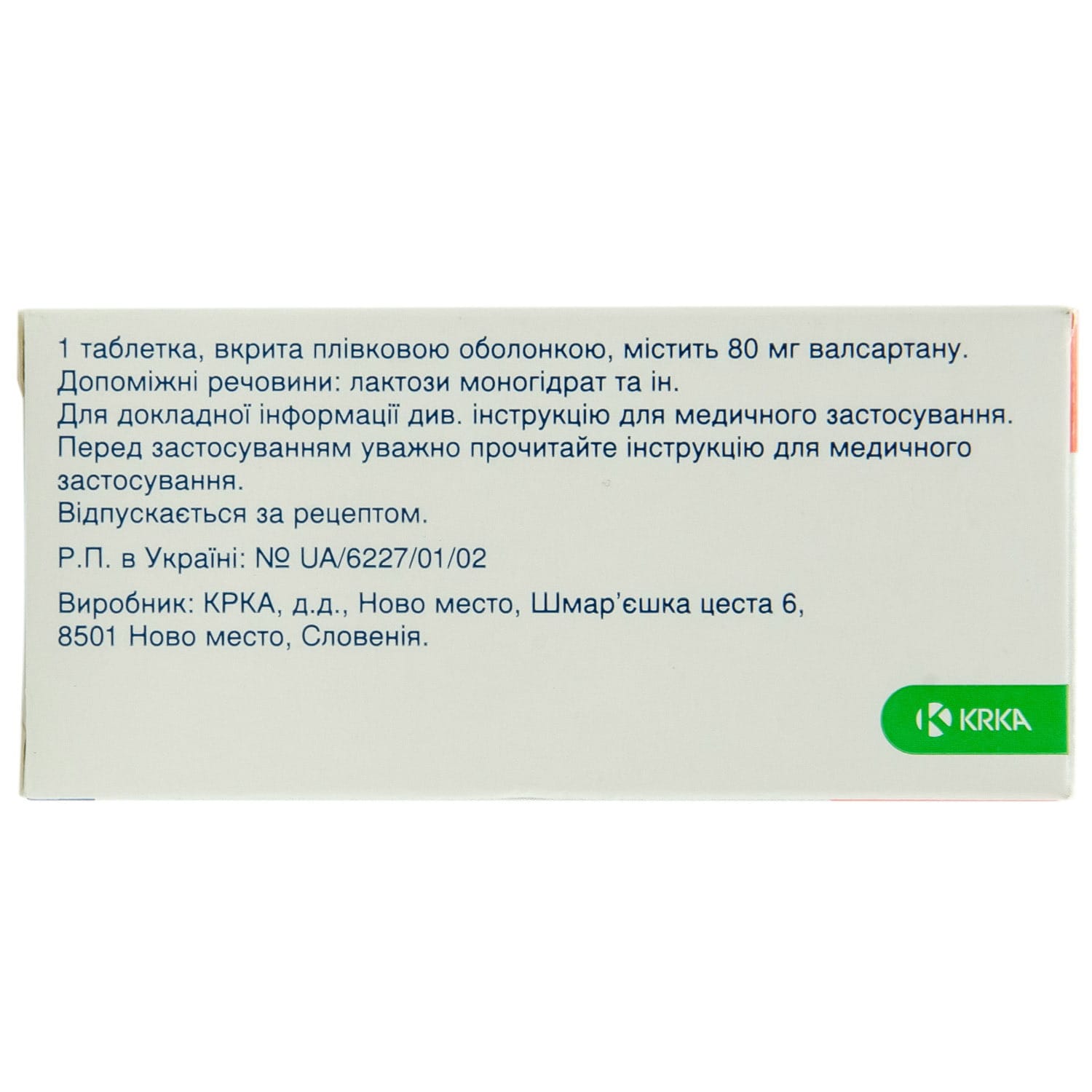
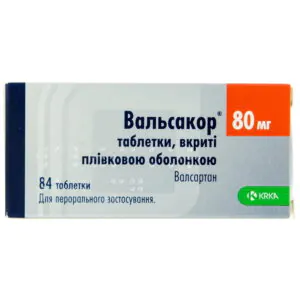
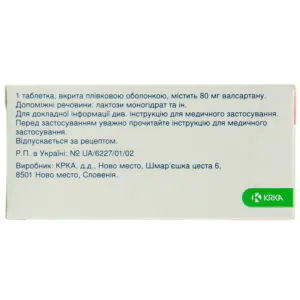
Please note: The product packaging may vary from the images shown. The contents, ingredients, and quality of the product remain unchanged.
Valsacor film-coated tablets 80 mg 84 pcs.
$39.01
Free Worldwide Shipping
to: Australia, Canada, Czechia, Denmark, Estonia, Ireland, Israel, Italy, Japan, Lithuania, Mexico, Netherlands, Poland, Slovakia, South Korea, Switzerland, United Kingdom, United States and more
In stock
Valsacor 80 mg tablets treat hypertension, heart failure and post-MI conditions, lowering blood pressure effectively with valsartan once daily.
Categories: Heart and blood vessels
Brand: KRKA
Payment
PayPal, Debit or Credit card, Google Pay, Apple Pay
Valsacor tablets are indicated for:
- Arterial hypertension (80 mg, 160 mg and 320 mg tablets).
- Treatment of arterial hypertension in adults and children over 6 years of age.
- Arterial hypertension (40 mg tablets).
- Treatment of arterial hypertension in children from 6 years of age.
- Post-infarction condition (tablets 40 mg, 80 mg and 160 mg).
- Treatment of clinically stable patients with symptomatic heart failure or asymptomatic left ventricular systolic dysfunction after a recent myocardial infarction.
- Heart failure (40 mg, 80 mg and 160 mg tablets).
- Treatment of symptomatic heart failure when ACE inhibitors (ACEIs) cannot be used, or as add-on therapy to ACE inhibitors when β-blockers cannot be used.
Composition
Active ingredient: 1 film-coated tablet contains 40 mg or 80 mg, 160 mg, or 320 mg of valsartan;
Excipients: lactose, microcrystalline cellulose, povidone, croscarmellose sodium, colloidal silicon dioxide, magnesium stearate, hypromellose, titanium dioxide (E 171), macrogol 4000, iron oxide yellow (E 172) – available on film-coated tablets of 40 mg, 160 mg and 320 mg, iron oxide red (E 172) – available on film-coated tablets of 80 mg, 160 mg and 320 mg.
Contraindication
Hypersensitivity to the active substance or to any of the components of the drug, severe liver dysfunction, biliary cirrhosis and cholestasis, pregnant women or women planning to become pregnant; concomitant use of angiotensin receptor antagonists, including valsartan, or ACE inhibitors with aliskiren in patients with diabetes mellitus or impaired renal function.
Method of application
Valsacor should be taken regardless of meals, with water.
Application features
Pregnant women
Contraindicated.
Children
Valsartan should be used to treat arterial hypertension in children aged 6 years and older.
Drivers
As with other antihypertensive agents, caution should be exercised when driving or operating machinery due to possible dizziness or weakness.
Overdose
Symptoms: Overdose with valsartan may result in severe hypotension, which may lead to depression of consciousness, vascular collapse and/or shock.
Treatment. Therapeutic measures depend on the time of administration and the type and severity of symptoms. The most important thing is to stabilize the circulatory status. In case of hypotension, the patient should be placed in the supine position and blood volume should be corrected.
It is unlikely that the drug can be removed by hemodialysis.
Side effects
In patients with arterial hypertension, the overall incidence of adverse reactions is consistent with the pharmacology of valsartan. The incidence of adverse reactions was not related to dose or duration of treatment and was independent of gender, age or race.
Interaction
When taking angiotensin II antagonists concomitantly with NSAIDs, a weakening of the antihypertensive effect is possible. Moreover, concomitant administration of angiotensin II antagonists and non-steroidal anti-inflammatory drugs may lead to a deterioration in renal function and serum potassium levels. Therefore, it is recommended to monitor renal function at the beginning of treatment, as well as to ensure adequate fluid intake.
Storage conditions
Store at a temperature not exceeding 30 °C in the original packaging to protect from moisture.
Keep out of reach of children.
Shelf life – 5 years.
Be the first to review “Valsacor film-coated tablets 80 mg 84 pcs.” Cancel reply
You may also like

Reviews
There are no reviews yet.