No products in the cart.

Vitaprompt is a vitamin B12 (cyanocobalamin) anti-anemic agent for oral treatment of B12 deficiency and pernicious anemia after injections.

🇦🇺 Australia
🇨🇦 Canada
🇨🇿 Czechia
🇩🇰 Denmark
🇪🇪 Estonia
🇮🇪 Ireland
🇮🇱 Israel
🇮🇹 Italy
🇯🇵 Japan
🇱🇹 Lithuania🇲🇽 Mexico
🇳🇱 Netherlands🇵🇱 Poland
🇸🇰 Slovakia
🇰🇷 South Korea
🇨🇭 Switzerland
🇬🇧 United Kingdom
🇺🇸 United States of America
and more
🇦🇺 Australia
🇨🇦 Canada
🇨🇿 Czechia
🇩🇰 Denmark
🇪🇪 Estonia
🇮🇪 Ireland
🇮🇱 Israel
🇮🇹 Italy
🇯🇵 Japan
🇱🇹 Lithuania🇲🇽 Mexico
🇳🇱 Netherlands🇵🇱 Poland
🇸🇰 Slovakia
🇰🇷 South Korea
🇨🇭 Switzerland
🇬🇧 United Kingdom
🇺🇸 United States of America
and more
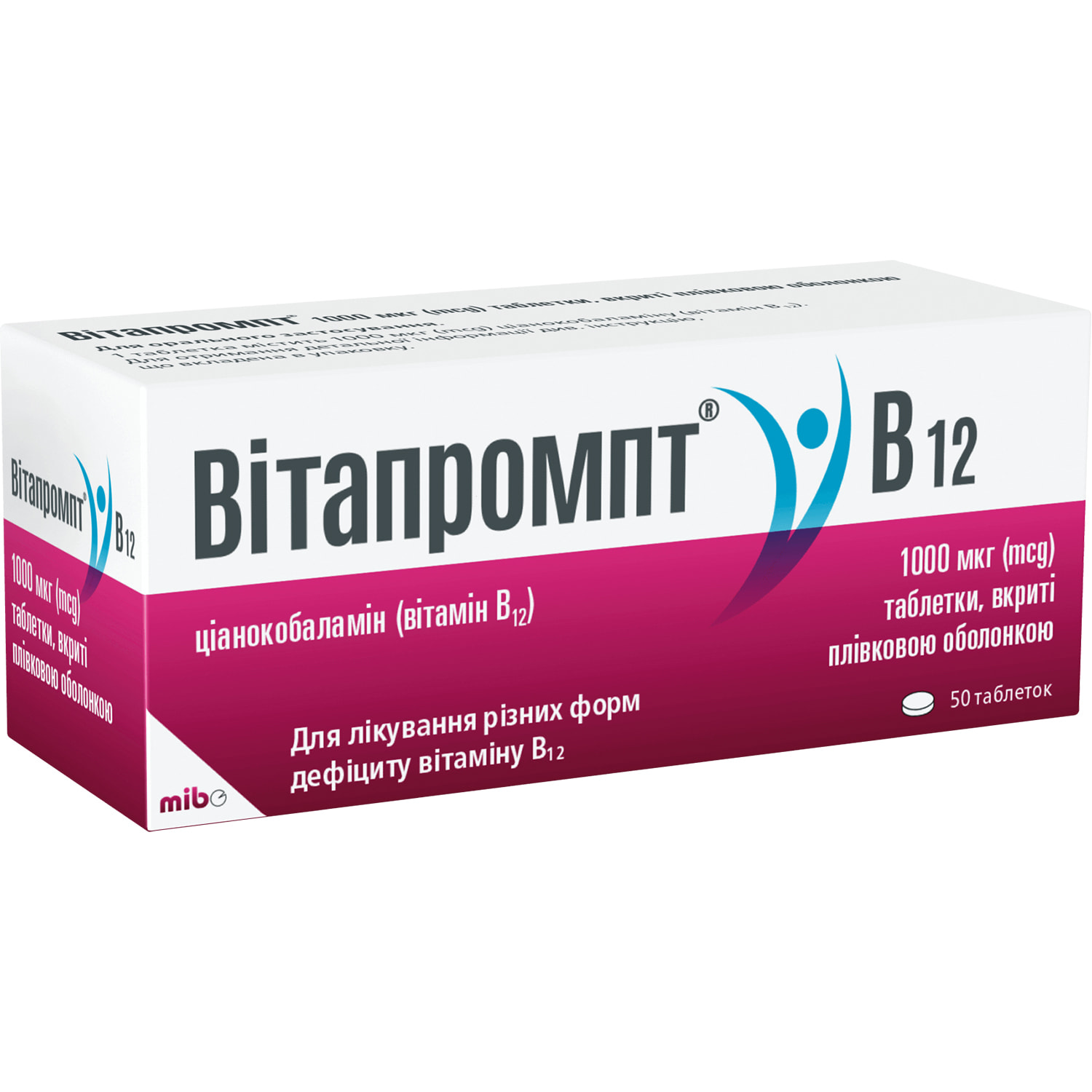
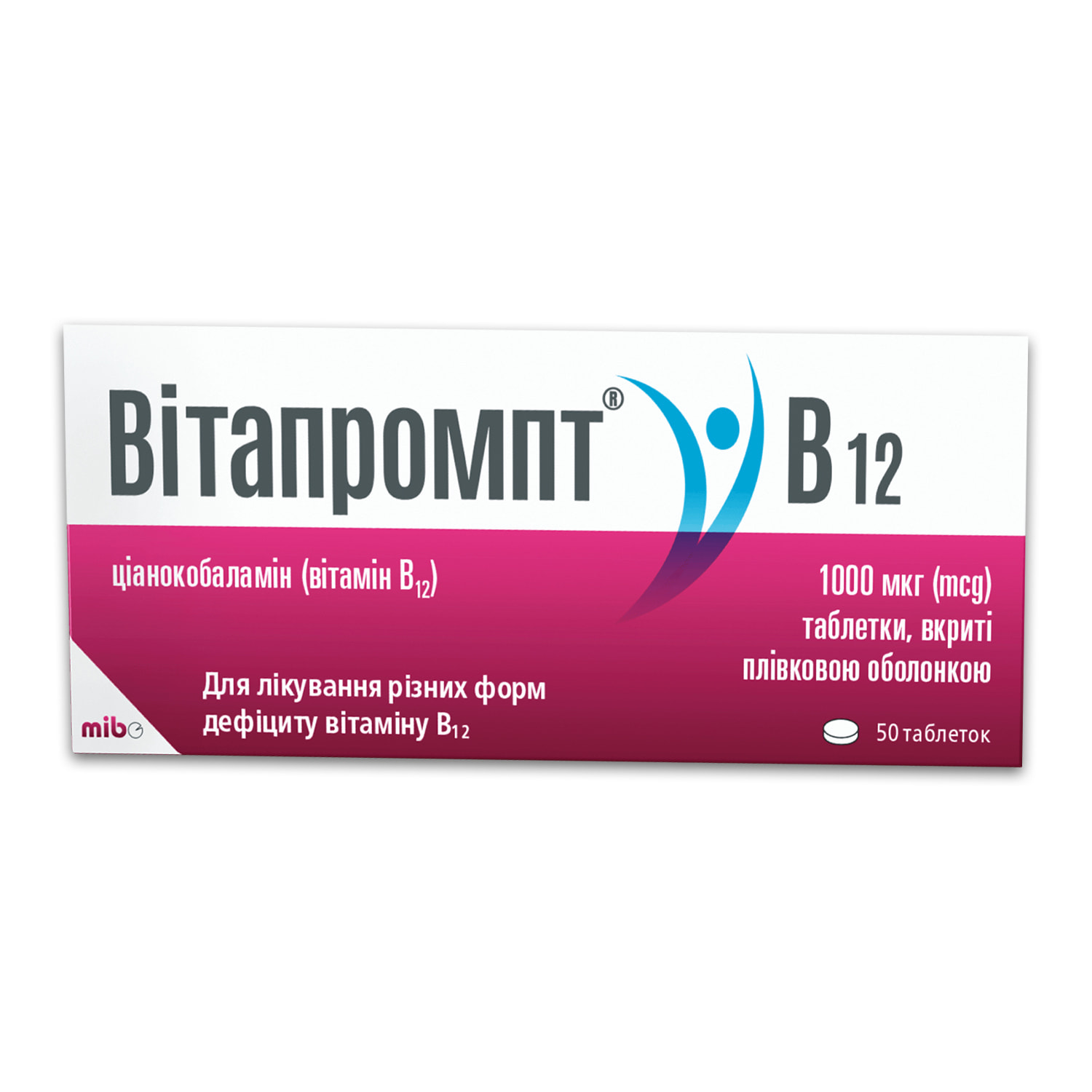
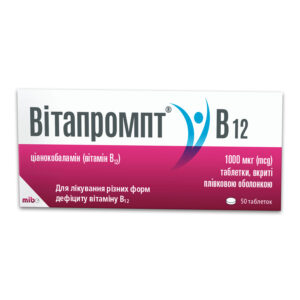
Please note: The product packaging may vary from the images shown. The contents, ingredients, and quality of the product remain unchanged.
$34.13
to: Australia, Canada, Czechia, Denmark, Estonia, Ireland, Israel, Italy, Japan, Lithuania, Mexico, Netherlands, Poland, Slovakia, South Korea, Switzerland, United Kingdom, United States and more
In stock
Vitaprompt is a vitamin B12 (cyanocobalamin) anti-anemic agent for oral treatment of B12 deficiency and pernicious anemia after injections.
PayPal, Debit or Credit card, Google Pay, Apple Pay
Vitaprompt – anti-anemic agent. Cyanocobalamin.
The drug Vitaprompt, tablets, is used for:
Note: Initial treatment for patients who need to quickly achieve normal vitamin B12 blood levels should be with vitamin B12 injections until remission is achieved.
active ingredient: cyanocobalamin;
Hypersensitivity to the active substance or to any of the excipients of the medicinal product.
Vitaprompt should not be used to treat megaloblastic anemia caused solely by folic acid deficiency.
Acute thromboembolic diseases. Angina pectoris, exertion of high functional class.
Vitaprompt should not be used in patients requiring cyanide detoxification (e.g. patients with retrobulbar neuritis in pernicious anemia). In such cases, other cobalamin derivatives should be used.
Patients with vitamin B12 deficiency at risk of developing Leber’s optic atrophy should not use cyanocobalamin to treat vitamin B12 deficiency.
Vitaprompt should not be used in patients with tobacco or alcohol-induced amblyopia.
On the part of the immune system – allergic reactions, including skin manifestations and angioedema; anaphylactic shock.
On the part of the skin and subcutaneous tissue – severe hypersensitivity reactions, which may manifest as urticaria, rash or itching over large areas of the body, acne-like skin reactions and blisters.
On the blood side – hypercoagulation.
General disorders – anaphylactic reactions, fever, nausea, sweating, purine metabolism disorders; unknown: malaise, fever.
Adults
1 tablet per day.
If rapid normalization of vitamin B12-related biomarkers is required, it should be administered parenterally first.
Duration of treatment
Provided that it is well tolerated, there is no limit to the duration of use. Oral vitamin B12 is usually prescribed for life, provided that adequate absorption of the vitamin from the intestine has been demonstrated, or as long as vitamin B12 deficiency persists. In the case of pernicious anemia, replacement therapy is mandatory for life. The response to treatment should be monitored regularly.
Vitaprompt tablets are taken orally, preferably on an empty stomach, with water.
The use of Vitaprompt tablets is not recommended during pregnancy and breastfeeding.
Vitaprompt should not be used in children (under 18 years of age) as there is insufficient clinical data and the dose is inappropriate for use in children at a dose of 1 mg.
Unknown. No relevant data available.
The likelihood of acute toxicity is low.
Overdose usually does not cause any symptoms, and symptomatic treatment of overdose is only required in exceptional cases.
Vitamin B12 absorption may be impaired by concomitant use with proton pump inhibitors (e.g. omeprazole), H2-histamine receptor blockers (e.g. cimetidine), kanamycin, neomycin, polymyxins, tetracyclines, aminosalicylic acid, colchicine, antiepileptic drugs, potassium preparations, aminoglycosides (e.g. neomycin) and cholestyramine.
Serum vitamin B12 levels may decrease in patients taking metformin.
Chloramphenicol may reduce the effect of vitamin B12 in anemia.
Prolonged exposure to nitrous oxide (laughing gas; N2O) can cause functional vitamin B12 deficiency and potentially serious neurological adverse reactions.
Second-generation antipsychotics (such as olanzapine and risperidone) are also substances with a known potential to decrease serum vitamin B12 levels.
Glucocorticoids, such as prednisone, increase vitamin B12 absorption in patients with pernicious anemia.
Store in the original packaging at a temperature not exceeding 30 ºC. Keep out of the reach of children.

UApothecary combines medicine search, online ordering, and pharmaceutical consultations. We provide up-to-date information about medications, updating data several times a day. We collaborate with doctors, pharmacists, and medical organizations to offer professional support. We guarantee the quality of medicines and convenient worldwide delivery. Our mission is to make quality medicines accessible to everyone.
This site is protected by reCAPTCHA and the Google
Privacy Policy and
Terms of Service apply.