
🇦🇺 Australia
🇧🇪 Belgium
🇨🇦 Canada
🇨🇿 Czechia
🇩🇰 Denmark
🇪🇪 Estonia
🇫🇮 Finland
🇬🇷 Greece
🇭🇺 Hungary
🇮🇪 Ireland
🇮🇱 Israel
🇮🇹 Italy
🇯🇵 Japan
🇰🇼 Kuwait
🇱🇻 Latvia
🇱🇹 Lithuania
🇲🇽 Mexico
🇲🇩 Moldova
🇳🇱 Netherlands
🇳🇴 Norway
🇵🇱 Poland
🇷🇴 Romania
🇸🇰 Slovakia
🇰🇷 South Korea
🇨🇭 Switzerland
🇬🇧 United Kingdom
🇺🇸 United States of America
and more
🇦🇺 Australia
🇧🇪 Belgium
🇨🇦 Canada
🇨🇿 Czechia
🇩🇰 Denmark
🇪🇪 Estonia
🇫🇮 Finland
🇬🇷 Greece
🇭🇺 Hungary
🇮🇪 Ireland
🇮🇱 Israel
🇮🇹 Italy
🇯🇵 Japan
🇰🇼 Kuwait
🇱🇻 Latvia
🇱🇹 Lithuania
🇲🇽 Mexico
🇲🇩 Moldova
🇳🇱 Netherlands
🇳🇴 Norway
🇵🇱 Poland
🇷🇴 Romania
🇸🇰 Slovakia
🇰🇷 South Korea
🇨🇭 Switzerland
🇬🇧 United Kingdom
🇺🇸 United States of America
and more


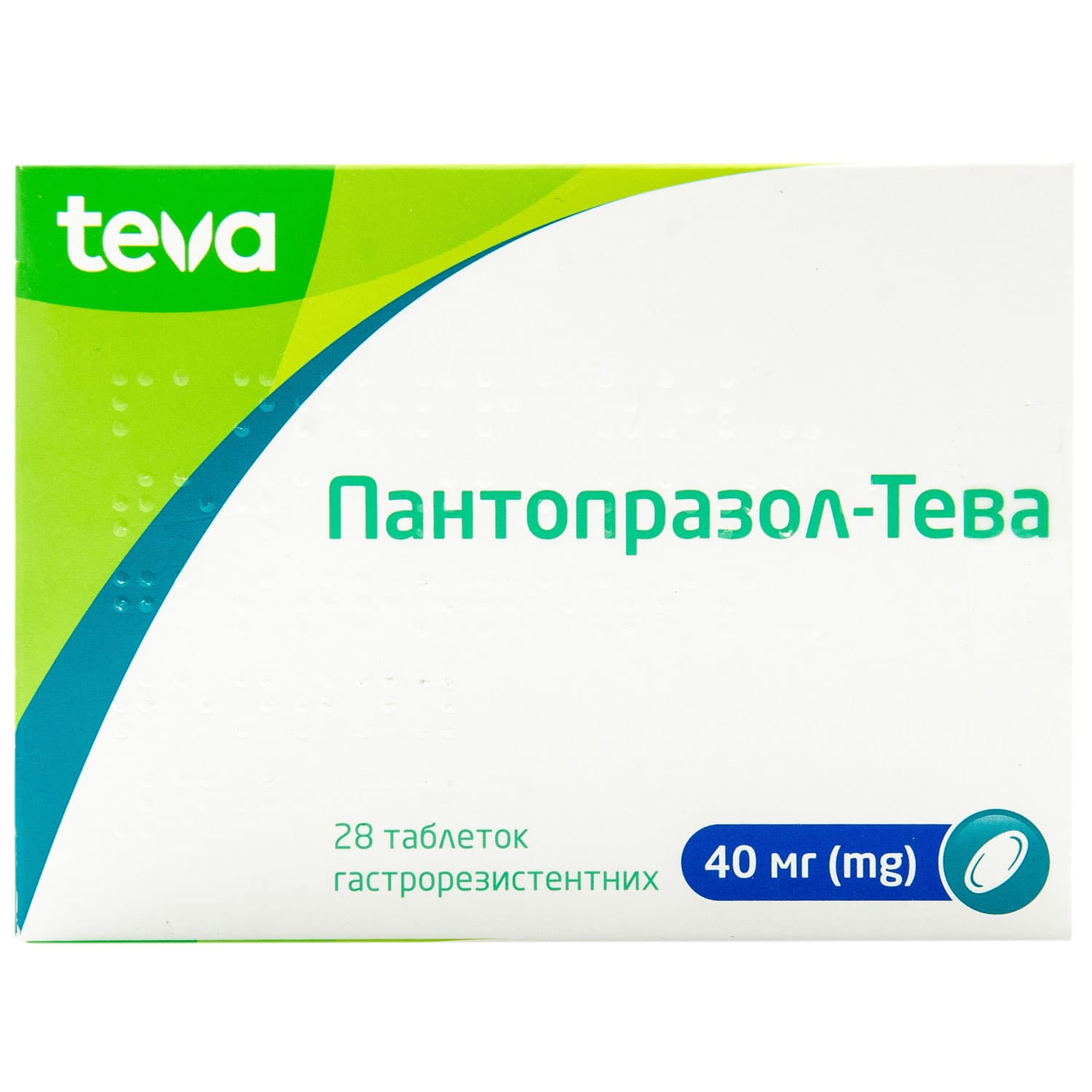
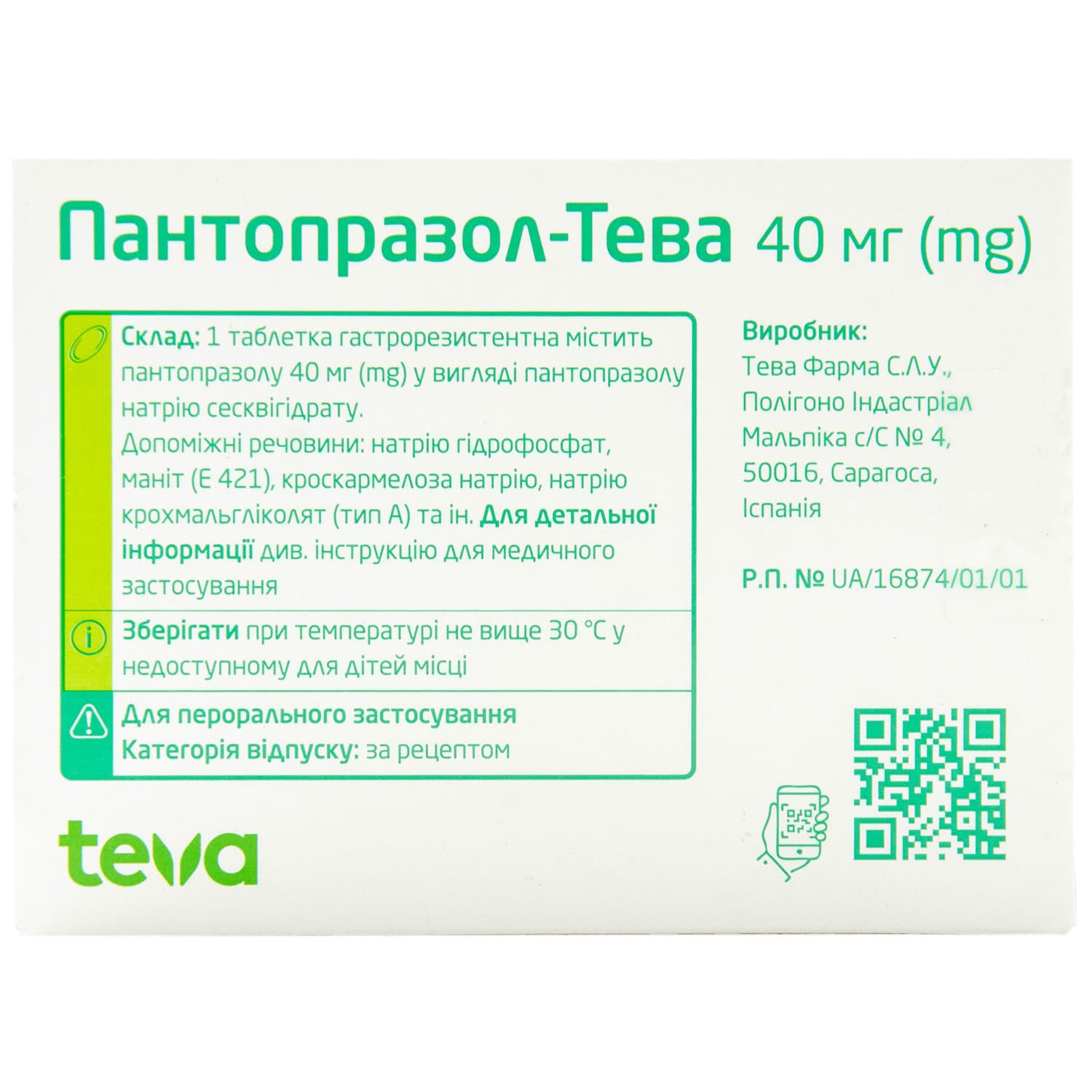


Pantoprazole Teva gastro-resistant tablets of 40 mg, pack of 28 pcs
$25.79
Free Worldwide Shipping
to: Australia, Belgium, Canada, Czechia, Denmark, Estonia, Finland, Greece, Hungary, Ireland, Israel, Italy, Japan, Kuwait, Latvia, Lithuania, Mexico, Moldova, Netherlands, Norway, Poland, Romania, Slovakia, South Korea, Switzerland, United Kingdom, United States and more
🏖️ Hello! We are on vacation!
We are still accepting orders on our website; however, order processing and shipping will resume after September 10. If you place an order during our vacation, we will contact you and remind you about the temporary shipping delay. Starting September 10, all orders received during this period will be processed and shipped in the order they were placed. If your order contains a product with less than one year remaining before its expiration date, we will notify you after September 10 and proceed according to your instructions. If you decide to cancel an order placed during our vacation, simply contact us through the contact form on our website, and we will be happy to assist you. Thank you for your understanding, and we apologize for any inconvenience caused.
In stock
Pantoprazole Teva 40 mg gastro-resistant tablets for reflux esophagitis, ulcers and H. pylori therapy. Dosage, instructions online for adults
Payment
PayPal, Debit or Credit card, Google Pay, Apple Pay
Orders Temporarily Unavailable
Due to temporary postal service disruptions, we are currently unable to accept orders.
Pantoprazole Teva gastro-resistant tablets are used for the indications listed below.
Adults and children over 12 years of age: reflux esophagitis.
adults:
- eradication of Helicobacter pylori (H. pylori) in patients with H. pylori-associated gastric and duodenal ulcers in combination with appropriate antibiotics;
- duodenal ulcer;
- stomach ulcer;
- Zollinger-Ellison syndrome and other hypersecretory pathological conditions.
Composition
The active substance is pantoprazole (one gastro-resistant tablet contains 40 mg of pantoprazole in the form of pantoprazole sodium sesquihydrate).
Excipients: sodium hydrogen phosphate, talc (E 421), microcrystalline cellulose, croscarmellose sodium, magnesium stearate, hypromellose, triethyl citrate, sodium starch glycolate (type A), methacrylic acid – ethyl acrylate copolymer (1: 1), iron oxide yellow (E172).
Contraindication
Hypersensitivity to pantoprazole, benzimidazole derivatives or to any component of the drug.
Method of application
Pantoprazole-Teva gastro-resistant tablets should be taken 1 hour before meals whole, without chewing or crushing, with sufficient water.
Adults and children over 12 years old
Treatment of reflux esophagitis. The recommended dose is one tablet of the drug “Pantoprazole Teva” 40 mg per day. In some cases, the dose can be doubled (two tablets of the drug “Pantoprazole Teva” 40 mg per day), especially if there is no effect from the use of other drugs for the treatment of reflux esophagitis. The treatment of reflux esophagitis usually takes 4 weeks. If this is not enough, healing can be expected within the next 4 weeks.
Adults
Eradication of H. pylori in combination with two antibiotics. In patients with gastric and duodenal ulcers and positive for H. pylori, eradication of the organism should be achieved with combination therapy. Local data on bacterial resistance and national guidelines for the use and prescription of appropriate antibacterial agents should be taken into account. Depending on susceptibility, the following therapeutic combinations may be prescribed for the eradication of H. pylori in adults:
- one tablet of “Pantoprazole Teva” 40 mg 2 times a day:
- + 1000 mg of amoxicillin 2 times a day
- + 500 mg of clarithromycin 2 times a day;
- one tablet of “Pantoprazole Teva” 40 mg 2 times a day:
- + 400-500 mg metronidazole (or 500 mg tinidazole) 2 times a day
- + 250-500 mg of clarithromycin 2 times a day;
- one tablet of “Pantoprazole Teva” 40 mg 2 times a day:
- + 1000 mg of amoxicillin 2 times a day
- + 400-500 mg of metronidazole (or 500 mg of tinidazole) 2 times a day.
When using combination therapy for eradication of H. pylori, the second tablet of the drug “Pantoprazole Teva” 40 mg should be taken in the evening 1 hour before a meal. The treatment period is 7 days and can be extended for another 7 days with a total duration of treatment of no more than 2 weeks. If further treatment with pantoprazole is indicated to ensure healing of the ulcer, the dosage recommendations for gastric and duodenal ulcers should be considered. If combination therapy is not indicated, for example, in patients with a negative result for H. pylori, for monotherapy the drug “Pantoprazole Teva” 40 mg is used in the dosage indicated below.
Treatment of stomach ulcers. One tablet of the drug “Pantoprazole-Teva” 40 mg per day. In some cases, the dose can be doubled (two tablets of the drug “Pantoprazole Teva” 40 mg per day), especially if there is no effect from the use of other drugs. Treatment of stomach ulcers usually takes 4 weeks. If this is not enough, healing of the ulcer can be expected within the next 4 weeks.
Treatment of duodenal ulcers. One tablet of the drug “Pantoprazole Teva” 40 mg per day. In some cases, the dose can be doubled (two tablets of the drug “Pantoprazole Teva” 40 mg per day), especially if there is no effect from the use of other drugs. Treatment of duodenal ulcers usually takes two weeks. If this is not enough, healing of the ulcer can be expected within the next 2 weeks.
Treatment of Zollinger-Ellison syndrome and other hypersecretory pathological conditions. For long-term treatment of Zollinger-Ellison syndrome and other pathological hypersecretory conditions, the initial daily dose is 80 mg (two tablets of the drug “Pantoprazole Teva” 40 mg). If necessary, the dose can then be titrated, increasing or decreasing depending on the acidity of the gastric juice. A dose exceeding 80 mg per day should be divided into two doses. A temporary increase in the dose to more than 160 mg of pantoprazole is possible, but the duration of use should be limited only to the period necessary for adequate acidity control. The duration of treatment of Zollinger-Ellison syndrome and other pathological conditions is not limited and depends on clinical need.
Application features
Pregnant women
Experience with the use of pantoprazole in pregnant women is limited. Pantoprazole should be used during pregnancy only if clearly needed.
Animal studies have shown excretion of pantoprazole in breast milk. There is evidence of excretion of pantoprazole in breast milk. A decision on whether to continue/discontinue breast-feeding or to continue/discontinue therapy with pantoprazole should be made taking into account the benefit of breast-feeding for the child and the benefit of therapy for the woman.
Children
The drug is not recommended for use in children under 12 years of age, as data on the safety and efficacy of the drug for this age group are limited.
Drivers
It is necessary to take into account the possible development of adverse reactions, such as dizziness and visual disturbances. In such cases, one should not drive or operate complex mechanisms.
Overdose
Symptoms of overdose are unknown. Doses up to 240 mg administered intravenously over 2 minutes have been well tolerated. Since pantoprazole is extensively protein bound, it is not a drug that can be readily dialyzed.
In case of overdose with clinical signs of intoxication, symptomatic and supportive therapy is used. There are no specific therapy recommendations.
Side effects
Adverse reactions can be expected to occur in approximately 5% of patients. The most common adverse reactions are diarrhea and headache, occurring in 1% of patients.
Storage conditions
Store at a temperature not exceeding 30 °C, out of the reach of children.
Shelf life – 3 years.
You may also like

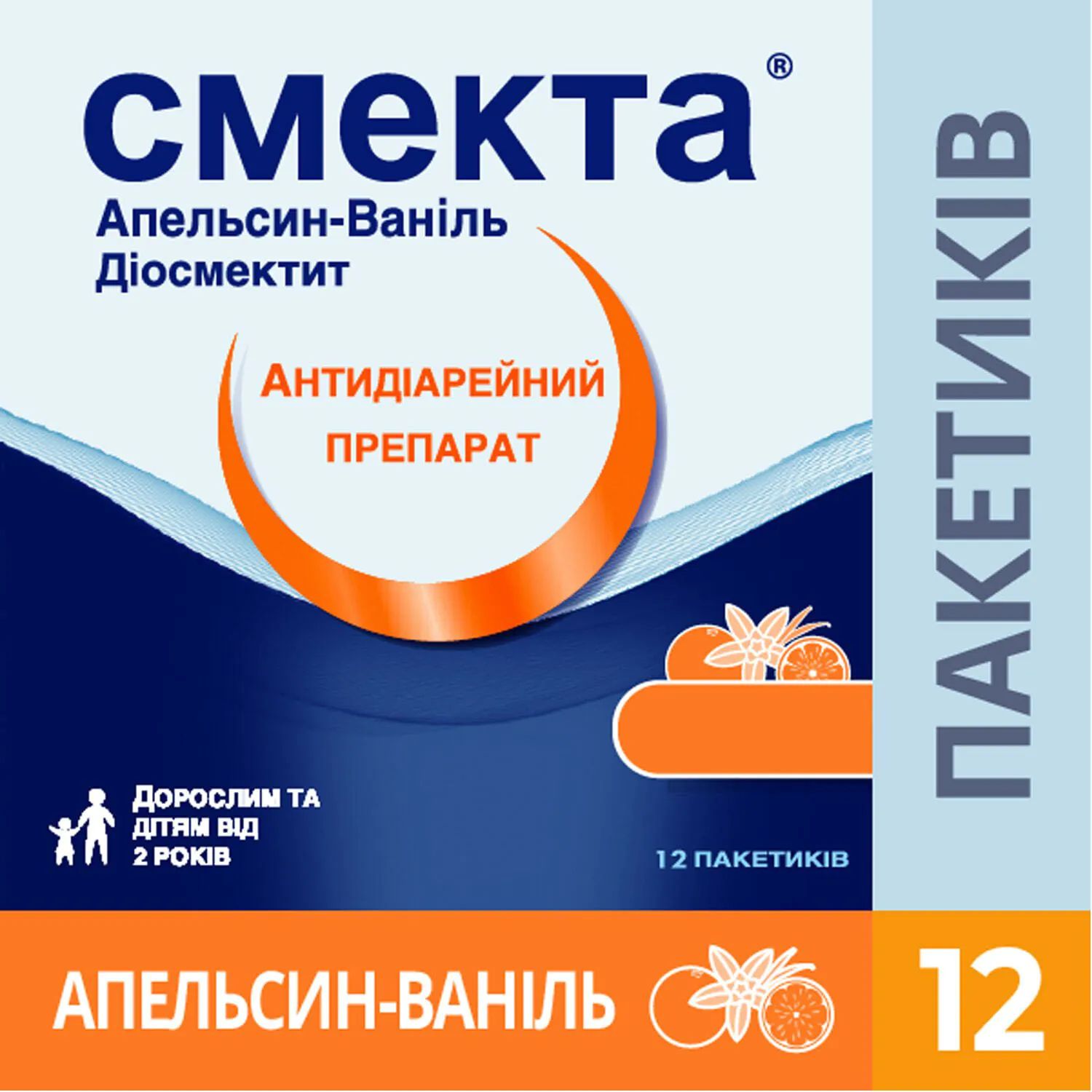
Smecta Orange-Vanilla powder for oral suspension in sachets of 3 g, 12 pcs

Reviews
There are no reviews yet.