
🇦🇺 Australia
🇧🇪 Belgium
🇨🇦 Canada
🇨🇿 Czechia
🇩🇰 Denmark
🇪🇪 Estonia
🇫🇮 Finland
🇬🇷 Greece
🇭🇺 Hungary
🇮🇪 Ireland
🇮🇱 Israel
🇮🇹 Italy
🇯🇵 Japan
🇰🇼 Kuwait
🇱🇻 Latvia
🇱🇹 Lithuania
🇲🇽 Mexico
🇲🇩 Moldova
🇳🇱 Netherlands
🇳🇴 Norway
🇵🇱 Poland
🇷🇴 Romania
🇸🇰 Slovakia
🇰🇷 South Korea
🇨🇭 Switzerland
🇬🇧 United Kingdom
🇺🇸 United States of America
and more
🇦🇺 Australia
🇧🇪 Belgium
🇨🇦 Canada
🇨🇿 Czechia
🇩🇰 Denmark
🇪🇪 Estonia
🇫🇮 Finland
🇬🇷 Greece
🇭🇺 Hungary
🇮🇪 Ireland
🇮🇱 Israel
🇮🇹 Italy
🇯🇵 Japan
🇰🇼 Kuwait
🇱🇻 Latvia
🇱🇹 Lithuania
🇲🇽 Mexico
🇲🇩 Moldova
🇳🇱 Netherlands
🇳🇴 Norway
🇵🇱 Poland
🇷🇴 Romania
🇸🇰 Slovakia
🇰🇷 South Korea
🇨🇭 Switzerland
🇬🇧 United Kingdom
🇺🇸 United States of America
and more


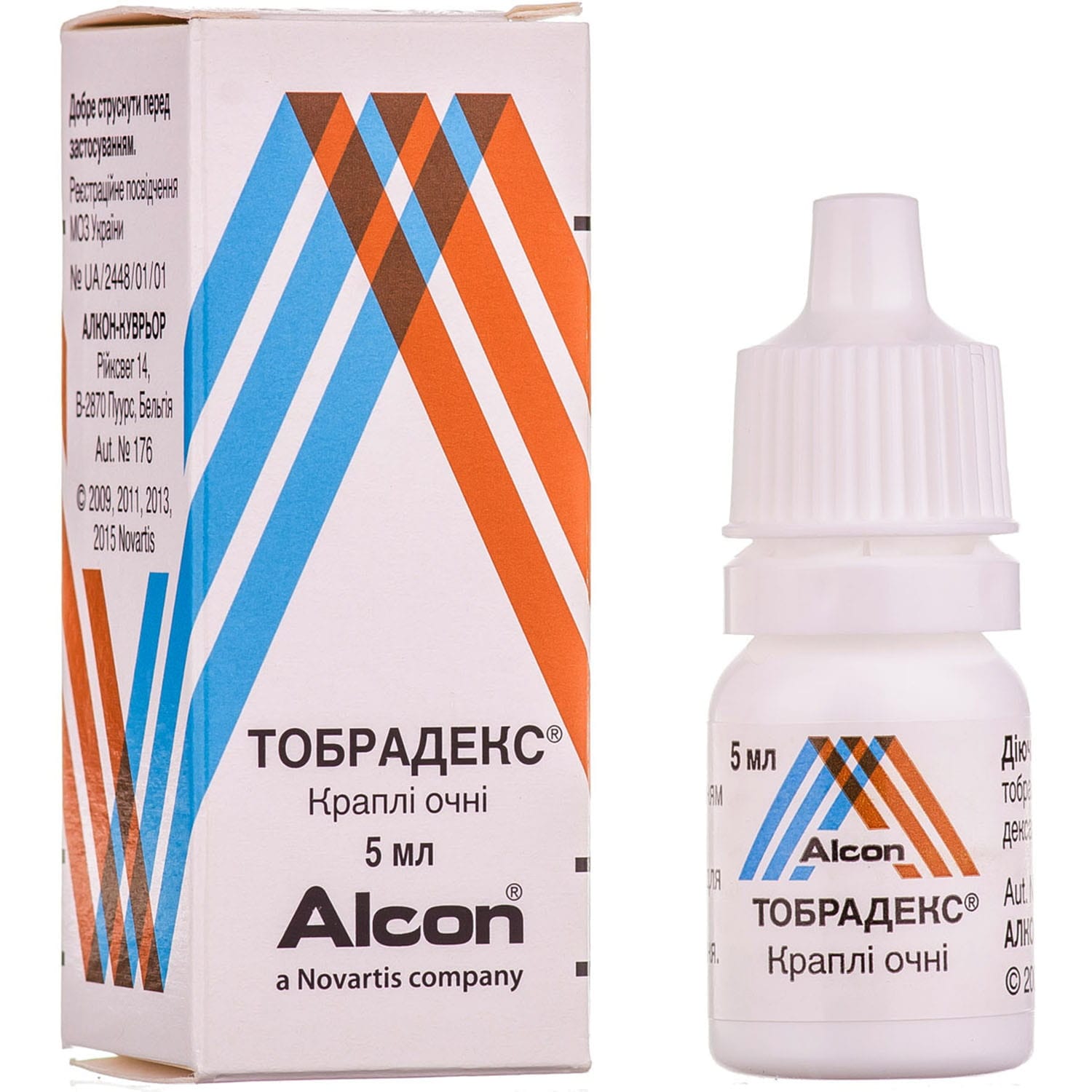
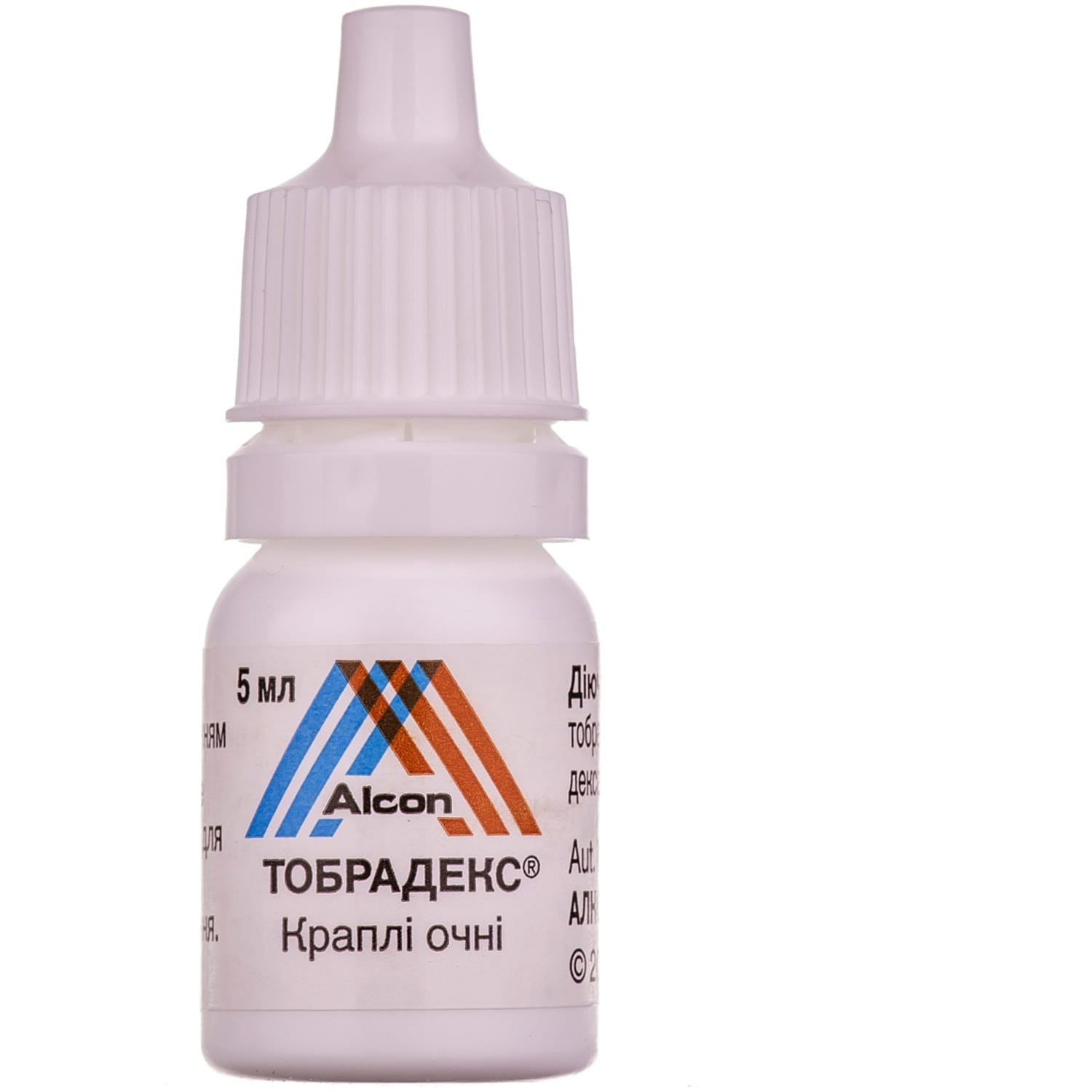
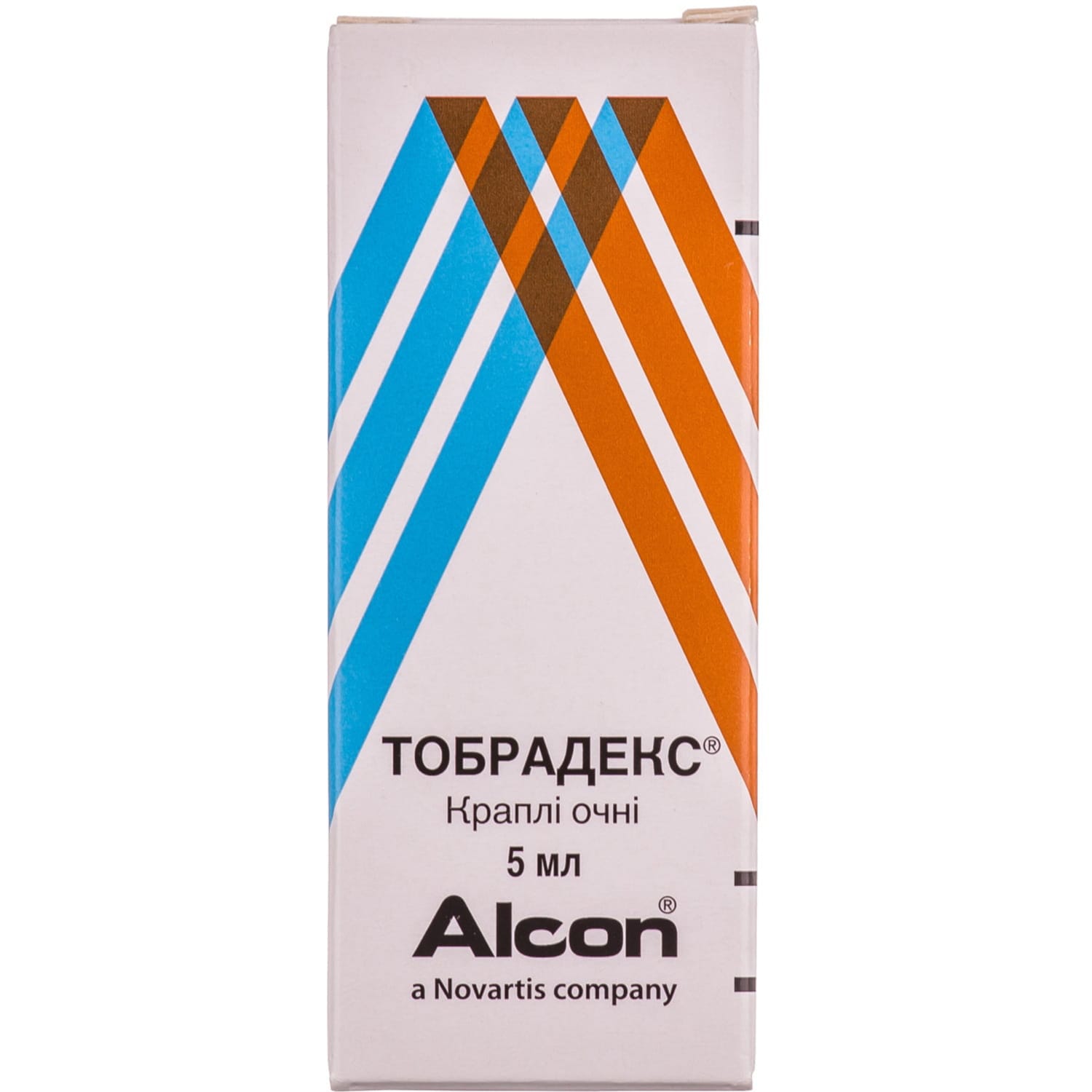


Tobradex eye drops suspension dropper bottle 5 ml
$20.87
Free Worldwide Shipping
to: Australia, Belgium, Canada, Czechia, Denmark, Estonia, Finland, Greece, Hungary, Ireland, Israel, Italy, Japan, Kuwait, Latvia, Lithuania, Mexico, Moldova, Netherlands, Norway, Poland, Romania, Slovakia, South Korea, Switzerland, United Kingdom, United States and more
🏖️ Hello! We are on vacation!
We are still accepting orders on our website; however, order processing and shipping will resume after September 10. If you place an order during our vacation, we will contact you and remind you about the temporary shipping delay. Starting September 10, all orders received during this period will be processed and shipped in the order they were placed. If your order contains a product with less than one year remaining before its expiration date, we will notify you after September 10 and proceed according to your instructions. If you decide to cancel an order placed during our vacation, simply contact us through the contact form on our website, and we will be happy to assist you. Thank you for your understanding, and we apologize for any inconvenience caused.
In stock
Tobradex eye drops with tobramycin and dexamethasone help treat eye inflammation and bacterial infection risk after surgery or injury for care
Payment
PayPal, Debit or Credit card, Google Pay, Apple Pay
Orders Temporarily Unavailable
Due to temporary postal service disruptions, we are currently unable to accept orders.
Tobradex eye drops are used for eye inflammation in steroid-sensitive patients who are indicated for the use of corticosteroids and have a superficial bacterial infection or are at risk of developing a bacterial infection of the eye. These inflammatory processes may occur after surgery or may be caused by infection, foreign body in the eye, or ocular trauma.
Composition
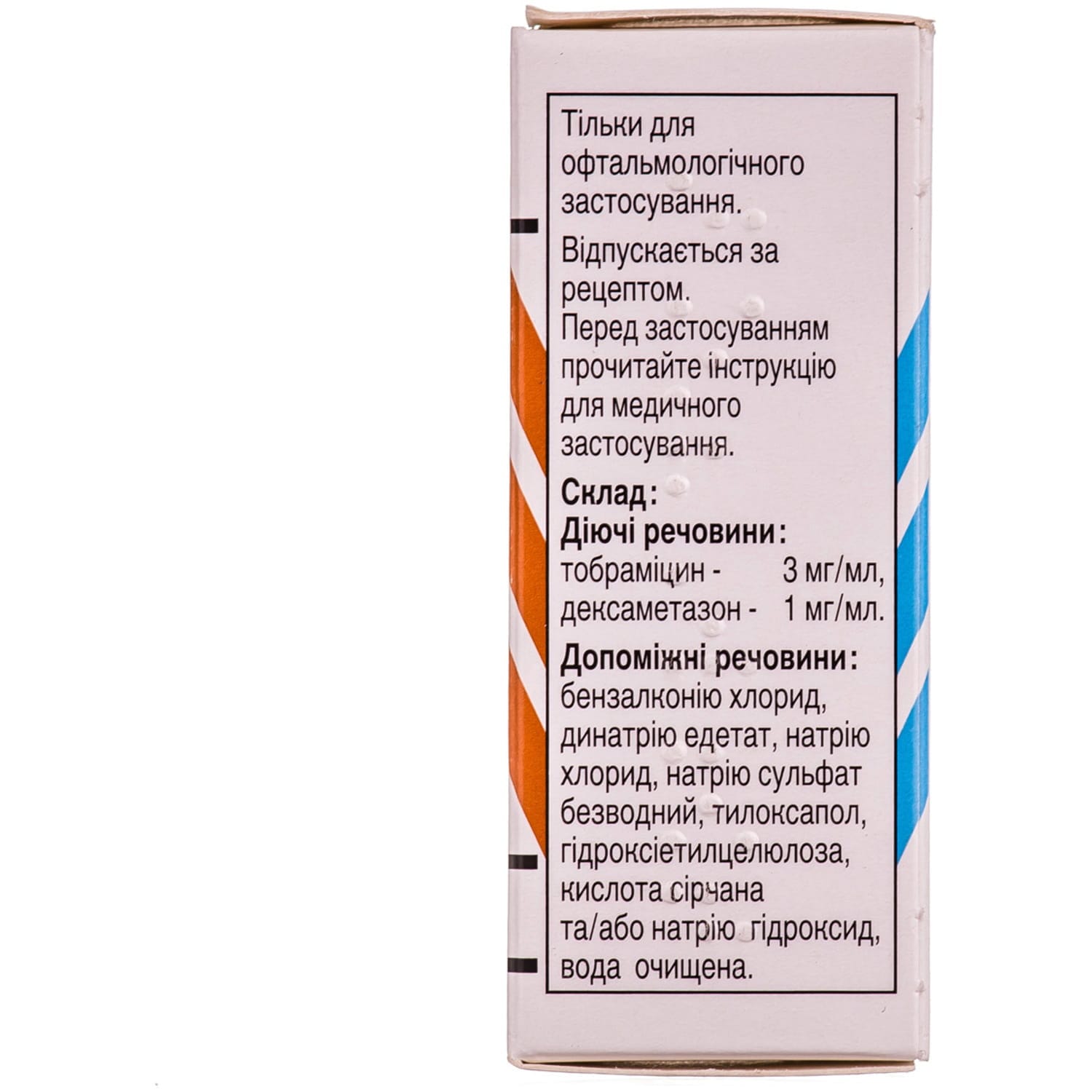
1 ml of suspension contains (active ingredients):
- tobramycin – 3 mg;
- dexamethasone – 1 mg.
Excipients: benzalkonium chloride, disodium edetate, sodium chloride, sodium sulfate anhydrous, tyloxapol, hydroxyethylcellulose, sulfuric acid and/or sodium hydroxide, purified water.
Contraindication
- hypersensitivity to the active substances or to any component of the drug;
- hypersensitivity to aminoglycosides;
- keratitis caused by the herpes simplex virus;
- cowpox, chickenpox and other viral infections of the cornea and conjunctiva;
- fungal diseases of the structures of the eye or untreated parasitic infections of the eye;
- mycobacterial infections of the eye;
- infection or injury limited to the superficial corneal epithelium;
- The drug should not be used after uncomplicated removal of a foreign body from the cornea.
Method of application
For ophthalmic use.
Adults, including elderly patients, children aged 12 to 18 years
One or two drops should be instilled into the conjunctival sac(s) every 4-6 hours. During the first 24-48 hours, the dose may be increased to one or two drops every 2 hours. The frequency of use should be gradually reduced as clinical signs improve. Care should be taken not to discontinue therapy prematurely.
In severe cases, instill one or two drops every hour until the inflammation is controlled, and gradually reduce the frequency of application to one or two drops every 2 hours for 3 days; then instill 1-2 drops every 4 hours for 5-8 days, and finally 1-2 drops daily for the last 5-8 days, if necessary.
After cataract surgery, the dose is one drop 4 times a day, starting on the day of surgery and continuing for 24 days. Treatment can be started the day before surgery with one drop 4 times a day, continuing with one drop after surgery, and then 4 times a day for 23 days. If necessary, the frequency of use of the drug can be increased to one drop every 2 hours during the first two days of therapy.
It is recommended to constantly monitor intraocular pressure.
It is recommended to press on the nasolacrimal opening and gently close the eyelids after instillation. This reduces the systemic absorption of drugs administered into the eye, which reduces the likelihood of systemic side effects.
Method of use
The bottle should be shaken well before use.
To prevent contamination of the dropper tip and the contents of the bottle, care must be taken not to touch the eyelids or other surfaces with the dropper tip.
Application features
Pregnant women
The use of Tobradex during pregnancy is not recommended.
Tobramycin is excreted in breast milk after systemic administration. There are no data on the excretion of dexamethasone in breast milk. It is not known whether tobramycin and dexamethasone are excreted in breast milk after topical ophthalmic administration. Since many drugs are excreted in human milk, consideration should be given to temporarily discontinuing breastfeeding while receiving Tobradex.
Clinical data to evaluate the effects of dexamethasone on male or female reproductive function are limited.
Children
The data obtained confirm the safety and efficacy of the drug in children aged 2 years and older who were treated with the drug for 7 days for the treatment of superficial bacterial eye inflammation. It is possible to use it in children who need to undergo cataract surgery. The safety and efficacy of use in children under 2 years of age have not been established.
Drivers
Tobradex eye drops have no or negligible influence on the ability to drive or use machines. Temporary blurred vision or other visual disturbances may affect the ability to drive or use machines. If blurred vision occurs during instillation, the patient should wait until the vision clears before driving or using machines.
Overdose
Given the characteristics of this drug, intended for topical use, no toxic effect is expected either when used in ophthalmology at the recommended doses or in the event of accidental ingestion of the contents of the bottle. Possible clinical signs and symptoms of drug overdose (punctate keratitis, erythema, increased lacrimation, eyelid edema and itching) may be similar to the side effects observed in some patients.
In case of overdose with the drug “Tobradex” when applied topically, wash the excess drug from the eye(s) with warm water.
Side effects
In clinical trials, the most common adverse reactions were eye pain, increased intraocular pressure, eye irritation, and eye itching, which occurred in less than 1% of patients.
Storage conditions
Store the bottle in an upright position at a temperature not exceeding 25 °C, out of the reach of children. Keep the bottle tightly closed. Do not freeze.
Shelf life – 2 years (after opening the bottle – 1 month).
You may also like

Reviews
There are no reviews yet.