
🇦🇺 Australia
🇧🇪 Belgium
🇨🇦 Canada
🇨🇿 Czechia
🇩🇰 Denmark
🇪🇪 Estonia
🇫🇮 Finland
🇬🇷 Greece
🇭🇺 Hungary
🇮🇪 Ireland
🇮🇱 Israel
🇮🇹 Italy
🇯🇵 Japan
🇰🇼 Kuwait
🇱🇻 Latvia
🇱🇹 Lithuania
🇲🇽 Mexico
🇲🇩 Moldova
🇳🇱 Netherlands
🇳🇴 Norway
🇵🇱 Poland
🇷🇴 Romania
🇸🇰 Slovakia
🇰🇷 South Korea
🇨🇭 Switzerland
🇬🇧 United Kingdom
🇺🇸 United States of America
and more
🇦🇺 Australia
🇧🇪 Belgium
🇨🇦 Canada
🇨🇿 Czechia
🇩🇰 Denmark
🇪🇪 Estonia
🇫🇮 Finland
🇬🇷 Greece
🇭🇺 Hungary
🇮🇪 Ireland
🇮🇱 Israel
🇮🇹 Italy
🇯🇵 Japan
🇰🇼 Kuwait
🇱🇻 Latvia
🇱🇹 Lithuania
🇲🇽 Mexico
🇲🇩 Moldova
🇳🇱 Netherlands
🇳🇴 Norway
🇵🇱 Poland
🇷🇴 Romania
🇸🇰 Slovakia
🇰🇷 South Korea
🇨🇭 Switzerland
🇬🇧 United Kingdom
🇺🇸 United States of America
and more


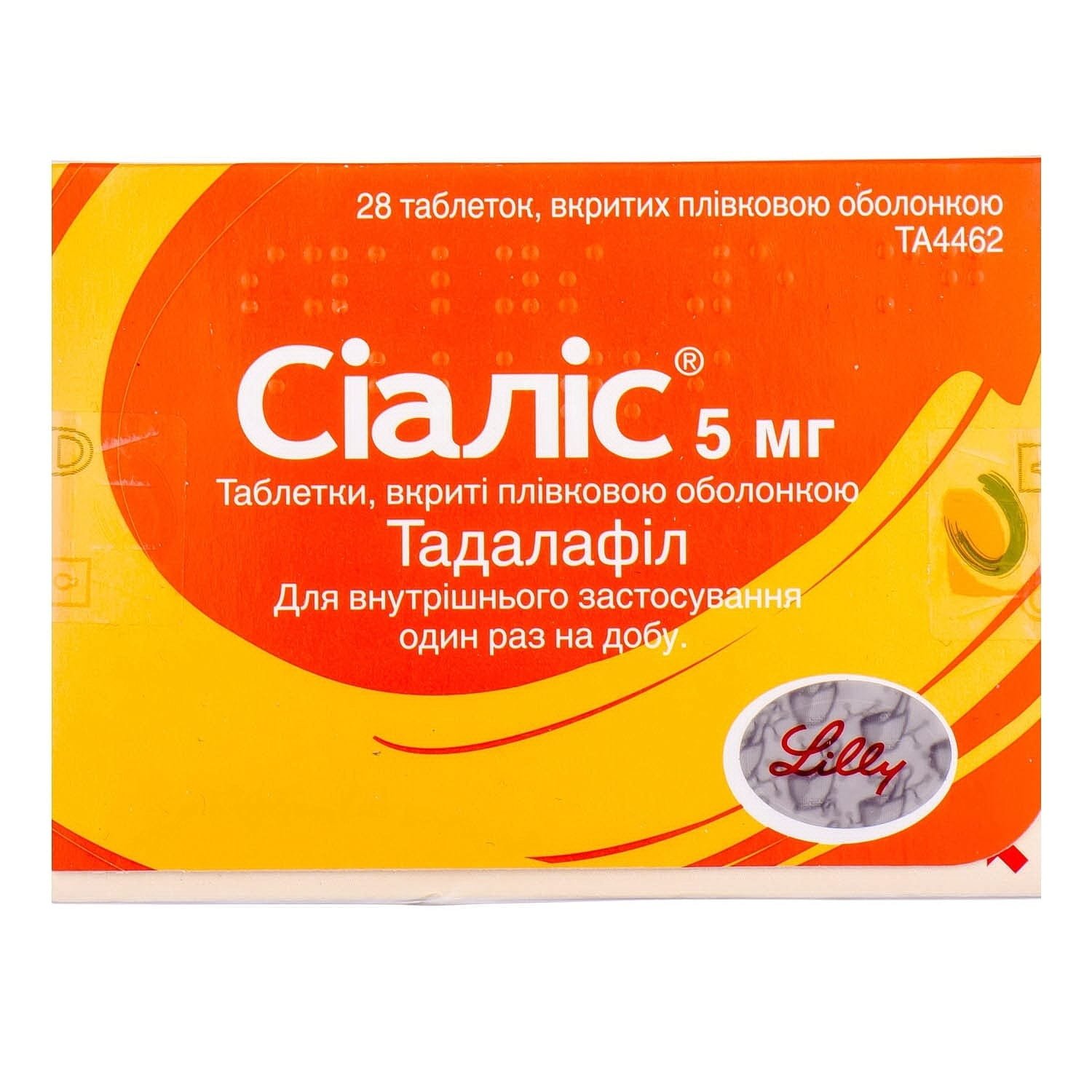


Cialis film-coated tablets 5 mg 28 pcs.
$244.22
Free Worldwide Shipping
to: Australia, Belgium, Canada, Czechia, Denmark, Estonia, Finland, Greece, Hungary, Ireland, Israel, Italy, Japan, Kuwait, Latvia, Lithuania, Mexico, Moldova, Netherlands, Norway, Poland, Romania, Slovakia, South Korea, Switzerland, United Kingdom, United States and more
🏖️ Hello! We are on vacation!
We are still accepting orders on our website; however, order processing and shipping will resume after September 10. If you place an order during our vacation, we will contact you and remind you about the temporary shipping delay. Starting September 10, all orders received during this period will be processed and shipped in the order they were placed. If your order contains a product with less than one year remaining before its expiration date, we will notify you after September 10 and proceed according to your instructions. If you decide to cancel an order placed during our vacation, simply contact us through the contact form on our website, and we will be happy to assist you. Thank you for your understanding, and we apologize for any inconvenience caused.
In stock
Cialis (tadalafil) treats erectile dysfunction in adult men with sexual stimulation. Available in 5-20 mg doses for on-demand or daily use.
Payment
PayPal, Debit or Credit card, Google Pay, Apple Pay
Orders Temporarily Unavailable
Due to temporary postal service disruptions, we are currently unable to accept orders.
Pharmacological properties
The active substance of Cialis – tadalafil – is a reversible selective inhibitor of specific phosphodiesterase type 5 (PDE-5) cGMP. When sexual stimulation causes local release of nitric oxide, inhibition of PDE-5 by tadalafil leads to an increase in the level of cGMP in the cavernous body of the penis. The result is relaxation of the smooth muscles of the arteries and blood flow to the tissues of the penis, which causes an erection. Tadalafil does not work in the absence of sexual stimulation.
In vitro studies have shown that tadalafil is a selective inhibitor of phosphodiesterase-5. PDE5 is an enzyme found in smooth muscle of the corpus cavernosum and vessels of internal organs, in skeletal muscle, platelets, kidneys, lungs and cerebellum. The effect of tadalafil on PDE-5 is 10,000 times greater than its effect on other types of phosphodiesterase (PDE-1, PDE-2, PDE-4 and PDE-7). Tadalafil is 10,000 times more active in blocking PDE5 than PDE3 – an enzyme found in the heart and blood vessels. This selectivity for PDE5 compared to PDE3 is important, since PDE3 is an enzyme involved in the contraction of the heart muscle. In addition, tadalafil is approximately 700 times more potent at PDE5 than at PDE6, an enzyme found in the retina responsible for phototransduction. Tadalafil is also 9000 times more potent at PDE5 than at PDE8, PDE9, and PDE10, and 14 times more potent at PDE11.
The tissue distribution and physiological effects of PDE-8 and PDE-11 have not been determined.
Tadalafil does not affect color perception (blue/green), which is explained by its low affinity for PDE-6 compared to PDE5. In addition, tadalafil has no effect on visual acuity, electroretinogram, intraocular pressure, and pupil size.
For 2.5 mg, 5 mg tablets: Changes in color perception were rarely (0.1%) reported in all studies.
Three clinical studies were conducted with 1504 patients to determine the onset of effect of Cialis, which demonstrated statistically confirmed improvement in erectile function. Cialis is effective for 36 hours. The effect is manifested as early as 16 minutes after taking the dose in the presence of sexual arousal.
Tadalafil in healthy subjects does not cause a significant change in systolic and diastolic blood pressure compared with placebo in the supine position (mean maximum decrease is 1.6 / 0.8 mm Hg) and in the standing position (mean maximum decrease is 0.2 / 4.6 mm Hg). Tadalafil does not cause a significant change in heart rate. Significant changes were observed in patients who also took nitrates.
A placebo-controlled study of the effect of tadalafil on spermatogenesis for 6 months did not reveal a clinically significant effect of the drug on sperm characteristics (sperm count, motility and structure). For tablets of 2.5 mg, 5 mg: tadalafil did not affect the level of testosterone, LH and FSH in the blood.
Tadalafil 2.5 mg and 5 mg once daily were evaluated in 3 clinical trials involving 853 patients of various ages (21 to 82 years) and ethnicities with erectile dysfunction of varying severity (mild, moderate, severe) and etiology. Most patients were previously taking phosphodiesterase-5 inhibitors as needed. In the 2 primary efficacy trials, the success rate was 57 and 67% for Cialis 5 mg, 50% for Cialis 2.5 mg compared with 31 and 37% for placebo. In studies in patients with erectile dysfunction secondary to diabetes, the success rate was 41 and 46% for Cialis 5 mg and 2.5 mg, respectively, compared with 28% for placebo.
Pharmacokinetics. Absorption. After oral administration, tadalafil is rapidly absorbed. The average C max in blood plasma is reached on average 2 hours after oral administration.
The rate and extent of absorption of tadalafil is independent of food intake, so the drug can be taken regardless of meals. The time of administration (morning or evening) does not significantly affect the rate and extent of absorption.
Distribution: The average volume of distribution is about 63 L. At therapeutic concentrations, 94% of tadalafil is bound to plasma proteins.
In healthy individuals, 0.0005% of the administered dose is detected in semen.
Metabolism. Tadalafil is primarily metabolized by the cytochrome P450 isoenzyme CYP 3A4. The major circulating metabolite is methylcatechol glucuronide. This metabolite is 13,000 times less active against PDE5 than tadalafil. Therefore, it can be assumed that this metabolite is not clinically significant at the concentrations given.
Excretion. In healthy individuals, the average T½ is 17.5 hours. Tadalafil is excreted mainly as inactive metabolites, mainly in the feces (about 61% of the dose) and to a lesser extent in the urine (about 36% of the dose).
2.5 mg and 5 mg tablets
The clearance of oral tadalafil is 2.5 l/h.
Tadalafil pharmacokinetics in healthy subjects are linearly proportional to time and dose. Increasing the dose from 2.5 mg to 20 mg, exposure (AUC) increases proportionally to dose. Steady-state plasma concentrations are achieved within 5 days after a single dose.
The pharmacokinetics of the drug are the same in patients with and without erectile dysfunction.
Special populations: Healthy elderly subjects (≥65 years) had lower oral tadalafil clearance, resulting in a 25% increase in AUC compared to healthy subjects aged 19-45 years. This difference is not clinically significant and does not require dose adjustment.
Renal impairment. For 2.5 mg and 5 mg tablets: In single dose studies of tadalafil (5-20 mg), tadalafil AUC exposure was approximately doubled in subjects with mild (creatinine clearance 51 to 80 mL/min) or moderate (creatinine clearance 31 to 50 mL/min) renal impairment, as well as in subjects with end-stage renal disease on dialysis.
For 20 mg tablets: In subjects with renal impairment, including patients undergoing hemodialysis, tadalafil AUC exposure was higher than in healthy subjects.
Hepatic impairment: Tadalafil exposure (AUC) in patients with mild to moderate hepatic impairment is comparable to that in healthy subjects. There are no data on the pharmacokinetics of tadalafil in severe hepatic impairment.
In diabetic patients, tadalafil exposure (AUC) was approximately 19% lower than the AUC in healthy subjects. This difference in exposure does not require dose adjustment.
Indication
Treatment of erectile dysfunction. The drug is effective in the presence of sexual stimulation.
Application
To be taken by adults (men) orally, regardless of meals.
2.5 mg and 5 mg tablets
The drug should be taken at least 30 minutes before anticipated sexual activity.
The effectiveness of tadalafil can persist for 36 hours after taking the drug.
Adult men: the usual recommended dose is 10 mg. In patients in whom tadalafil at a dose of 10 mg does not give an adequate effect, it is advisable to use 20 mg. The maximum recommended frequency of administration is 1 time per day.
Tadalafil 10 mg and 20 mg are intended for use prior to anticipated sexual activity and are not recommended for continuous daily use.
For patients who plan to use Cialis frequently (at least twice a week), a daily regimen of a lower dose may be appropriate, based on patient choice and physician decision.
For daily use, the recommended dose is 5 mg/day at approximately the same time. The dose may be reduced to 2.5 mg once daily depending on individual tolerability.
The appropriateness of prolonged daily use should be reassessed periodically.
Elderly patients: No dosage adjustment is required.
Patients with renal impairment. No dosage adjustment is required in patients with mild or moderate renal impairment. For patients with severe renal impairment, the maximum recommended dose is 10 mg; daily use is not recommended.
Patients with impaired liver function. The recommended dose of Cialis is 10 mg, which should be taken before the intended sexual activity, regardless of food intake. Clinical data on the safety of Cialis in patients with severe hepatic insufficiency (Child-Pugh class C) are limited, so the physician should carefully and individually assess the benefits / risks of therapy. Data on the use of tadalafil at a dose above 10 mg in patients with liver damage are absent. Taking a single dose 1 time per day has not been evaluated in patients with impaired liver function, so the physician should carefully and individually assess the benefits / risks of this therapy.
Patients with diabetes: no dosage adjustment is required.
20 mg tablets
The recommended dose is 20 mg before anticipated sexual activity. The drug can be taken 16 minutes before sexual activity. The effectiveness of tadalafil can last up to 36 hours after taking a dose.
The maximum recommended frequency of administration is once a day.
Elderly patients: No dosage adjustment is required.
Patients with renal impairment. No dosage adjustment is required in patients with mild or moderate renal impairment. For patients with severe renal impairment, the maximum recommended dose is 10 mg; daily use is not recommended.
Patients with impaired liver function. The recommended dose of Cialis is 10 mg, which should be taken before anticipated sexual activity, regardless of food intake. Clinical data on the safety of Cialis in patients with severe hepatic impairment (Child-Pugh class C) are limited, so the physician should carefully and individually assess the benefits/risks of therapy. There are no data on the use of tadalafil in doses above 10 mg in patients with impaired liver function.
Contraindication
Hypersensitivity to tadalafil or to other components of the drug; simultaneous use of organic nitrates in any dosage form.
The drug is not used in men with heart disease for whom sexual activity is contraindicated. Physicians should consider the potential cardiac risk of sexual activity for patients with cardiovascular disease.
The following groups of patients with cardiovascular diseases were not included in clinical trials, therefore the use of tadalafil in them is contraindicated:
- patients with myocardial infarction within the last 90 days;
- patients with unstable angina or angina occurring during sexual intercourse;
- patients with heart failure corresponding to NYHA class II or higher within the last 6 months;
- patients with uncontrolled arrhythmias, hypotension (90/50 mm Hg) or uncontrolled hypertension;
- patients after a stroke that occurred within the last 6 months.
The drug is contraindicated in patients with loss of vision in one eye as a result of non-arterial anterior ischemic optic neuropathy (NAPION), regardless of whether this was associated with previous exposure to phosphodiesterase-5 inhibitors.
20 mg tablets: Cialis should not be used in patients under 18 years of age.
Side effects
2.5 and 5 mg tablets
The most commonly reported adverse effects were headache and dyspepsia. Adverse reactions were short-lived and mild to moderate.
Data on adverse reactions in patients over 75 years of age are limited.
The following are adverse reaction data reported during clinical trials in patients receiving tadalafil on-demand and daily, as well as data obtained from post-marketing surveillance in patients receiving Cialis on-demand.
| Very often(≥1/10) | often(≥1/100 to 1/10) | Not often(≥1/1000 to 1/100) | rarely(≥1/10,000 to 1/1,000) | unknown |
|---|---|---|---|---|
| On the part of the immune system | ||||
| hypersensitivity reactions | ||||
| From the CNS | ||||
| Headache | dizziness | strokefaint
Transient ischemic attacks migraine |
epileptic seizuresTemporary memory loss | |
| From the organ of vision | ||||
| blurred visionSensations described as eye pain
eyelid swelling conjunctival hyperemia |
visual impairment | NAPIONRetinal vein occlusion | ||
| From the organ of hearing | ||||
| Sudden hearing loss | ||||
| From the side of the cardiovascular system | ||||
| increased heartbeat | tachycardia | Myocardial infarction | unstable anginaventricular arrhythmia | |
| From the vascular system | ||||
| facial redness | Arterial hypotension (more common in patients receiving tadalafil together with antihypertensive agents)AG | |||
| From the respiratory, thoracic and mediastinal systems | ||||
| Nasal congestion | Nosebleed | |||
| Gastrointestinal tract | ||||
| dyspepsia | Stomach paingastroesophageal reflux | |||
| Skin and subcutaneous tissue disorders | ||||
| rashhives
hyperhidrosis |
Stevens-Johnson syndromeexfoliative dermatitis | |||
| Musculoskeletal and connective tissue disorders | ||||
| Back painmyalgia | ||||
| Reproductive system and breast disorders | ||||
| prolonged erection | priapism | |||
| General disorders and administration site conditions | ||||
| Chest pain | facial swelling | Sudden cardiac death | ||
A slightly higher prevalence of ECG abnormalities, primarily sinus bradycardia, was reported in patients receiving tadalafil once daily compared to placebo.
You may also like


Reviews
There are no reviews yet.