


PMS Cholestyramine Orange helps lower cholesterol, support lipid control, and relieve bile acid diarrhea and itching caused by cholestasis symptoms.

We deliver to:
🇦🇺 Australia
🇧🇪 Belgium
🇨🇦 Canada
🇨🇿 Czechia
🇩🇰 Denmark
🇪🇪 Estonia
🇫🇮 Finland
🇬🇷 Greece
🇭🇺 Hungary
🇮🇪 Ireland
🇮🇱 Israel
🇮🇹 Italy
🇯🇵 Japan
🇰🇼 Kuwait
🇱🇻 Latvia
🇱🇹 Lithuania
🇲🇽 Mexico
🇲🇩 Moldova
🇳🇱 Netherlands
🇳🇴 Norway
🇵🇱 Poland
🇷🇴 Romania
🇸🇰 Slovakia
🇰🇷 South Korea
🇨🇭 Switzerland
🇬🇧 United Kingdom
🇺🇸 United States of America
and more
We deliver to:
🇦🇺 Australia
🇧🇪 Belgium
🇨🇦 Canada
🇨🇿 Czechia
🇩🇰 Denmark
🇪🇪 Estonia
🇫🇮 Finland
🇬🇷 Greece
🇭🇺 Hungary
🇮🇪 Ireland
🇮🇱 Israel
🇮🇹 Italy
🇯🇵 Japan
🇰🇼 Kuwait
🇱🇻 Latvia
🇱🇹 Lithuania
🇲🇽 Mexico
🇲🇩 Moldova
🇳🇱 Netherlands
🇳🇴 Norway
🇵🇱 Poland
🇷🇴 Romania
🇸🇰 Slovakia
🇰🇷 South Korea
🇨🇭 Switzerland
🇬🇧 United Kingdom
🇺🇸 United States of America
and more
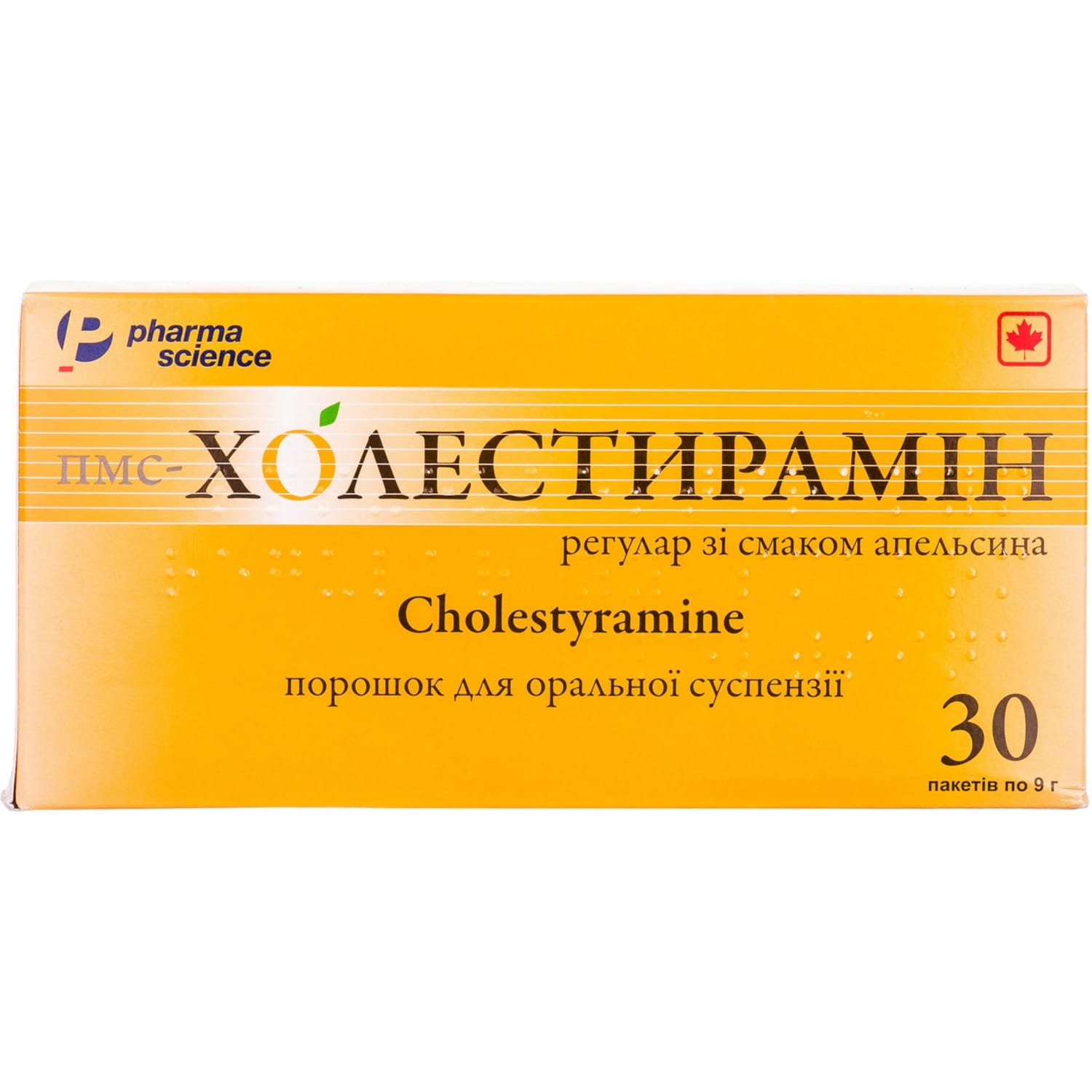
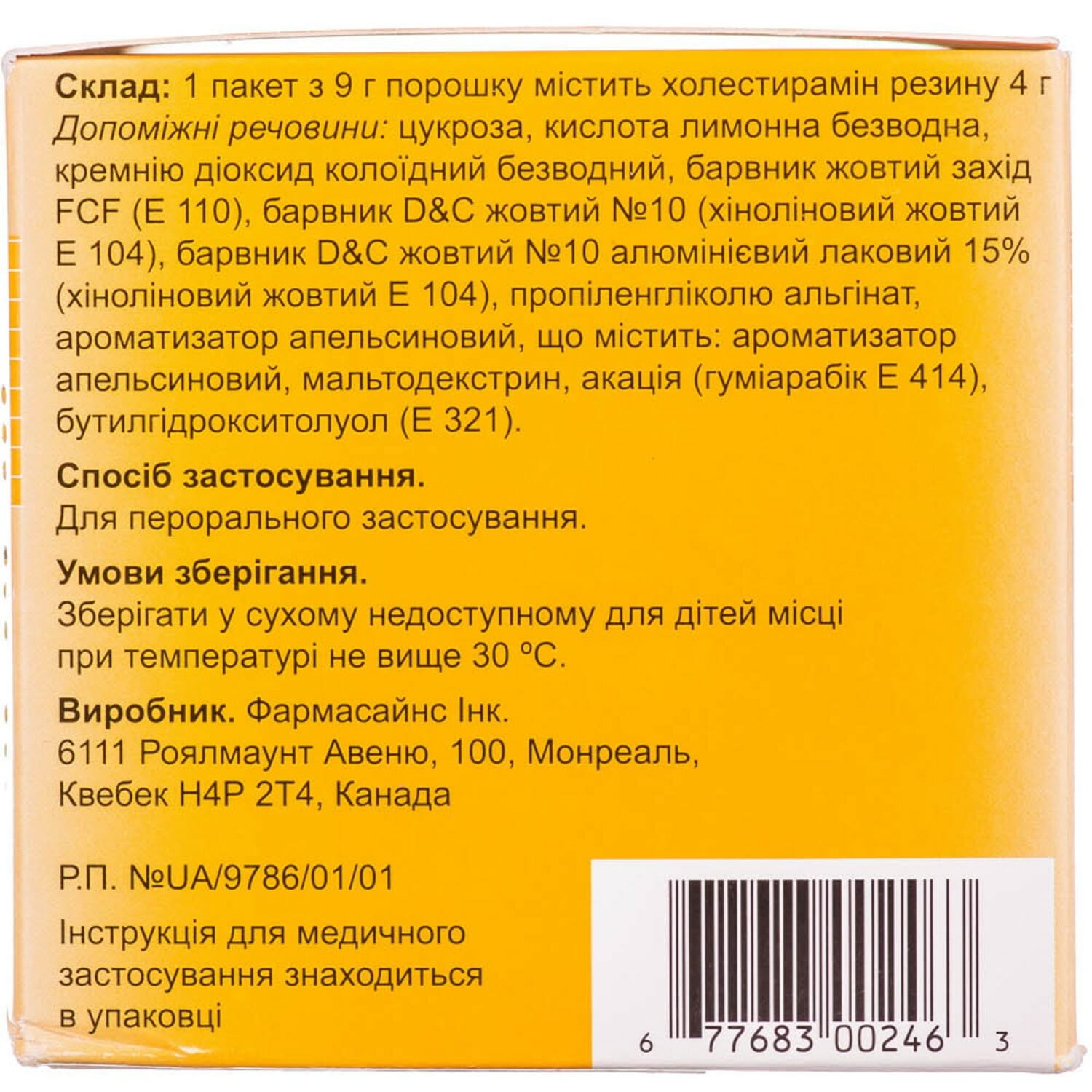
Please note: The product packaging may vary from the images shown. The contents, ingredients, and quality of the product remain unchanged.
PMS-Cholestyramine regular with orange flavor powder for oral suspension 4 g/9 g in 9 g bags 30 pcs.
$70.55
Free Worldwide Shipping
to: Australia, Belgium, Canada, Czechia, Denmark, Estonia, Finland, Greece, Hungary, Ireland, Israel, Italy, Japan, Kuwait, Latvia, Lithuania, Mexico, Moldova, Netherlands, Norway, Poland, Romania, Slovakia, South Korea, Switzerland, United Kingdom, United States and more
🏖️ Hello! We are on vacation!
We are still accepting orders on our website; however, order processing and shipping will resume after September 10. If you place an order during our vacation, we will contact you and remind you about the temporary shipping delay. Starting September 10, all orders received during this period will be processed and shipped in the order they were placed. If your order contains a product with less than one year remaining before its expiration date, we will notify you after September 10 and proceed according to your instructions. If you decide to cancel an order placed during our vacation, simply contact us through the contact form on our website, and we will be happy to assist you. Thank you for your understanding, and we apologize for any inconvenience caused.
In stock
Categories: Heart and blood vessels
Brand: Pharmascience
Payment
PayPal, Debit or Credit card, Google Pay, Apple Pay
Orders Temporarily Unavailable
Due to temporary postal service disruptions, we are currently unable to accept orders.
Powder for oral suspension “PMS-cholestyramine regular with orange flavor” is used:
- as adjuvant therapy (as an adjunct to diet and exercise) to reduce elevated serum cholesterol levels in patients with primary hypercholesterolemia in order to reduce the risk of atherosclerotic lesions of the coronary arteries and myocardial infarction;
- as a means of reducing elevated cholesterol levels in patients with combined hypercholesterolemia and hypertriglyceridemia, however, the drug is not indicated in cases where hypertriglyceridemia is the dominant pathology;
- for the symptomatic treatment of diarrhea caused by bile acids in patients with short bowel syndrome, as well as for the relief of itching in cholestasis due to partial obstruction of the biliary tract.
Composition
The active substance is cholestyramine resin, a copolymer of styrene and divinylbenzene with quaternary ammonium functional groups (1 sachet of powder contains cholestyramine resin 4 g).
Excipients: sucrose, anhydrous citric acid, anhydrous colloidal silicon dioxide, sunset yellow FCF dye (E 110), D&C yellow No. 10 dye (quinoline yellow E 104), D&C yellow No. 10 aluminum lake dye 15% (quinoline yellow E 104), propylene glycol alginate, orange flavoring, containing: orange flavoring, maltodextrin, acacia (gum arabic E 414), butylhydroxytoluene (E 321).
Contraindication
- with complete obstruction of the biliary tract, when bile does not enter the intestines at all;
- in case of hypersensitivity to the active substance or other components included in the preparation.
Method of application
Cholestyramine should be administered orally.
In order to minimize possible side effects from the gastrointestinal tract, it is advisable to start therapy with one dose of the drug once a day. Then, after 1-2 days, the dosage can be increased.
It is important to motivate the patient to adhere to the prescribed treatment regimen, despite the side effects that occur from the gastrointestinal tract. Monitoring compliance with the drug regimen plays an important role for successful treatment.
The recommended dose for adults is 4 g of cholestyramine 1 to 6 times daily. The dosage can be adjusted to better meet the individual needs of the patient.
The drug should not be taken in dry form, it is intended only for use in the form of an aqueous suspension.
Preparation of the drug for administration: the color of the drug may vary from batch to batch, but does not affect the quality of the product itself.
To prepare the suspension, place the contents of one sachet in a glass of 120-180 ml of water or a non-carbonated drink (milk or fruit juice). After one minute, stir the powder vigorously into the liquid. The powder can be stirred into soup or juice with pulp squeezed from fruit (apples or pineapples).
Application features
Pregnant women
Since cholestyramine is not absorbed in the intestine, it is theoretically unlikely to have any adverse effects on the fetus when taken at recommended doses. However, there have been no controlled clinical studies of the drug in pregnant women. In addition, cholestyramine may interfere with the absorption of fat-soluble vitamins in the intestine, which may adversely affect fetal development.
The drug should be used with caution in breastfeeding women, as it may interfere with the absorption of vitamins in the intestines, which may lead to malnutrition in the child.
Thus, the use of the drug in pregnant and breastfeeding women is possible only in cases where the potential benefit from using the drug outweighs the potential risk to the fetus or child.
Children
The safety and effectiveness of cholestyramine in children have not been established.
Drivers
There is no data on the effect of the drug on the reaction speed when driving vehicles or other mechanisms, but the possibility of developing adverse reactions from the nervous system, such as dizziness, drowsiness, and loss of consciousness, should be taken into account.
Overdose
One case of overdose was described in a patient who took the drug for several weeks in a dose that was 150% of the maximum recommended daily dose. No significant events were noted. The main consequence of overdose may be impaired gastrointestinal tract patency. The presence of such obstruction, the degree of its severity and the necessary symptomatic therapy are determined.
Side effects
Constipation is the most common side effect of cholestyramine, especially at high doses and in elderly patients (over 60 years of age). In most cases, these side effects are relieved by standard therapy. In some cases, a temporary dose reduction or discontinuation of the drug may be necessary.
Storage conditions
Store at a temperature not exceeding 30 °C, in a dry place and out of the reach of children.
Shelf life – 3 years.
Be the first to review “PMS-Cholestyramine regular with orange flavor powder for oral suspension 4 g/9 g in 9 g bags 30 pcs.” Cancel reply
You may also like



Reviews
There are no reviews yet.