
🇦🇺 Australia
🇧🇪 Belgium
🇨🇦 Canada
🇨🇿 Czechia
🇩🇰 Denmark
🇪🇪 Estonia
🇫🇮 Finland
🇬🇷 Greece
🇭🇺 Hungary
🇮🇪 Ireland
🇮🇱 Israel
🇮🇹 Italy
🇯🇵 Japan
🇰🇼 Kuwait
🇱🇻 Latvia
🇱🇹 Lithuania
🇲🇽 Mexico
🇲🇩 Moldova
🇳🇱 Netherlands
🇳🇴 Norway
🇵🇱 Poland
🇷🇴 Romania
🇸🇰 Slovakia
🇰🇷 South Korea
🇨🇭 Switzerland
🇬🇧 United Kingdom
🇺🇸 United States of America
and more
🇦🇺 Australia
🇧🇪 Belgium
🇨🇦 Canada
🇨🇿 Czechia
🇩🇰 Denmark
🇪🇪 Estonia
🇫🇮 Finland
🇬🇷 Greece
🇭🇺 Hungary
🇮🇪 Ireland
🇮🇱 Israel
🇮🇹 Italy
🇯🇵 Japan
🇰🇼 Kuwait
🇱🇻 Latvia
🇱🇹 Lithuania
🇲🇽 Mexico
🇲🇩 Moldova
🇳🇱 Netherlands
🇳🇴 Norway
🇵🇱 Poland
🇷🇴 Romania
🇸🇰 Slovakia
🇰🇷 South Korea
🇨🇭 Switzerland
🇬🇧 United Kingdom
🇺🇸 United States of America
and more


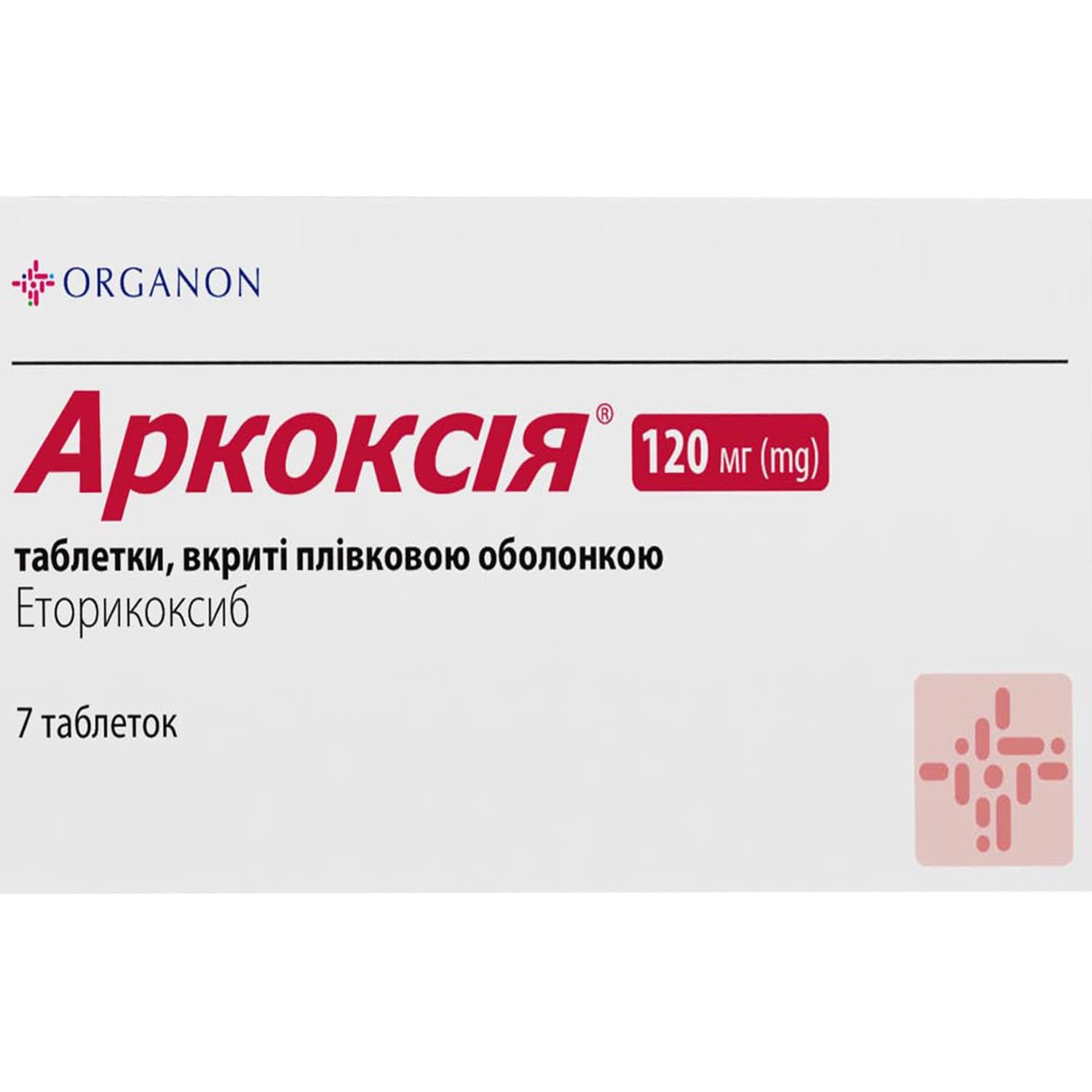

Arcoxia film-coated tablets 120 mg blister 7 pcs
$32.46
Free Worldwide Shipping
to: Australia, Belgium, Canada, Czechia, Denmark, Estonia, Finland, Greece, Hungary, Ireland, Israel, Italy, Japan, Kuwait, Latvia, Lithuania, Mexico, Moldova, Netherlands, Norway, Poland, Romania, Slovakia, South Korea, Switzerland, United Kingdom, United States and more
🏖️ Hello! We are on vacation!
We are still accepting orders on our website; however, order processing and shipping will resume after September 10. If you place an order during our vacation, we will contact you and remind you about the temporary shipping delay. Starting September 10, all orders received during this period will be processed and shipped in the order they were placed. If your order contains a product with less than one year remaining before its expiration date, we will notify you after September 10 and proceed according to your instructions. If you decide to cancel an order placed during our vacation, simply contact us through the contact form on our website, and we will be happy to assist you. Thank you for your understanding, and we apologize for any inconvenience caused.
In stock
Arcoxia tablets with etoricoxib help manage pain, inflammation and stiffness associated with arthritis, gout and dental surgery.
Payment
PayPal, Debit or Credit card, Google Pay, Apple Pay
Arcoxia tablets are used for the following indications:
- symptomatic therapy for osteoarthritis, rheumatoid arthritis, ankylosing spondylitis, as well as for pain and signs of inflammation associated with acute gouty arthritis;
- Short-term treatment of moderate postoperative pain associated with dental surgery.
The decision to prescribe a selective COX-2 inhibitor should be based on an assessment of all individual risks in the patient.
Composition
Active ingredient: etoricoxib;
1 tablet contains 30 mg, 60 mg, 90 mg or 120 mg of etoricoxib;
Excipients: calcium hydrogen phosphate anhydrous, microcrystalline cellulose, croscarmellose sodium, magnesium stearate;
Tablet shell: dye Opadry II blue-green 39K11526 (for dosage 30 mg), Opadry II green 39K11520 (for dosage 60 mg), Opadry II white 39K18305 (for dosage 90 mg), Opadry II green 39K11529 (for dosage 120 mg), carnauba wax;
Composition of the dye Opadray II blue-green 39K11526, Opadray II green 39K11520, Opadray II green 39K11529: lactose monohydrate, hypromellose; titanium dioxide (E 171) triacetin; indigo (E 132) iron oxide yellow (E172);
Composition of the dye Opadry II white 39K18305: lactose monohydrate, hypromellose; titanium dioxide (E 171) triacetin.
Contraindication
The drug Arcoxia is contraindicated:
- with hypersensitivity to the active substance or any excipient of the drug;
- with active ulcer or active gastrointestinal bleeding;
- patients who have experienced bronchospasm, acute rhinitis, nasal polyps, angioedema, urticaria or other allergic reactions after taking acetylsalicylic acid or NSAIDs, including COX-2 (cyclooxyhexanase-2) inhibitors;
- during pregnancy and breastfeeding;
- in severe liver dysfunction (serum albumin <25 g/l or ≥ 10 points on the Child-Pugh scale);
- if the calculated renal creatinine clearance is <30 ml/minute;
- children under 16 years of age;
- for inflammatory bowel diseases;
- with congestive heart failure (NYHA II-IV);
- patients with arterial hypertension whose blood pressure is consistently above 140/90 mm Hg and is not adequately controlled;
- with diagnosed coronary heart disease, peripheral artery disease and/or cerebrovascular disease.
Method of application
The drug is administered orally. The drug can be taken regardless of meals. The onset of the drug’s effect occurs faster when taken before meals. This should be taken into account if rapid relief of symptoms is required.
Since the risk of cardiovascular events with etoricoxib increases with increasing dose and duration of exposure, short courses of treatment should be administered at the most effective daily dose. The need for symptomatic relief and response to treatment should be reassessed periodically, especially in patients with osteoarthritis.
Application features
Pregnant women
Etoricoxib is contraindicated during pregnancy. If a woman becomes pregnant during treatment, etoricoxib should be discontinued.
Children
Etoricoxib is contraindicated in children under 16 years of age.
Drivers
Patients who experience dizziness, vertigo, or drowsiness while taking etoricoxib should not drive or operate machinery.
Overdose
In clinical studies, single doses of etoricoxib up to 500 mg or multiple doses of up to 150 mg daily for 21 days were not associated with significant toxicity. Acute overdoses of etoricoxib have been reported, although in most cases no adverse reactions were reported. The most commonly observed adverse reactions were consistent with the safety profile of etoricoxib (e.g., gastrointestinal, cardiac, and renal).
In the event of overdose, it is advisable to take the usual supportive measures, such as removing unabsorbed drug from the gastrointestinal tract, conducting clinical observation, and, if necessary, providing supportive treatment.
Etoricoxib is not removed by hemodialysis; it is unknown whether the drug is removed by peritoneal dialysis.
Side effects
- Metabolism and nutrition disorders: often (≥ 1/100, <1/10) – edema/fluid retention.
- From the nervous system: often (≥ 1/100, <1/10) – dizziness, headache.
- Cardiac disorders: often (≥ 1/100, <1/10) – palpitations, arrhythmia.
- From the vascular system: often (≥ 1/100, <1/10) – hypertension.
- Respiratory, thoracic and mediastinal disorders: common (≥ 1/100, <1/10) – bronchospasm.
- Gastrointestinal: very often (≥ 1/10) – abdominal pain; often (≥ 1/100, <1/10) – constipation, flatulence, gastritis, heartburn / acid reflux, diarrhea, dyspepsia / epigastric discomfort, nausea, vomiting, esophagitis, mouth ulcers.
- On the part of the digestive system: often (≥ 1/100, <1/10) – increased ALT, increased AST.
- Skin and subcutaneous tissue disorders: common (≥ 1/100, <1/10) – ecchymoses.
- General disorders and administration-related disorders: common (≥ 1/100, <1/10) – asthenia/fatigue, flu-like symptoms.
Interaction
Voriconazole and miconazole: Co-administration of oral voriconazole or topical miconazole oral gel (potent CYP3A4 inhibitors) with etoricoxib resulted in a small increase in etoricoxib exposure, which was not considered clinically relevant based on published data.
Rifampicin. Co-administration of etoricoxib with rifampicin (a potent inducer of CYP enzymes) resulted in a 65% decrease in etoricoxib plasma concentrations. This may be associated with a recurrence of symptoms when co-administered with etoricoxib. While these data may indicate the need for an increase in dose, it is not recommended to use etoricoxib at doses higher than those indicated for each indication, as the combined use of rifampicin and etoricoxib at such doses has not been studied.
Storage conditions
Store in the original packaging at a temperature not exceeding 30 °C, out of the reach of children.
Shelf life – 3 years.
You may also like

Reviews
There are no reviews yet.