
🇦🇺 Australia
🇧🇪 Belgium
🇨🇦 Canada
🇨🇿 Czechia
🇩🇰 Denmark
🇪🇪 Estonia
🇫🇮 Finland
🇬🇷 Greece
🇭🇺 Hungary
🇮🇪 Ireland
🇮🇱 Israel
🇮🇹 Italy
🇯🇵 Japan
🇰🇼 Kuwait
🇱🇻 Latvia
🇱🇹 Lithuania
🇲🇽 Mexico
🇲🇩 Moldova
🇳🇱 Netherlands
🇳🇴 Norway
🇵🇱 Poland
🇷🇴 Romania
🇸🇰 Slovakia
🇰🇷 South Korea
🇨🇭 Switzerland
🇬🇧 United Kingdom
🇺🇸 United States of America
and more
🇦🇺 Australia
🇧🇪 Belgium
🇨🇦 Canada
🇨🇿 Czechia
🇩🇰 Denmark
🇪🇪 Estonia
🇫🇮 Finland
🇬🇷 Greece
🇭🇺 Hungary
🇮🇪 Ireland
🇮🇱 Israel
🇮🇹 Italy
🇯🇵 Japan
🇰🇼 Kuwait
🇱🇻 Latvia
🇱🇹 Lithuania
🇲🇽 Mexico
🇲🇩 Moldova
🇳🇱 Netherlands
🇳🇴 Norway
🇵🇱 Poland
🇷🇴 Romania
🇸🇰 Slovakia
🇰🇷 South Korea
🇨🇭 Switzerland
🇬🇧 United Kingdom
🇺🇸 United States of America
and more

$19.79 Original price was: $19.79.$17.99Current price is: $17.99.


Please note: The product packaging may vary from the images shown. The contents, ingredients, and quality of the product remain unchanged.
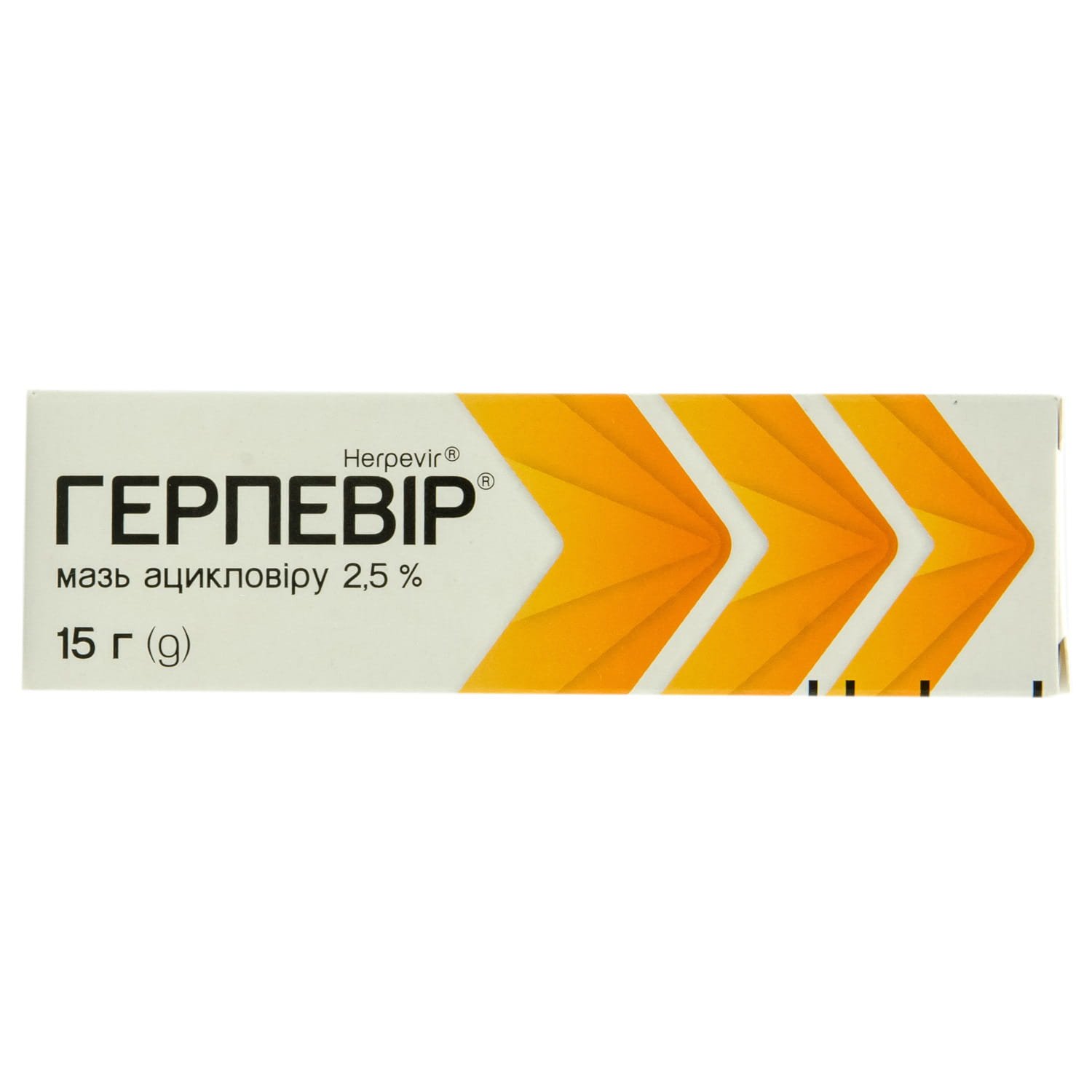
Herpevir ointment 2.5% tube 15 g
$19.28
Free Worldwide Shipping
to: Australia, Belgium, Canada, Czechia, Denmark, Estonia, Finland, Greece, Hungary, Ireland, Israel, Italy, Japan, Kuwait, Latvia, Lithuania, Mexico, Moldova, Netherlands, Norway, Poland, Romania, Slovakia, South Korea, Switzerland, United Kingdom, United States and more
🏖️ Hello! We are on vacation!
We are still accepting orders on our website; however, order processing and shipping will resume after September 10. If you place an order during our vacation, we will contact you and remind you about the temporary shipping delay. Starting September 10, all orders received during this period will be processed and shipped in the order they were placed. If your order contains a product with less than one year remaining before its expiration date, we will notify you after September 10 and proceed according to your instructions. If you decide to cancel an order placed during our vacation, simply contact us through the contact form on our website, and we will be happy to assist you. Thank you for your understanding, and we apologize for any inconvenience caused.
In stock
Herpevir 2.5% ointment with acyclovir helps treat cold sores on lips and face. Antiviral formula relieves herpes symptoms and supports healing.
Payment
PayPal, Debit or Credit card, Google Pay, Apple Pay
Composition
active ingredient: acyclovir;
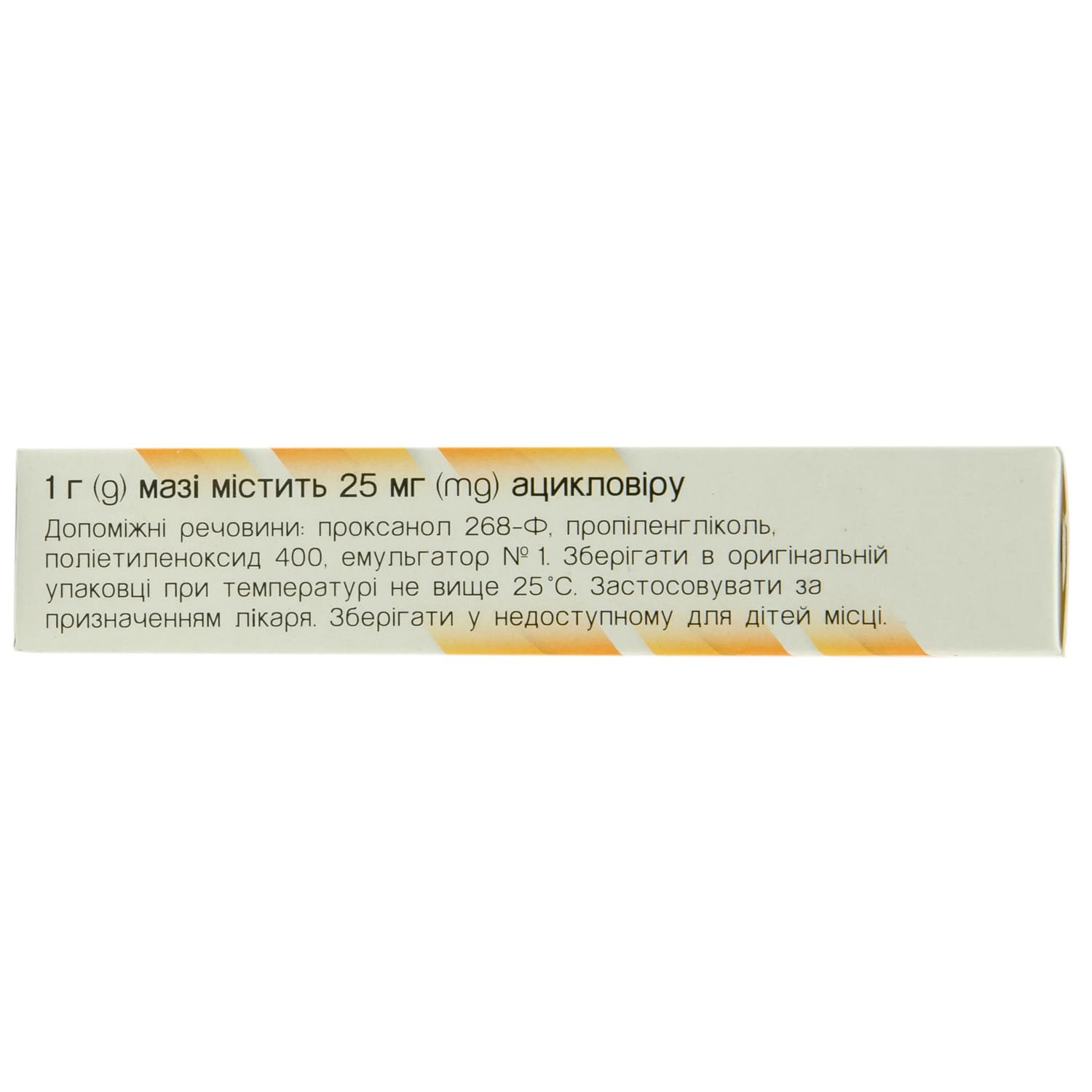
1 g of ointment contains acyclovir in terms of 100% substance 25 mg;
excipients: propylene glycol, poloxamer 338, polyethylene oxide 400, emulsifier No. 1.
Dosage form
Ointment.
Main physicochemical properties: homogeneous white ointment with a faint specific odor.
Pharmacotherapeutic group
Antiviral agents. ATX code D06B B03.
Pharmacological properties
Pharmacodynamics.
Acyclovir is an antiviral drug that has high in vitro activity against herpes simplex virus types I and II. Toxicity to host cells is minimal. Once in cells infected with herpes virus, acyclovir is phosphorylated to form the active compound acyclovir triphosphate. The first stage of this process depends on the presence of virus-encoded thymidine kinase. Acyclovir triphosphate acts as an inhibitor and substrate for viral DNA polymerase, preventing further synthesis of viral DNA without affecting normal cellular processes.
Pharmacokinetics.
The level of systemic absorption of acyclovir after repeated topical application of Herpevir ointment is minimal.
Indication
Infections of the lips and face caused by the herpes simplex virus ( Herpes labialis) .
Contraindication
Hypersensitivity to acyclovir, valacyclovir, propylene glycol or other components of the ointment.
Interaction with other medicinal products and other types of interactions
No interaction was detected.
Application features
The ointment should only be used to treat herpes on the lips and face.
It is not recommended to apply the ointment to the mucous membranes of the oral cavity or eyes, and to use it to treat genital herpes.
Accidental contact of the ointment with the eyes should be avoided.
Persons suffering from particularly severe and recurrent Herpes labialis should seek medical advice. Persons with herpes should be advised to avoid contact transmission of the virus to others, especially if there are open lesions (e.g. wash hands before and after using the ointment). It is not recommended for use in immunocompromised persons. Such persons should seek medical advice regarding the treatment of any infection.
The product contains propylene glycol, which may cause skin irritation.
Use during pregnancy or breastfeeding
Pregnant and breastfeeding women are recommended to use the drug only in cases where the benefit, in the opinion of the doctor, outweighs the risk. However, it should be understood that the systemic penetration of acyclovir after external application of the cream is very low.
Clinical studies have shown that the use of acyclovir in preparations of any composition does not lead to an increase in fetal developmental defects.
Some clinical data indicate that acyclovir passes into breast milk when administered orally. However, the amount of acyclovir that may enter the infant’s body during breastfeeding after application of the drug in the form of a cream is insignificant.
Clinical studies have shown that acyclovir has no clinically significant effect on male fertility after oral administration. There are no data on the effect of acyclovir on female fertility.
The ability to influence the reaction speed when driving or working with other mechanisms
Data is missing.
Method of administration and doses
The drug is intended for external use only.
Children over 12 years of age and adults should apply Herpevir ointment 5 times a day at approximately 4-hour intervals, except at night. It is important to start treatment as early as possible at the onset of infection, best during the prodromal period or erythema stage. Treatment can also be started in later stages – papules or blisters.
Treatment should last at least 4 days. If healing has not occurred, treatment can be continued for up to 10 days. If the symptoms of the disease do not disappear after 10 days of treatment, the patient should consult a doctor. Hands should be washed before and after using the ointment, and excessive rubbing or touching the affected areas with a towel should be avoided to prevent exacerbation or transmission of infection.
Children
There is insufficient data on the safety of the drug in children under 12 years of age, therefore it is recommended to use the drug in children over 12 years of age.
Overdose
In case of accidental oral or topical use of the entire tube of ointment, adverse effects are unlikely due to minimal systemic exposure. In case of suspected overdose, medical attention should be sought.
Side effects
Skin and connective tissue disorders
Uncommon (≥ 1/1000; < 1/100): temporary sharp or burning pain after applying the ointment, moderate drying and peeling of the skin, itching.
Rare (≥ 1/10,000; < 1/1,000): erythema, contact dermatitis after application of the ointment (sensitivity testing showed that these cases were most often associated with the components of the cream base, and not with acyclovir).
On the part of the immune system
Rare (< 1/10,000): immediate hypersensitivity reactions, including angioedema and urticaria.
Expiration date
5 years.
Storage conditions
Store in original packaging at a temperature not exceeding 25 ° C. Keep out of the reach of children.
Packaging
5 g or 15 g in a tube, 1 tube in a pack.
You may also like

Reviews
There are no reviews yet.