No products in the cart.

We deliver to:
🇦🇺 Australia
🇨🇦 Canada
🇨🇿 Czechia
🇩🇰 Denmark🇪🇪 Estonia
🇮🇪 Ireland
🇮🇱 Israel
🇮🇹 Italy
🇯🇵 Japan
🇲🇽 Mexico
🇵🇱 Poland
🇰🇷 South Korea
🇨🇭 Switzerland
🇬🇧 United Kingdom
🇺🇸 United States of Americaand more
We deliver to:
🇦🇺 Australia
🇨🇦 Canada
🇨🇿 Czechia
🇩🇰 Denmark🇪🇪 Estonia
🇮🇪 Ireland
🇮🇱 Israel
🇮🇹 Italy
🇯🇵 Japan
🇲🇽 Mexico
🇵🇱 Poland
🇰🇷 South Korea
🇨🇭 Switzerland
🇬🇧 United Kingdom
🇺🇸 United States of Americaand more


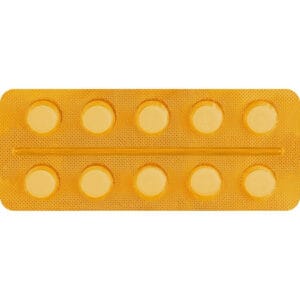
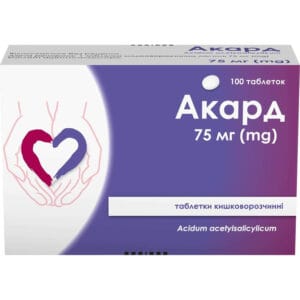
Please note: The product packaging may vary from the images shown. The contents, ingredients, and quality of the product remain unchanged.
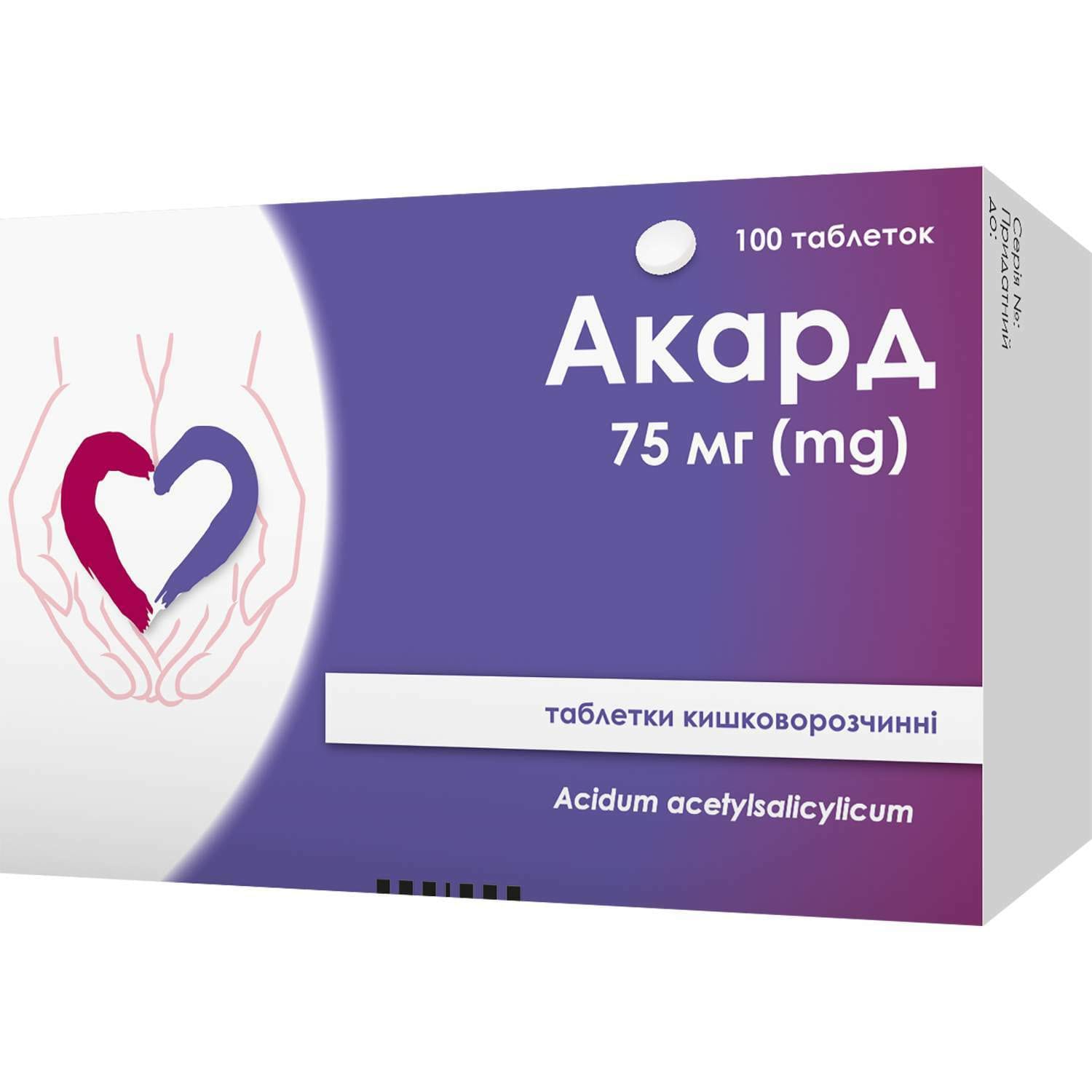
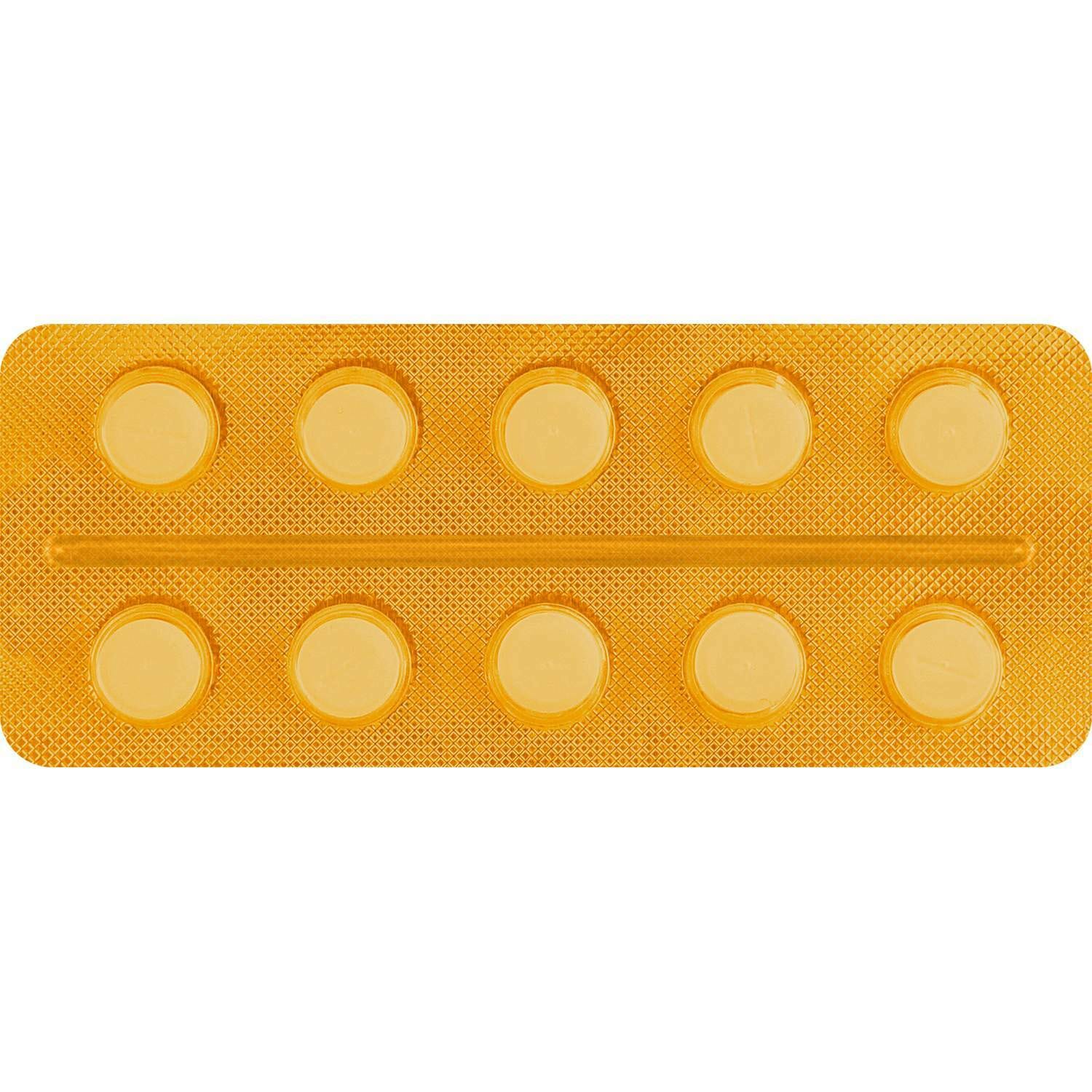
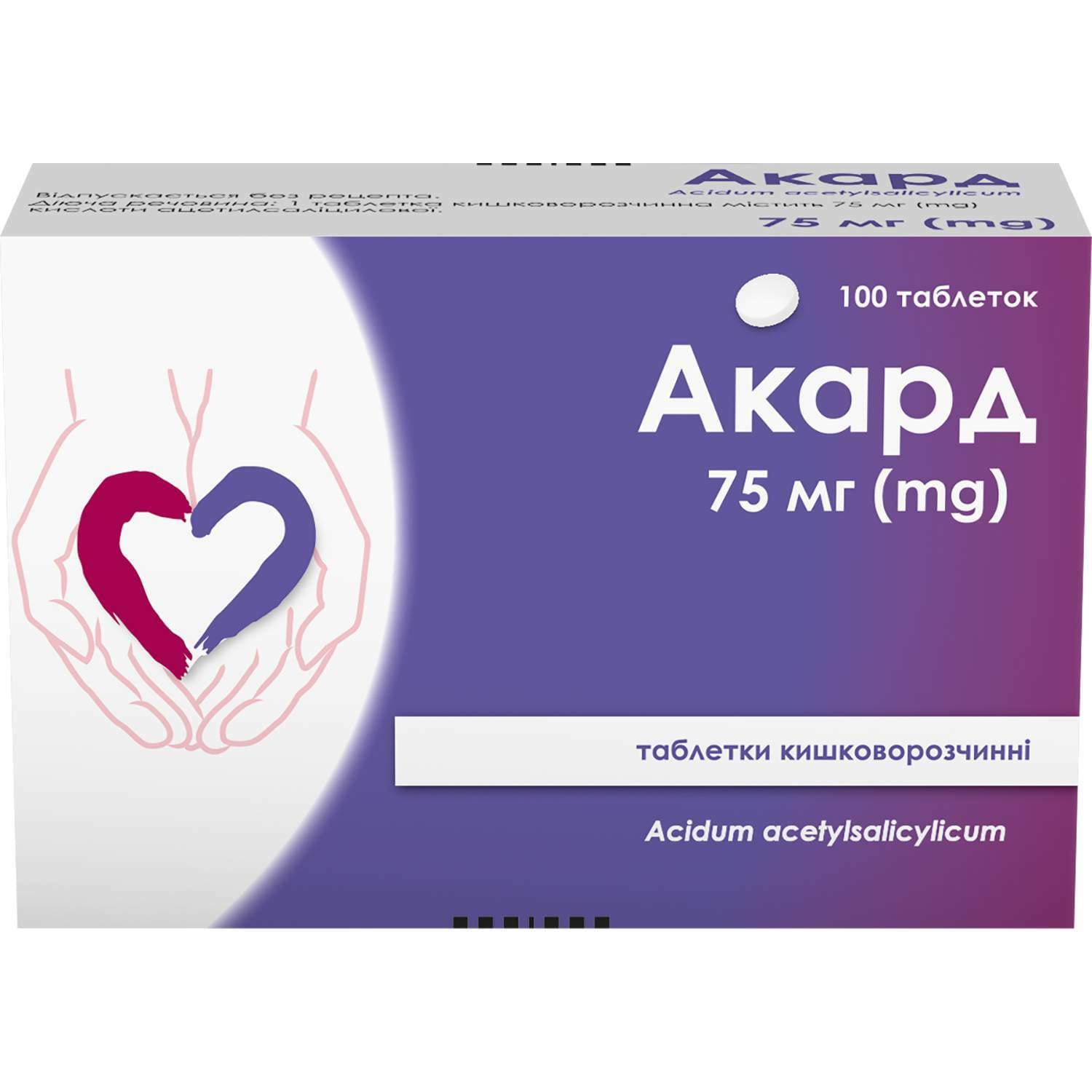
Acard enteric-coated tablets 75 mg 100 pcs.
$20.79
Free Worldwide Shipping
to: Australia, Canada, Czechia, Denmark, Estonia, Ireland, Israel, Italy, Japan, Mexico, Poland, South Korea, Switzerland, United Kingdom, United States and more
In stock
Acard 75 mg tablets prevent stroke, heart attack, TIA, and cardiovascular complications, reduce thrombosis risk, and support secondary prevention.
Categories: Heart and blood vessels
Brand: Polpharma
Payment
PayPal, Debit or Credit card, Google Pay, Apple Pay
Acard tablets are indicated for secondary prevention of stroke.
To reduce risk:
- death in patients with suspected acute myocardial infarction;
- death in patients who have had a myocardial infarction;
- transient ischemic attacks (TIA) and stroke in patients with TIA;
- morbidity and mortality in stable and unstable angina.
For prevention:
- thrombosis and embolism after vascular surgery (percutaneous transluminal catheter angioplasty (PTCA), carotid endarterectomy, coronary artery bypass grafting (CABG), arteriovenous bypass grafting);
- deep vein thrombosis and pulmonary embolism after prolonged immobilization (after surgery);
- myocardial infarction in patients with a high risk of developing cardiovascular complications (diabetes mellitus, controlled arterial hypertension) and in individuals with a multifactorial risk of cardiovascular disease (hyperlipidemia, obesity, smoking, old age, etc.).
Composition
Active ingredient: acetylsalicylic acid;
1 enteric-coated tablet contains – 75 mg of acetylsalicylic acid;
Excipients: corn starch, powdered cellulose, sodium starch (type A), hypromellose, coating: methacrylate copolymer (type C), talc, titanium dioxide (E 171), triethyl citrate, cochineal red lake (E 124), colloidal silicon dioxide, sodium bicarbonate; sodium lauryl sulfate.
Contraindication
- Hypersensitivity to acetylsalicylic acid, other salicylates or any component of the drug.
- Chronic asthma caused by a history of salicylates or nonsteroidal anti-inflammatory drugs.
- Acute peptic ulcers.
- Hemorrhagic diathesis.
- Severe renal failure.
- Severe liver failure.
- Severe heart failure.
- Combination with methotrexate at a dose of 15 mg/week or more.
Method of application
Adults are usually prescribed 1-2 tablets of 75 mg or 1 tablet of 150 mg per day during or after meals. The tablets should be swallowed whole with a small amount of water.
In patients with recent myocardial infarction or suspected myocardial infarction: an initial loading dose of 225-300 mg of acetylsalicylic acid once a day is recommended to achieve rapid inhibition of platelet aggregation. A dosage of 300 mg per day may be used for a short time according to therapeutic indications.
The tablets can be chewed for faster absorption.
Application features
Pregnant women
Inhibition of prostaglandin synthesis may adversely affect pregnancy and/or embryonal/fetal development. Available epidemiological data indicate a risk of miscarriage and foetal malformations following the use of prostaglandin synthesis inhibitors in early pregnancy. The risk increases with increasing dose and duration of therapy. According to the available data, an association between the use of acetylsalicylic acid and an increased risk of miscarriage has not been proven.
During the first and second trimesters of pregnancy, drugs containing acetylsalicylic acid should not be prescribed unless clearly necessary. In women who may be pregnant or during the first and second trimesters of pregnancy, the dose of drugs containing acetylsalicylic acid should be as low as possible and the duration of treatment as short as possible.
In the third trimester of pregnancy, all prostaglandin synthesis inhibitors may affect the fetus in the following ways:
- cardiopulmonary toxicity (with premature closure of the ductus arteriosus and pulmonary hypertension);
- renal dysfunction with possible further development of renal failure with oligohydramnios.
Prostaglandin synthesis inhibitors can affect a woman and her baby in the following ways at the end of pregnancy:
- possibility of prolongation of bleeding time, antiplatelet effect, which may occur even after very low doses;
- inhibition of uterine contractions, which can lead to a delay or increase in the duration of labor.
Despite this, acetylsalicylic acid is contraindicated in the third trimester of pregnancy.
Salicylates and their metabolites pass into breast milk in small quantities.
Since no harmful effects on the child have been observed after administration to lactating women, it is generally not necessary to interrupt breastfeeding. However, in cases of regular use or when using high doses, breastfeeding should be discontinued early.
Children
Do not use drugs containing acetylsalicylic acid in children with acute respiratory viral infections (ARI), which are accompanied or not accompanied by fever. With some viral diseases, especially influenza A, influenza B and chickenpox, there is a risk of developing Reye’s syndrome, which is a very rare but life-threatening disease requiring urgent medical intervention. The risk may be increased if acetylsalicylic acid is used as a concomitant drug, but a causal relationship in this case has not been proven. If these conditions are accompanied by prolonged vomiting, this may be a sign of Reye’s syndrome.
For the above reasons, the use of the drug is contraindicated in children under 16 years of age without special indications (Kawasaki disease).
Drivers
Does not affect the ability to drive a car or operate machinery.
Overdose
Salicylate overdose is possible due to chronic intoxication resulting from long-term therapy (administration of more than 100 mg/kg/day for more than 2 days may cause toxic effects), as well as due to acute intoxication, which is life-threatening (overdose), and the causes of which may be, for example, accidental use by children or an unforeseen overdose.
Chronic salicylate poisoning can be insidious because its signs and symptoms are nonspecific. Moderate chronic salicylate intoxication, or salicylism, usually occurs only after repeated ingestion of large doses.
The first symptoms of acetylsalicylic acid intoxication are dizziness, nausea, vomiting, tinnitus and increased breathing, and balance disorders.
Side effects
Gastrointestinal disorders: dyspepsia, epigastric pain and abdominal pain, in some cases – inflammation of the gastrointestinal tract, clinical manifestations of erosive-ulcerative lesions of the gastrointestinal tract, which can in some cases lead to gastrointestinal hemorrhage.
Interaction
The use of methotrexate in doses of 15 mg/week or more increases the hematological toxicity of methotrexate (reduction in renal clearance of methotrexate by anti-inflammatory agents and displacement of methotrexate from plasma protein binding by salicylates).
When used simultaneously with valproic acid, acetylsalicylic acid displaces it from its connection with plasma proteins, increasing the toxicity of the latter.
Ethyl alcohol contributes to damage to the mucous membrane of the gastrointestinal tract and prolongs bleeding time due to the synergism of acetylsalicylic acid and alcohol.
Systemic glucocorticosteroids (except hydrocortisone), which are used for replacement therapy in Addison’s disease, reduce the level of salicylates in the blood during corticosteroid treatment and increase the risk of overdose after the end of treatment.
When used with corticosteroids, the risk of gastrointestinal bleeding increases.
Selective serotonin reuptake inhibitors: increased risk of upper gastrointestinal bleeding due to possible synergistic effect.
Storage conditions
Store in a dry place, protected from light, at a temperature below 25 °C.
Keep out of reach of children.
Shelf life – 2 years.
Be the first to review “Acard enteric-coated tablets 75 mg 100 pcs.” Cancel reply
You may also like


Reviews
There are no reviews yet.