
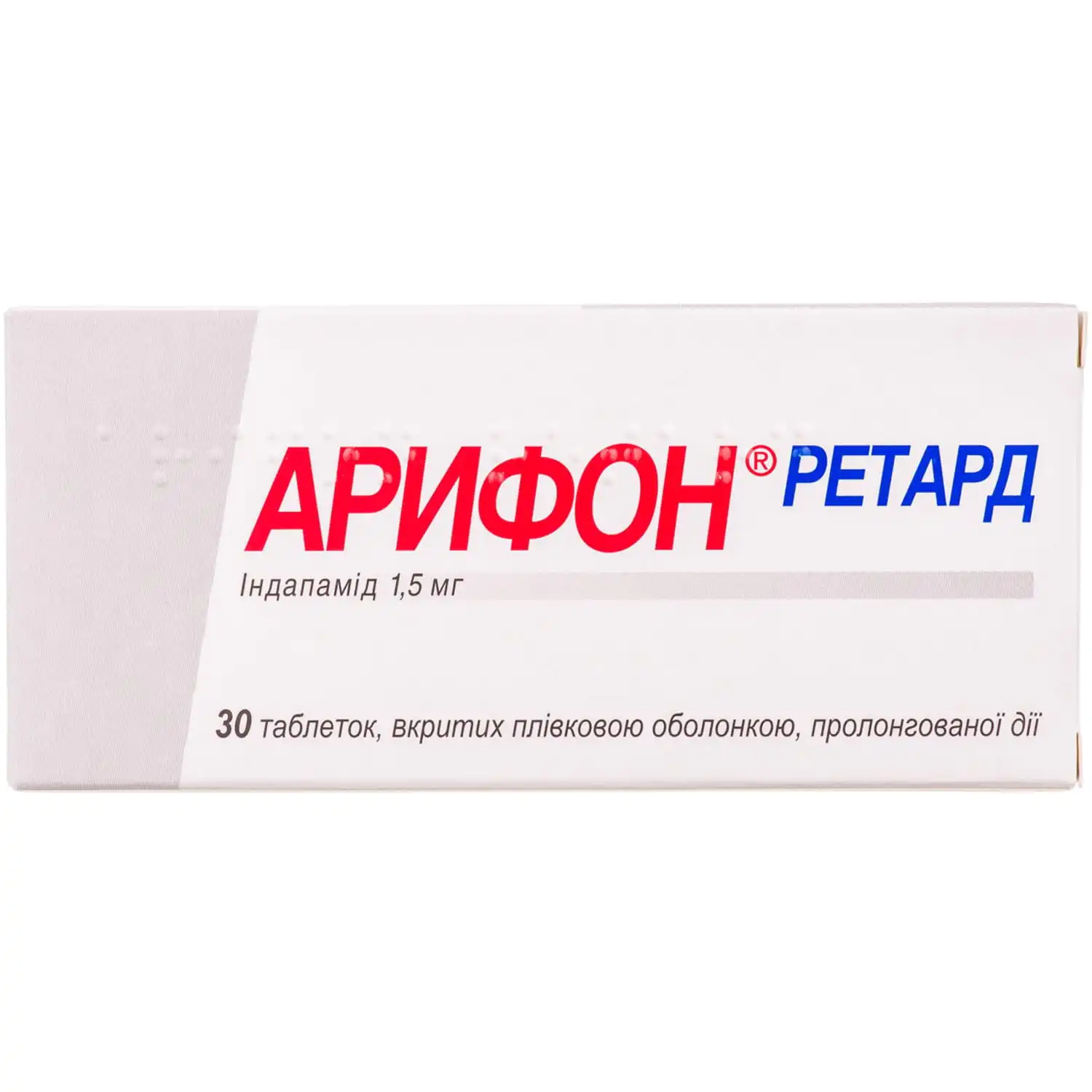
Arifon Retard 1.5 mg tablets for essential hypertension in adults. Long-acting indapamide to control blood pressure effectively and safely.

We deliver to:
🇦🇺 Australia
🇧🇪 Belgium
🇨🇦 Canada
🇨🇿 Czechia
🇩🇰 Denmark
🇪🇪 Estonia
🇫🇮 Finland
🇬🇷 Greece
🇭🇺 Hungary
🇮🇪 Ireland
🇮🇱 Israel
🇮🇹 Italy
🇯🇵 Japan
🇰🇼 Kuwait
🇱🇻 Latvia
🇱🇹 Lithuania
🇲🇽 Mexico
🇲🇩 Moldova
🇳🇱 Netherlands
🇳🇴 Norway
🇵🇱 Poland
🇷🇴 Romania
🇸🇰 Slovakia
🇰🇷 South Korea
🇨🇭 Switzerland
🇬🇧 United Kingdom
🇺🇸 United States of America
and more
We deliver to:
🇦🇺 Australia
🇧🇪 Belgium
🇨🇦 Canada
🇨🇿 Czechia
🇩🇰 Denmark
🇪🇪 Estonia
🇫🇮 Finland
🇬🇷 Greece
🇭🇺 Hungary
🇮🇪 Ireland
🇮🇱 Israel
🇮🇹 Italy
🇯🇵 Japan
🇰🇼 Kuwait
🇱🇻 Latvia
🇱🇹 Lithuania
🇲🇽 Mexico
🇲🇩 Moldova
🇳🇱 Netherlands
🇳🇴 Norway
🇵🇱 Poland
🇷🇴 Romania
🇸🇰 Slovakia
🇰🇷 South Korea
🇨🇭 Switzerland
🇬🇧 United Kingdom
🇺🇸 United States of America
and more
Dear Customers! Due to temporary issues affecting postal carriers, delivery times may be longer than usual!
Dear Customers! Due to temporary issues affecting postal carriers, delivery times may be longer than usual!
Dear Customers! Due to temporary issues affecting postal carriers, delivery times may be longer than usual!
Dear Customers! Due to temporary issues affecting postal carriers, delivery times may be longer than usual!
Dear Customers! Due to temporary issues affecting postal carriers, delivery times may be longer than usual!
Dear Customers! Due to temporary issues affecting postal carriers, delivery times may be longer than usual!


Please note: The product packaging may vary from the images shown. The contents, ingredients, and quality of the product remain unchanged.
Arifon Retard film-coated tablets of prolonged action 1.5 mg 30 pcs.
$19.05
Free Worldwide Shipping
to: Australia, Belgium, Canada, Czechia, Denmark, Estonia, Finland, Greece, Hungary, Ireland, Israel, Italy, Japan, Kuwait, Latvia, Lithuania, Mexico, Moldova, Netherlands, Norway, Poland, Romania, Slovakia, South Korea, Switzerland, United Kingdom, United States and more
🏖️ Hello! We are on vacation!
We are still accepting orders on our website; however, order processing and shipping will resume after September 10. If you place an order during our vacation, we will contact you and remind you about the temporary shipping delay. Starting September 10, all orders received during this period will be processed and shipped in the order they were placed. If your order contains a product with less than one year remaining before its expiration date, we will notify you after September 10 and proceed according to your instructions. If you decide to cancel an order placed during our vacation, simply contact us through the contact form on our website, and we will be happy to assist you. Thank you for your understanding, and we apologize for any inconvenience caused.
In stock
Categories: Heart and blood vessels
Brand: Servier
Payment
PayPal, Debit or Credit card, Google Pay, Apple Pay
Orders Temporarily Unavailable
Due to temporary postal service disruptions, we are currently unable to accept orders.
Arifon Retard tablets are used for essential hypertension in adults.
Composition
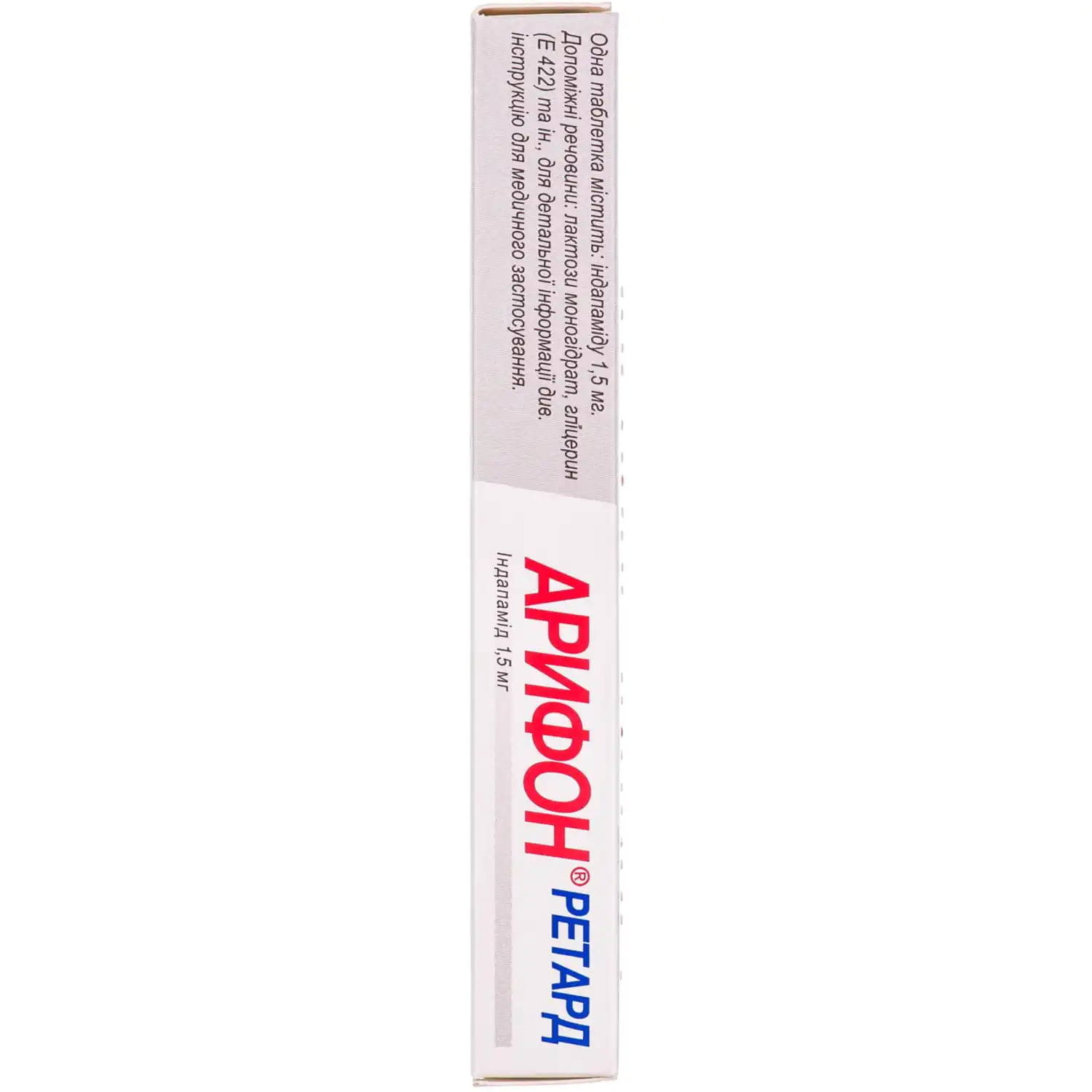
The active substance is indapamine (one tablet contains 1.5 mg of indapamide).
Excipients: lactose monohydrate, hypromellose (E 464), povidone, colloidal anhydrous silicon dioxide (E 551), magnesium stearate (E 470 B), titanium dioxide (E 171), glycerol (E 422), macrogol 6000.
Contraindication
- hypersensitivity to the active substance, other sulfonamides or to any excipients;
- severe renal failure;
- hepatic encephalopathy or severe liver dysfunction;
- hypokalemia.
Method of application
For oral use.
Dosage – one tablet per day, preferably in the morning. The tablet should be swallowed whole, without chewing, with water.
The use of higher doses of the drug does not lead to an increase in the antihypertensive effect, but the diuretic effect increases.
Application features
Pregnant women
Data on the use of indapamide in pregnant women are absent or limited (less than 300 cases). The consequence of prolonged use of thiazide diuretics during the third trimester of pregnancy may be a decrease in the volume of circulating blood of the pregnant woman and uteroplacental blood flow, which may lead to fetoplacental ischemia and fetal growth retardation. As a precautionary measure, it is advisable to avoid the use of indapamide during pregnancy.
There is insufficient data on the excretion of indapamide/metabolites into breast milk. Indapamide should not be used during breast-feeding.
No effect on human fertility is expected.
Children
The safety and effectiveness of the drug in children have not been established.
Drivers
The drug “Arifon Retard” does not affect alertness. However, in the event of adverse reactions, including symptoms associated with a decrease in blood pressure, especially at the beginning of treatment or when used in combination with another antihypertensive agent, the ability to drive a car or operate other mechanisms may be impaired.
Overdose
Symptoms
Symptoms of overdose are primarily manifestations of water and electrolyte disorders (hyponatremia, hypokalemia). Clinically, nausea, vomiting, hypotension, convulsions, drowsiness, dizziness (vertigo), confusion, polyuria or oliguria up to anuria (caused by hypovolemia) are possible.
Treatment
First aid measures include rapid removal of the drug by gastric lavage and/or administration of activated charcoal, followed by restoration of water and electrolyte balance in a hospital setting.
Side effects
The most frequently reported adverse reactions were: hypersensitivity reactions, mainly dermatological, in patients predisposed to allergic and asthmatic reactions, and maculopapular rashes.
Storage conditions
Store at a temperature not exceeding 30 °C, out of the reach of children.
Shelf life – 2 years.
Be the first to review “Arifon Retard film-coated tablets of prolonged action 1.5 mg 30 pcs.” Cancel reply
You may also like



Reviews
There are no reviews yet.