
🇦🇺 Australia
🇧🇪 Belgium
🇨🇦 Canada
🇨🇿 Czechia
🇩🇰 Denmark
🇪🇪 Estonia
🇫🇮 Finland
🇬🇷 Greece
🇭🇺 Hungary
🇮🇪 Ireland
🇮🇱 Israel
🇮🇹 Italy
🇯🇵 Japan
🇰🇼 Kuwait
🇱🇻 Latvia
🇱🇹 Lithuania
🇲🇽 Mexico
🇲🇩 Moldova
🇳🇱 Netherlands
🇳🇴 Norway
🇵🇱 Poland
🇷🇴 Romania
🇸🇰 Slovakia
🇰🇷 South Korea
🇨🇭 Switzerland
🇬🇧 United Kingdom
🇺🇸 United States of America
and more
🇦🇺 Australia
🇧🇪 Belgium
🇨🇦 Canada
🇨🇿 Czechia
🇩🇰 Denmark
🇪🇪 Estonia
🇫🇮 Finland
🇬🇷 Greece
🇭🇺 Hungary
🇮🇪 Ireland
🇮🇱 Israel
🇮🇹 Italy
🇯🇵 Japan
🇰🇼 Kuwait
🇱🇻 Latvia
🇱🇹 Lithuania
🇲🇽 Mexico
🇲🇩 Moldova
🇳🇱 Netherlands
🇳🇴 Norway
🇵🇱 Poland
🇷🇴 Romania
🇸🇰 Slovakia
🇰🇷 South Korea
🇨🇭 Switzerland
🇬🇧 United Kingdom
🇺🇸 United States of America
and more


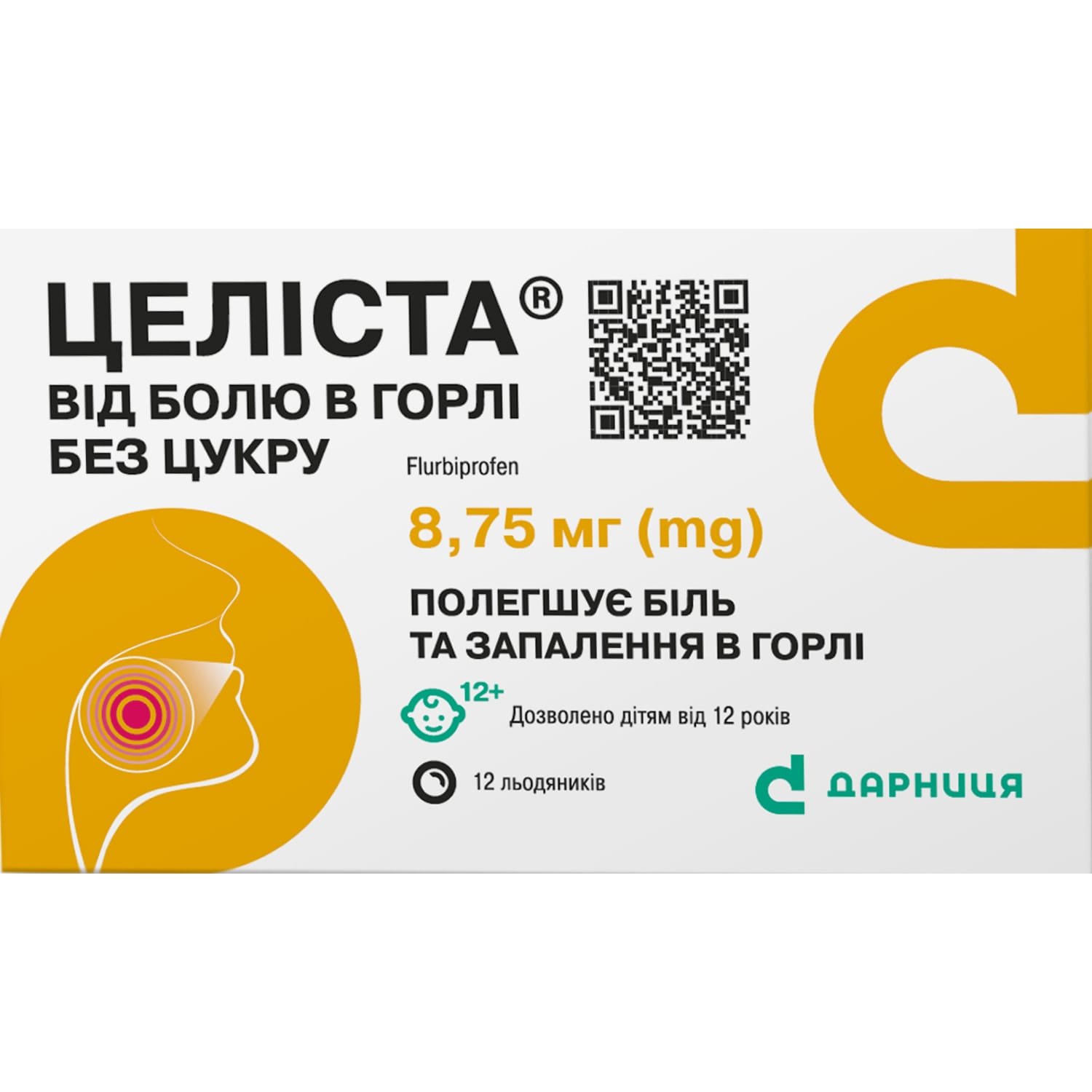

Celista for sore throat sugar-free lozenges 8.75 mg, 12 pcs
$14.89
Free Worldwide Shipping
to: Australia, Belgium, Canada, Czechia, Denmark, Estonia, Finland, Greece, Hungary, Ireland, Israel, Italy, Japan, Kuwait, Latvia, Lithuania, Mexico, Moldova, Netherlands, Norway, Poland, Romania, Slovakia, South Korea, Switzerland, United Kingdom, United States and more
🏖️ Hello! We are on vacation!
We are still accepting orders on our website; however, order processing and shipping will resume after September 10. If you place an order during our vacation, we will contact you and remind you about the temporary shipping delay. Starting September 10, all orders received during this period will be processed and shipped in the order they were placed. If your order contains a product with less than one year remaining before its expiration date, we will notify you after September 10 and proceed according to your instructions. If you decide to cancel an order placed during our vacation, simply contact us through the contact form on our website, and we will be happy to assist you. Thank you for your understanding, and we apologize for any inconvenience caused.
In stock
Celista Sore Throat lozenges with flurbiprofen 8.75 mg relieve sore throat pain for up to 3 days in adults and children over 12. Sugar-free formula.
Payment
PayPal, Debit or Credit card, Google Pay, Apple Pay
Orders Temporarily Unavailable
Due to temporary postal service disruptions, we are currently unable to accept orders.
Celista Sore Throat Sugar-Free is intended for short-term symptomatic relief of sore throat in adults and children aged 12 years and over.
Composition
- active ingredient: flurbiprofen;
- 1 lollipop contains 8.75 mg of flurbiprofen;
- excipients: isomalt (E 953), maltitol (E 965), cochineal red A (E 124), sunset yellow (E 110), acesulfame potassium, macrogol 300, orange flavoring, potassium hydroxide, levomenthol.
Contraindication
- Hypersensitivity to flurbiprofen or to any of the excipients of the drug.
- History of hypersensitivity reactions (e.g. bronchial asthma, bronchospasm, rhinitis, angioedema or urticaria) after taking acetylsalicylic acid or other NSAIDs.
- Recurrent peptic ulcer/bleeding in history or in the acute phase (two or more episodes confirmed by characteristic clinical manifestations) and intestinal ulcers.
- History of gastrointestinal bleeding or perforation, severe colitis, hemorrhagic or hematopoietic disorders related to previous NSAID therapy.
- Severe heart failure, severe kidney failure, or severe liver failure.
- The last trimester of pregnancy.
Adverse reactions
There have been reports of hypersensitivity reactions to NSAIDs, which may include:
- nonspecific allergic reactions and anaphylaxis;
- airway reactivity, for example: bronchial asthma, exacerbation of bronchial asthma, bronchospasm, shortness of breath;
- various skin reactions, for example: itching, urticaria, angioedema, less often – exfoliative and bullous dermatoses (including epidermal necrolysis and erythema multiforme).
Events such as oedema, hypertension and heart failure have been reported in association with NSAID treatment. Clinical trials and epidemiological data suggest that the use of some NSAIDs (particularly at high doses and in long-term treatment) may be associated with a slightly increased risk of arterial thrombotic events (e.g. myocardial infarction or stroke).
Method of application
Suck the lollipops until completely dissolved.
Use the lowest effective dose for the shortest duration necessary to relieve symptoms. If symptoms persist, worsen, or last more than 3 days, consult a doctor.
It is not recommended to use the medicine for more than 3 days.
Adults and adolescents (aged 12 years and over).
Take 1 lozenge every 3–6 hours until pain is relieved. Maximum daily dose is 5 lozenges.
Application features
Use during pregnancy or breastfeeding
Flurbiprofen is contraindicated during the third trimester of pregnancy.
Due to the possible adverse effects of NSAIDs on breastfed infants, the drug is not recommended for use in breastfeeding women.
Children
Do not use in children under 12 years of age.
Ability to influence reaction speed when driving vehicles or other mechanisms
Studies on the ability to influence the reaction rate when driving vehicles or other mechanisms have not been conducted.
Overdose
Symptoms. In most patients, the use of clinically significant amounts of NSAIDs caused only nausea, vomiting, epigastric pain or, less commonly, diarrhea. Tinnitus, headache and gastrointestinal bleeding may also occur. In more severe poisoning, toxic lesions of the central nervous system in the form of drowsiness are possible, sometimes – agitation, visual disturbances, disorientation or coma. Sometimes patients experience convulsions. In severe poisoning, metabolic acidosis and an increase in prothrombin time may occur, presumably due to interaction with blood clotting factors circulating in the bloodstream. Acute renal failure and liver damage may occur. In patients with bronchial asthma, exacerbation of the course of asthma is possible.
Treatment. Treatment should be symptomatic and supportive, and include maintaining a patent airway and monitoring cardiac function and vital signs until the patient’s condition is normal. Oral administration of activated charcoal within 1 hour of a potentially toxic dose or gastric lavage is recommended. Frequent or prolonged muscle spasms should be treated with intravenous diazepam or lorazepam. Bronchodilators should be used in the presence of bronchial asthma. There is no specific antidote to flurbiprofen.
Interaction with other medicinal products and other types of interactions
The concomitant use of flurbiprofen with:
- other NSAIDs, including selective cyclooxygenase-2 (COX-2) inhibitors: the simultaneous use of two or more NSAIDs should be avoided, as this increases the risk of side effects (especially gastrointestinal side effects such as ulcers and bleeding);
- acetylsalicylic acid (in low doses).
Flurbiprofen should be used with caution in combination with the following drugs:
- Anticoagulants: NSAIDs may enhance the effect of anticoagulants such as warfarin;
- antiplatelet agents: increased risk of gastrointestinal ulceration or bleeding;
- Antihypertensives (diuretics, ACE inhibitors and angiotensin II antagonists): NSAIDs may reduce the effect of diuretics and other antihypertensive agents, as well as enhance nephrotoxicity caused by inhibition of cyclooxygenase, especially in patients with impaired renal function (patients should receive sufficient fluid intake);
- Alcohol: increases the risk of adverse reactions, especially gastrointestinal bleeding.
Storage conditions
Store in original packaging at a temperature not exceeding 30°C. Keep out of the reach of children.
You may also like


Reviews
There are no reviews yet.