
🇦🇺 Australia
🇧🇪 Belgium
🇨🇦 Canada
🇨🇿 Czechia
🇩🇰 Denmark
🇪🇪 Estonia
🇫🇮 Finland
🇬🇷 Greece
🇭🇺 Hungary
🇮🇪 Ireland
🇮🇱 Israel
🇮🇹 Italy
🇯🇵 Japan
🇰🇼 Kuwait
🇱🇻 Latvia
🇱🇹 Lithuania
🇲🇽 Mexico
🇲🇩 Moldova
🇳🇱 Netherlands
🇳🇴 Norway
🇵🇱 Poland
🇷🇴 Romania
🇸🇰 Slovakia
🇰🇷 South Korea
🇨🇭 Switzerland
🇬🇧 United Kingdom
🇺🇸 United States of America
and more
🇦🇺 Australia
🇧🇪 Belgium
🇨🇦 Canada
🇨🇿 Czechia
🇩🇰 Denmark
🇪🇪 Estonia
🇫🇮 Finland
🇬🇷 Greece
🇭🇺 Hungary
🇮🇪 Ireland
🇮🇱 Israel
🇮🇹 Italy
🇯🇵 Japan
🇰🇼 Kuwait
🇱🇻 Latvia
🇱🇹 Lithuania
🇲🇽 Mexico
🇲🇩 Moldova
🇳🇱 Netherlands
🇳🇴 Norway
🇵🇱 Poland
🇷🇴 Romania
🇸🇰 Slovakia
🇰🇷 South Korea
🇨🇭 Switzerland
🇬🇧 United Kingdom
🇺🇸 United States of America
and more
Dear Customers! Due to temporary issues affecting postal carriers, delivery times may be longer than usual!
Dear Customers! Due to temporary issues affecting postal carriers, delivery times may be longer than usual!
Dear Customers! Due to temporary issues affecting postal carriers, delivery times may be longer than usual!
Dear Customers! Due to temporary issues affecting postal carriers, delivery times may be longer than usual!
Dear Customers! Due to temporary issues affecting postal carriers, delivery times may be longer than usual!
Dear Customers! Due to temporary issues affecting postal carriers, delivery times may be longer than usual!


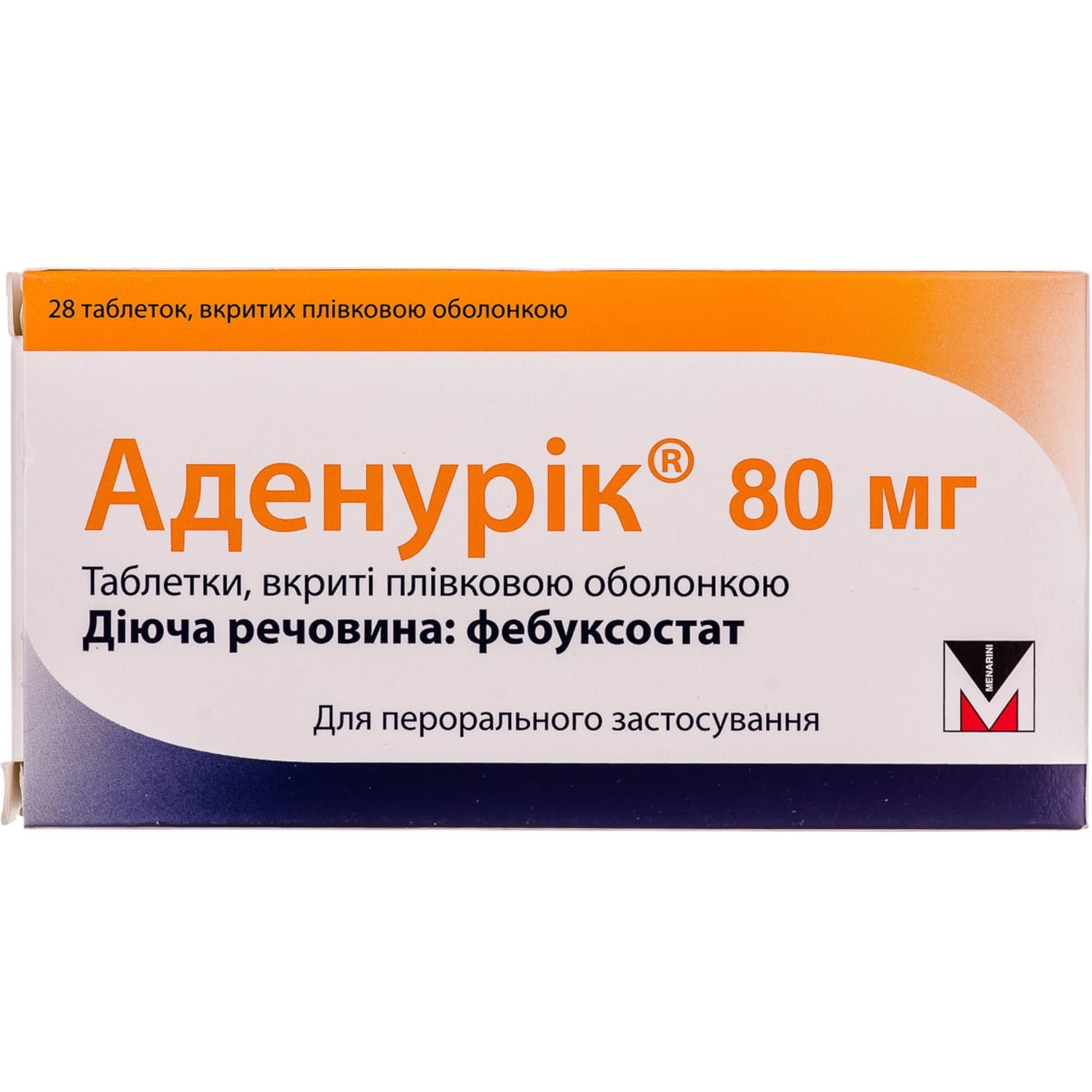
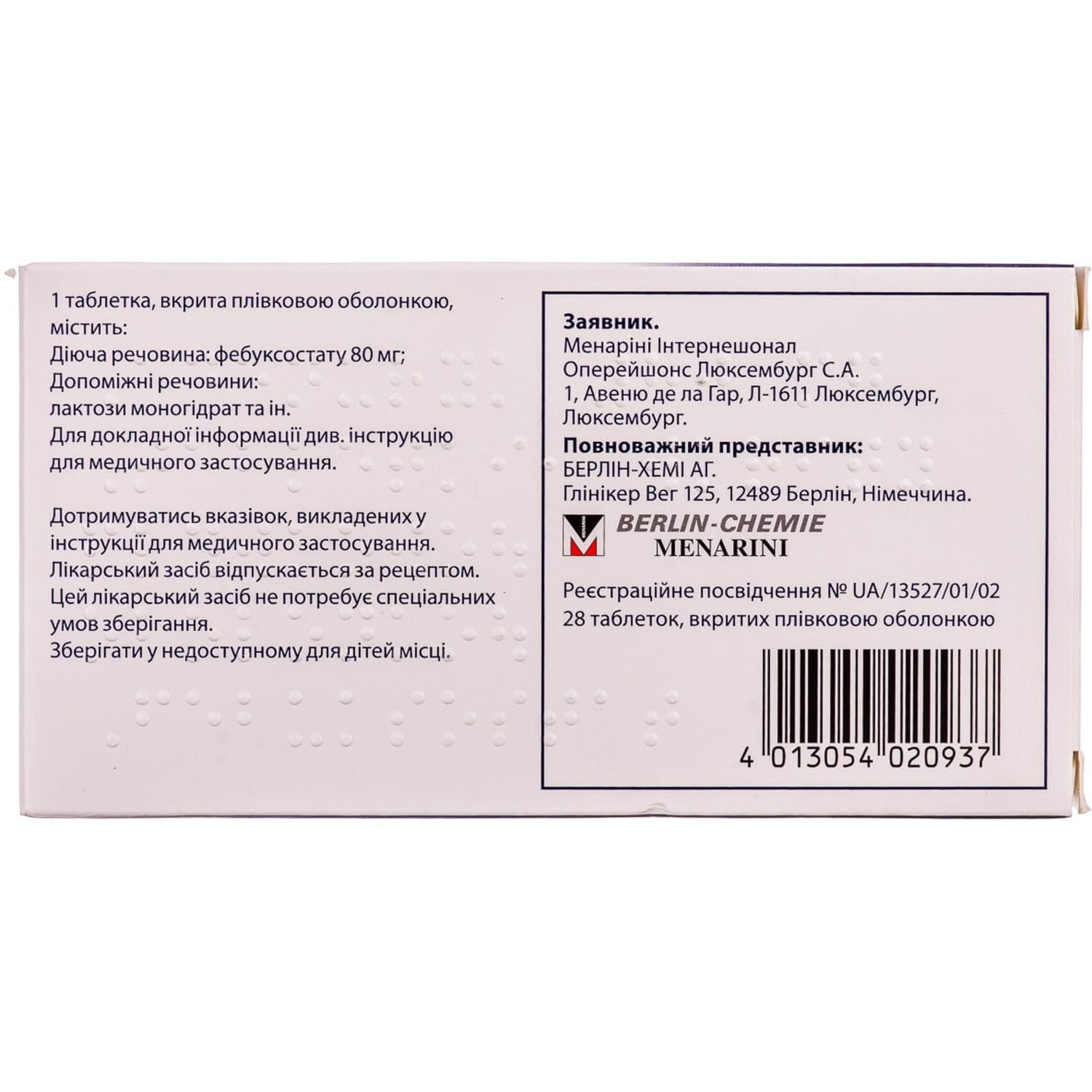


Adenuric film-coated tablets 80 mg 28 pcs.
$59.15
Free Worldwide Shipping
to: Australia, Belgium, Canada, Czechia, Denmark, Estonia, Finland, Greece, Hungary, Ireland, Israel, Italy, Japan, Kuwait, Latvia, Lithuania, Mexico, Moldova, Netherlands, Norway, Poland, Romania, Slovakia, South Korea, Switzerland, United Kingdom, United States and more
🏖️ Hello! We are on vacation!
We are still accepting orders on our website; however, order processing and shipping will resume after September 10. If you place an order during our vacation, we will contact you and remind you about the temporary shipping delay. Starting September 10, all orders received during this period will be processed and shipped in the order they were placed. If your order contains a product with less than one year remaining before its expiration date, we will notify you after September 10 and proceed according to your instructions. If you decide to cancel an order placed during our vacation, simply contact us through the contact form on our website, and we will be happy to assist you. Thank you for your understanding, and we apologize for any inconvenience caused.
In stock
Adenuric (febuxostat) treats chronic hyperuricemia, gout, and tumor lysis syndrome in adults. Available in 80 mg and 120 mg doses.
Payment
PayPal, Debit or Credit card, Google Pay, Apple Pay
Orders Temporarily Unavailable
Due to temporary postal service disruptions, we are currently unable to accept orders.
Adenuric 80 mg and Adenuric 120 mg tablets are indicated for the treatment of chronic hyperuricemia in diseases accompanied by the deposition of urate crystals, including the presence of tophi and/or gouty arthritis at present or in history.
Adenuric 120 mg is indicated for the treatment and prevention of hyperuricemia in adult patients undergoing chemotherapy for hematological malignancies at moderate or high risk of tumor lysis syndrome (TLS).
Adenuric is indicated for adult patients.
Composition
Active ingredient: febuxostat;
1 film-coated tablet contains 80 mg or 120 mg of febuxostat;
Excipients: lactose, hydroxypropylcellulose, microcrystalline cellulose, croscarmellose sodium, magnesium stearate, silicon dioxide, polyvinyl alcohol, titanium dioxide (E 171), polyethylene glycol, talc, iron oxide yellow (E 172).
Contraindication
Hypersensitivity to the active substance or any other excipient of the drug.
Method of application
For oral use.
Adenuric is administered orally, regardless of meals.
Gout. The recommended dose of Adenuric is 80 mg once daily orally, without regard to meals. If serum uric acid levels exceed 6 mg/dL (357 μmol/L) after 2 to 4 weeks of treatment, an increase in the dose of Adenuric to 120 mg once daily should be considered. The onset of action is rapid, allowing for repeat uric acid levels after 2 weeks. The goal of treatment is to reduce uric acid levels and maintain them below 6 mg/dL (357 μmol/L).
The duration of prevention of gout attacks is at least 6 months.
Tumor Lysis Syndrome (TLS): The recommended dose of Adenuric is 120 mg once daily orally, without regard to meals.
Adenuric should be started two days before the start of cytotoxic therapy and continued for at least 7 days; however, the duration of therapy may be extended to 9 days depending on the duration of chemotherapy and clinical assessment.
Application features
Pregnant women
Febuxostat should not be used during pregnancy.
Drivers
With caution.
Overdose
In case of overdose, symptomatic and supportive therapy is indicated.
Side effects
The most common adverse reactions in clinical trials (4072 patients receiving doses of 10 to 300 mg) and post-marketing surveillance in patients with gout were gout flares, liver dysfunction, diarrhea, nausea, headache, rash, and edema. These reactions were mostly mild to moderate in severity. During post-marketing surveillance, isolated cases of serious hypersensitivity reactions to febuxostat have been reported, some of which were accompanied by systemic reactions.
Interaction
Glucuronidation inducers.
Strong inducers of UDP-glucuronyltransferase may increase the metabolism and reduce the efficacy of febuxostat. In patients taking strong inducers of glucuronidation, it is recommended to monitor the level of uric acid in the blood plasma after 1-2 weeks of concomitant therapy. When the inducer of glucuronidation is canceled, an increase in the level of febuxostat in the blood plasma is possible.
Storage conditions
No special storage conditions are required.
Keep out of reach of children.
Shelf life – 3 years.
You may also like

Reviews
There are no reviews yet.