
🇦🇺 Australia
🇧🇪 Belgium
🇨🇦 Canada
🇨🇿 Czechia
🇩🇰 Denmark
🇪🇪 Estonia
🇫🇮 Finland
🇬🇷 Greece
🇭🇺 Hungary
🇮🇪 Ireland
🇮🇱 Israel
🇮🇹 Italy
🇯🇵 Japan
🇰🇼 Kuwait
🇱🇻 Latvia
🇱🇹 Lithuania
🇲🇽 Mexico
🇲🇩 Moldova
🇳🇱 Netherlands
🇳🇴 Norway
🇵🇱 Poland
🇷🇴 Romania
🇸🇰 Slovakia
🇰🇷 South Korea
🇨🇭 Switzerland
🇬🇧 United Kingdom
🇺🇸 United States of America
and more
🇦🇺 Australia
🇧🇪 Belgium
🇨🇦 Canada
🇨🇿 Czechia
🇩🇰 Denmark
🇪🇪 Estonia
🇫🇮 Finland
🇬🇷 Greece
🇭🇺 Hungary
🇮🇪 Ireland
🇮🇱 Israel
🇮🇹 Italy
🇯🇵 Japan
🇰🇼 Kuwait
🇱🇻 Latvia
🇱🇹 Lithuania
🇲🇽 Mexico
🇲🇩 Moldova
🇳🇱 Netherlands
🇳🇴 Norway
🇵🇱 Poland
🇷🇴 Romania
🇸🇰 Slovakia
🇰🇷 South Korea
🇨🇭 Switzerland
🇬🇧 United Kingdom
🇺🇸 United States of America
and more


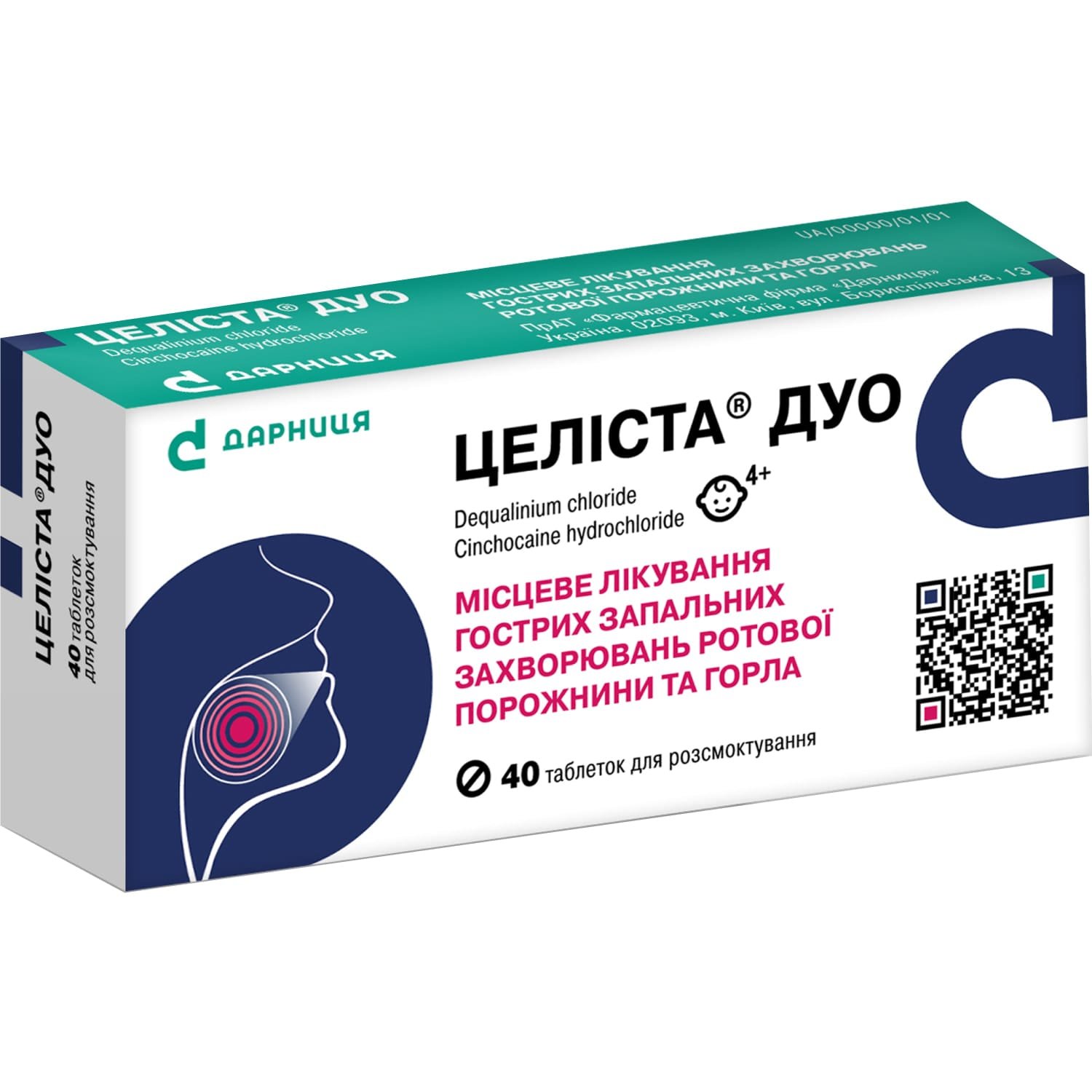

Celista Duo lozenges 40 pieces
$25.85
Free Worldwide Shipping
to: Australia, Belgium, Canada, Czechia, Denmark, Estonia, Finland, Greece, Hungary, Ireland, Israel, Italy, Japan, Kuwait, Latvia, Lithuania, Mexico, Moldova, Netherlands, Norway, Poland, Romania, Slovakia, South Korea, Switzerland, United Kingdom, United States and more
🏖️ Hello! We are on vacation!
We are still accepting orders on our website; however, order processing and shipping will resume after September 10. If you place an order during our vacation, we will contact you and remind you about the temporary shipping delay. Starting September 10, all orders received during this period will be processed and shipped in the order they were placed. If your order contains a product with less than one year remaining before its expiration date, we will notify you after September 10 and proceed according to your instructions. If you decide to cancel an order placed during our vacation, simply contact us through the contact form on our website, and we will be happy to assist you. Thank you for your understanding, and we apologize for any inconvenience caused.
In stock
Celista Duo lozenges with dequalinium and cinchocaine treat throat and mouth inflammation, sore throat, and bad breath in children over 4 and adults.
Payment
PayPal, Debit or Credit card, Google Pay, Apple Pay
Orders Temporarily Unavailable
Due to temporary postal service disruptions, we are currently unable to accept orders.
Celista Duo is a drug used for throat diseases.
For the local treatment of acute inflammatory diseases of the oral cavity and throat: gingivitis, ulcerative and aphthous stomatitis, tonsillitis, laryngitis and pharyngitis.
The drug Celista® Duo is also recommended for use in the presence of bad breath.
The drug Celista® Duo can be used:
- in cases of mixed infection of the oral cavity and throat (on the recommendation of a doctor);
- as an auxiliary drug in the treatment of catarrhal angina, lacunar angina and Plaut-Vincent angina;
- in case of candidiasis of the oral cavity and pharynx.
Recommended in the postoperative period after tonsillectomy and tooth extraction.
Composition
- active ingredients: dequalinium chloride, cinchocaine hydrochloride;
- 1 tablet contains: dequalinium chloride 0.25 mg, cinchocaine hydrochloride (dibucaine hydrochloride) 0.03 mg;
- Excipients: sorbitol (E 420), talc, colloidal anhydrous silicon dioxide, magnesium stearate, mint flavoring, peppermint oil.
Contraindication
Hypersensitivity to dequalinium chloride, cinchocaine hydrochloride (dibucaine hydrochloride), other quaternary ammonium compounds (e.g. benzalkonium chloride), or any of the excipients of the drug.
Adverse reactions
Sometimes hypersensitivity reactions may occur after using the drug, such as rash, itching, burning sensation, irritation of the mucous membrane of the mouth and throat. In rare cases, namely in case of abuse, ulceration and necrosis may occur. In case of any unusual reactions, the drug should be discontinued and a doctor should be consulted regarding further therapy.
Method of application
Adults and children over 12 years of age – prescribe 1 tablet every 2 hours, after the symptoms of inflammation have subsided – 1 tablet every 4 hours.
Children over 4 years old – prescribe 1 tablet every 3 hours, after the symptoms of inflammation have subsided – 1 tablet every 4 hours.
The maximum daily dose is 10-12 tablets during the acute phase and 6 tablets after the inflammatory symptoms disappear.
The tablets should be slowly dissolved without chewing. The duration of treatment is determined by the doctor individually. The patient should consult a doctor if the symptoms have not disappeared or worsened after 5 days of using the drug.
Application features
Since the medicine does not contain sugar, it is suitable for use by diabetics.
The medicine contains sorbitol, so it should not be used in patients with rare hereditary diseases such as fructose intolerance syndrome.
Use with caution in patients with low plasma cholinesterase levels.
Use during pregnancy or breastfeeding
Pregnancy. Controlled studies have not been conducted. The drug can be used during pregnancy after consultation with a doctor if the expected therapeutic effect outweighs the possible risk to the fetus.
Breastfeeding. Clinical studies on the penetration of active substances into breast milk have not been conducted, therefore the drug is not recommended for use during breastfeeding.
Children
The drug in this dosage form should not be prescribed to children under 4 years of age.
Ability to influence reaction speed when driving vehicles or other mechanisms
Studies on the effect of the drug on the ability to drive and use other mechanisms have not been conducted. However, the likelihood of such an effect is very low.
Overdose
The drug is generally well tolerated. In case of overdose, nausea, vomiting, and in rare cases, ulcers and necrosis of the esophagus are possible.
Treatment of overdose is symptomatic; if necessary, enveloping agents can be used.
Do not induce vomiting or perform gastric lavage.
Interaction with other medicinal products and other types of interactions
The antibacterial activity of dequalinium is reduced when used simultaneously with anionic surfactants, which may be part of toothpaste.
The use of the drug should not be combined with the use of cholinesterase inhibitors.
Storage conditions
Store in the original packaging at a temperature not exceeding 25 °C.
Keep out of reach of children.
You may also like

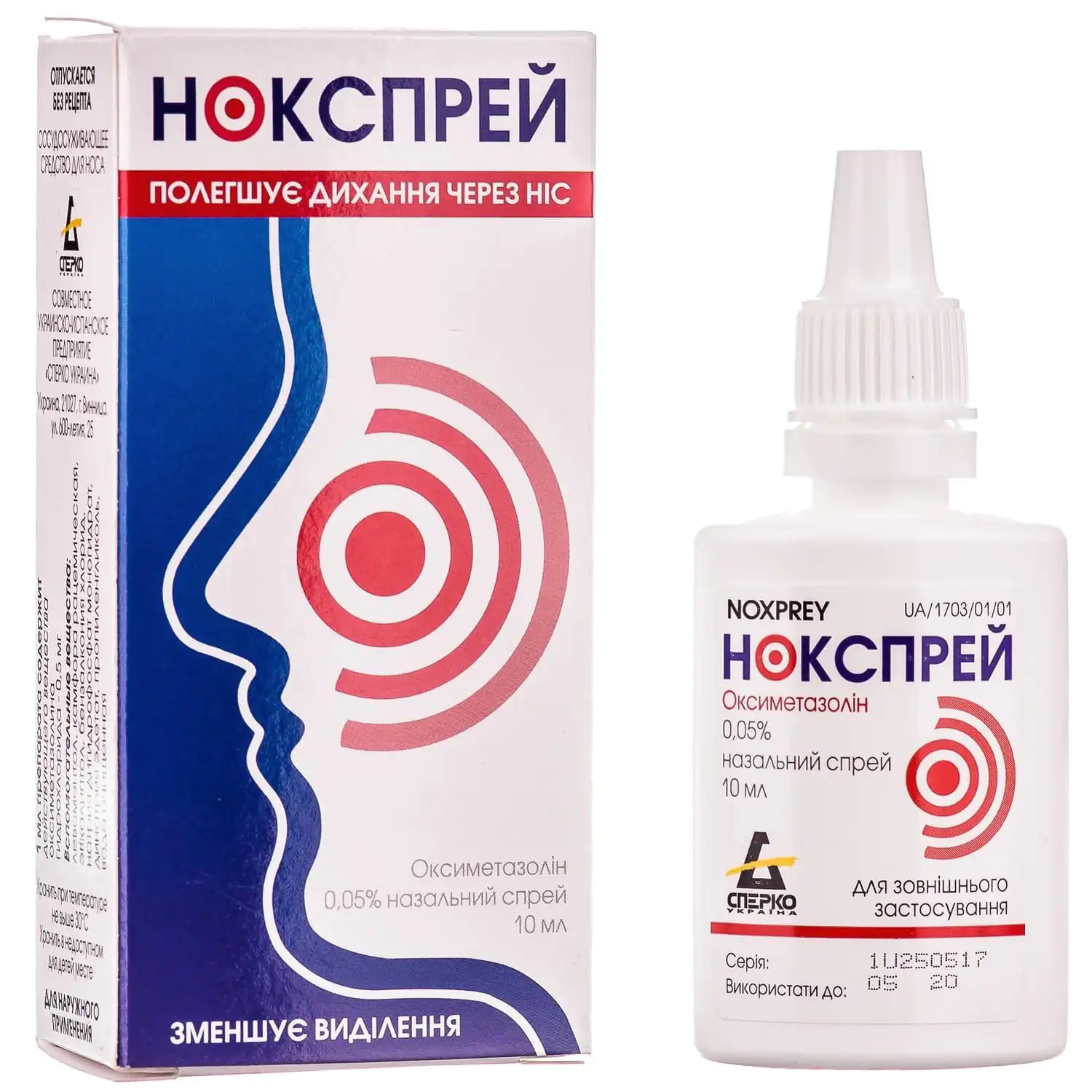
Noxsprey nasal spray 0.05% container 10 ml
Reviews
There are no reviews yet.