
🇦🇺 Australia
🇧🇪 Belgium
🇨🇦 Canada
🇨🇿 Czechia
🇩🇰 Denmark
🇪🇪 Estonia
🇫🇮 Finland
🇬🇷 Greece
🇭🇺 Hungary
🇮🇪 Ireland
🇮🇱 Israel
🇮🇹 Italy
🇯🇵 Japan
🇰🇼 Kuwait
🇱🇻 Latvia
🇱🇹 Lithuania
🇲🇽 Mexico
🇲🇩 Moldova
🇳🇱 Netherlands
🇳🇴 Norway
🇵🇱 Poland
🇷🇴 Romania
🇸🇰 Slovakia
🇰🇷 South Korea
🇨🇭 Switzerland
🇬🇧 United Kingdom
🇺🇸 United States of America
and more
🇦🇺 Australia
🇧🇪 Belgium
🇨🇦 Canada
🇨🇿 Czechia
🇩🇰 Denmark
🇪🇪 Estonia
🇫🇮 Finland
🇬🇷 Greece
🇭🇺 Hungary
🇮🇪 Ireland
🇮🇱 Israel
🇮🇹 Italy
🇯🇵 Japan
🇰🇼 Kuwait
🇱🇻 Latvia
🇱🇹 Lithuania
🇲🇽 Mexico
🇲🇩 Moldova
🇳🇱 Netherlands
🇳🇴 Norway
🇵🇱 Poland
🇷🇴 Romania
🇸🇰 Slovakia
🇰🇷 South Korea
🇨🇭 Switzerland
🇬🇧 United Kingdom
🇺🇸 United States of America
and more


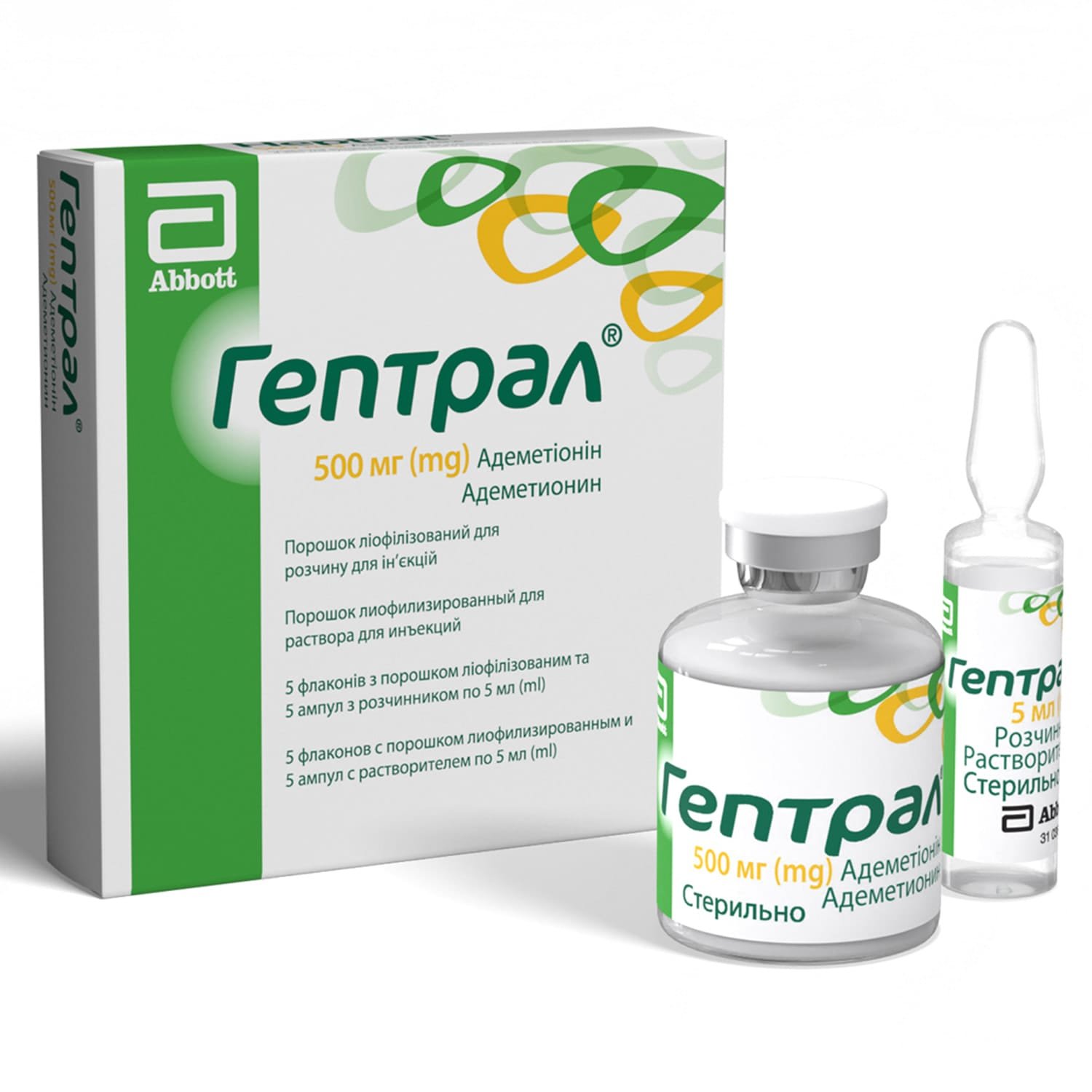
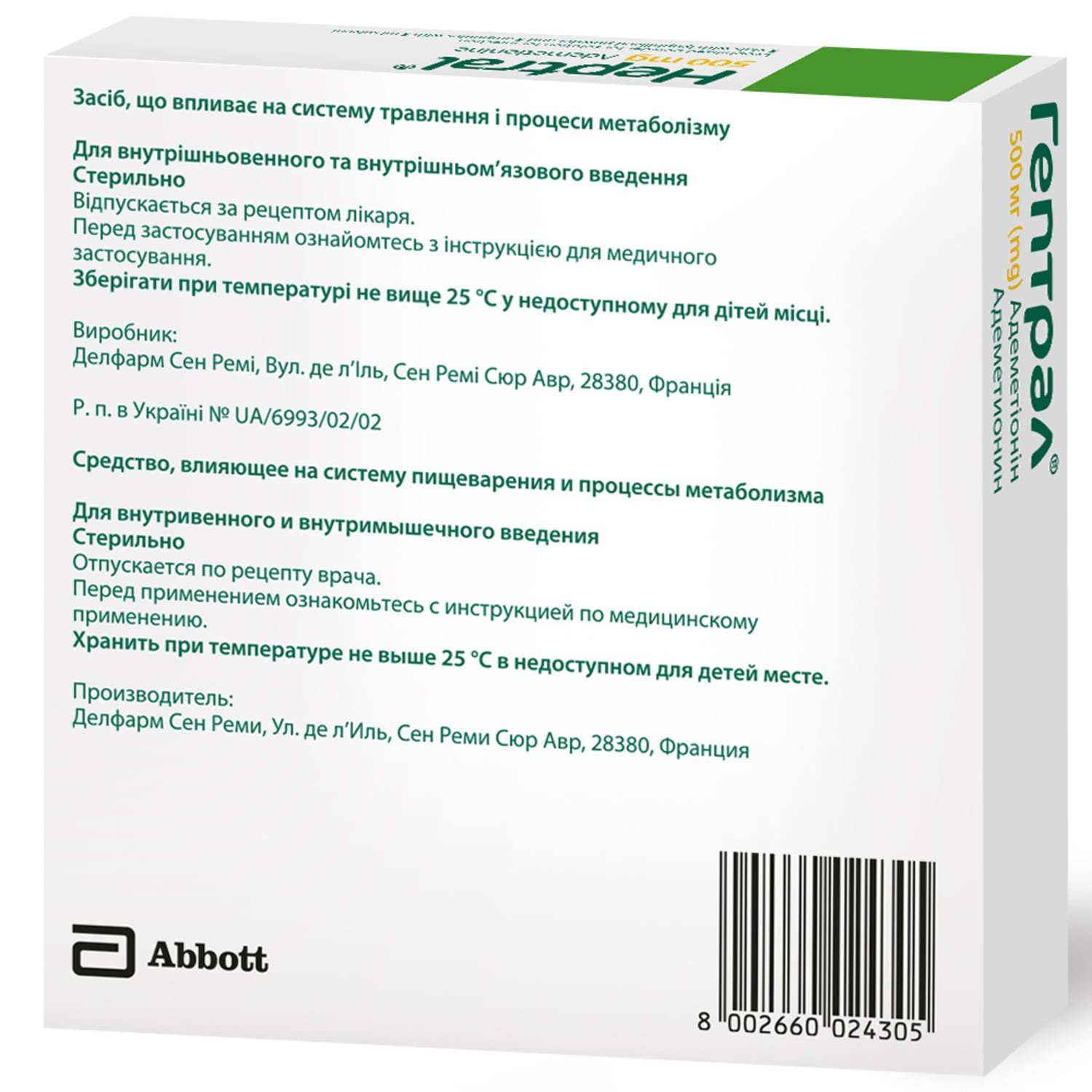


Heptral lyophilized powder for preparation of solution for injection 500 mg in vials of 5 pcs. complete with solvent in ampoules of 5 ml 5 pcs.
$96.40
Free Worldwide Shipping
to: Australia, Belgium, Canada, Czechia, Denmark, Estonia, Finland, Greece, Hungary, Ireland, Israel, Italy, Japan, Kuwait, Latvia, Lithuania, Mexico, Moldova, Netherlands, Norway, Poland, Romania, Slovakia, South Korea, Switzerland, United Kingdom, United States and more
🏖️ Hello! We are on vacation!
We are still accepting orders on our website; however, order processing and shipping will resume after September 10. If you place an order during our vacation, we will contact you and remind you about the temporary shipping delay. Starting September 10, all orders received during this period will be processed and shipped in the order they were placed. If your order contains a product with less than one year remaining before its expiration date, we will notify you after September 10 and proceed according to your instructions. If you decide to cancel an order placed during our vacation, simply contact us through the contact form on our website, and we will be happy to assist you. Thank you for your understanding, and we apologize for any inconvenience caused.
In stock
Heptral supports liver function and bile flow in intrahepatic cholestasis, helping adults and pregnant women maintain healthy liver function daily.
Payment
PayPal, Debit or Credit card, Google Pay, Apple Pay
Orders Temporarily Unavailable
Due to temporary postal service disruptions, we are currently unable to accept orders.
Heptral is a drug that affects the digestive system and metabolic processes. Amino acids and their derivatives.
Indications for use
- intrahepatic cholestasis in adults, including patients with chronic hepatitis of various etiologies and liver cirrhosis;
- Intrahepatic cholestasis in pregnant women.
Composition
- active ingredient: ademetionine;
- 1 vial of lyophilized powder contains 949 mg of ademethionine 1,4-butanedisulfonate, which corresponds to 500 mg of ademethionine cation;
- excipients: none.
- 1 ampoule with solvent contains L-lysine, sodium hydroxide, water for injection.
Contraindication
Hypersensitivity to the active substance or to any of the excipients of the drug (see section “Composition”).
Genetic defects affecting the methionine cycle and/or causing homocystinuria and/or hyperhomocysteinemia (e.g. cystathionine beta synthase deficiency, vitamin B12 metabolism defect).
Adverse reactions
The most commonly reported side effects during treatment with ademetionine were headache, diarrhea, and nausea.
From the gastrointestinal tract: often – abdominal pain, diarrhea, nausea; infrequently – dry mouth, dyspepsia, flatulence, gastrointestinal pain, gastrointestinal bleeding, gastrointestinal disorders, vomiting, esophagitis; rarely – abdominal bloating.
General disorders and administration site conditions: common: asthenia; uncommon: edema, hyperthermia, chills*, injection site reactions*, injection site necrosis*; rare: malaise.
Nervous system disorders: often – headache; infrequently – dizziness, paresthesia, dysgeusia*.
Mental disorders: often – anxiety, insomnia; infrequently – agitation, confusion.
Respiratory, thoracic and mediastinal disorders: uncommon – laryngeal edema*.
Skin and subcutaneous tissue disorders: common: pruritus; uncommon: hyperhidrosis, angioedema*, allergic skin reactions (e.g. rash, pruritus, urticaria, erythema)*.
Method of application
Treatment can be initiated with parenteral administration of the drug followed by the use of the drug in tablet form or immediately with the use of tablets.
For intramuscular or intravenous administration, the lyophilized powder must be dissolved in the special solvent provided immediately before use. For intravenous administration, the required dose of dissolved ademetionine must be further diluted in 250 ml of physiological saline or 5% dextrose (glucose) solution and infused slowly over 1–2 hours. Any unused portion of the solution must be discarded.
Ademetionine should not be mixed with alkaline solutions or solutions containing calcium ions. If the lyophilized powder has a color other than white to yellowish (due to cracks in the vial or exposure to elevated temperature), it should be avoided.
Initial therapy
Intravenous or intramuscular: The recommended dose is 5–12 mg/kg body weight per day for 2 weeks. The usual starting dose is 500 mg/day, the total daily dose should not exceed 1000 mg.
Supportive therapy
Administer orally (inside) according to the instructions for medical use of the drug Heptral® in the form of enteric-coated tablets.
The duration of therapy depends on the severity and course of the disease and is determined by the doctor individually.
Application features
Use during pregnancy or breastfeeding
In clinical studies, no adverse reactions were observed in women treated with ademetionine during the third trimester of pregnancy. Ademetionine should be used only if clearly needed during the first two trimesters of pregnancy.
During breastfeeding, ademetionine can be used only if the potential benefit from its use outweighs the potential risk to the infant.
Children
The safety and effectiveness of ademetionine in children have not been established.
Ability to influence reaction speed when driving vehicles or other mechanisms
Some patients may experience dizziness when taking ademetionine. Patients should refrain from driving or operating machinery until they are certain that ademetionine therapy does not affect their ability to perform these activities.
Overdose
Cases of overdose with ademetionine have been observed rarely. In case of overdose, physicians should contact local poison control centers. In general, patient monitoring and supportive treatment are recommended.
Interaction with other medicinal products and other types of interactions
Serotonin syndrome has been reported in a patient taking ademetionine while taking clomipramine. Therefore, although the possibility of an interaction is theoretically possible, caution should be exercised when ademetionine is used concomitantly with selective serotonin reuptake inhibitors (SSRIs), tricyclic antidepressants (such as clomipramine), and drugs and herbal remedies containing tryptophan.
Storage conditions
Store at a temperature not exceeding 25C in a place inaccessible to children.
You may also like

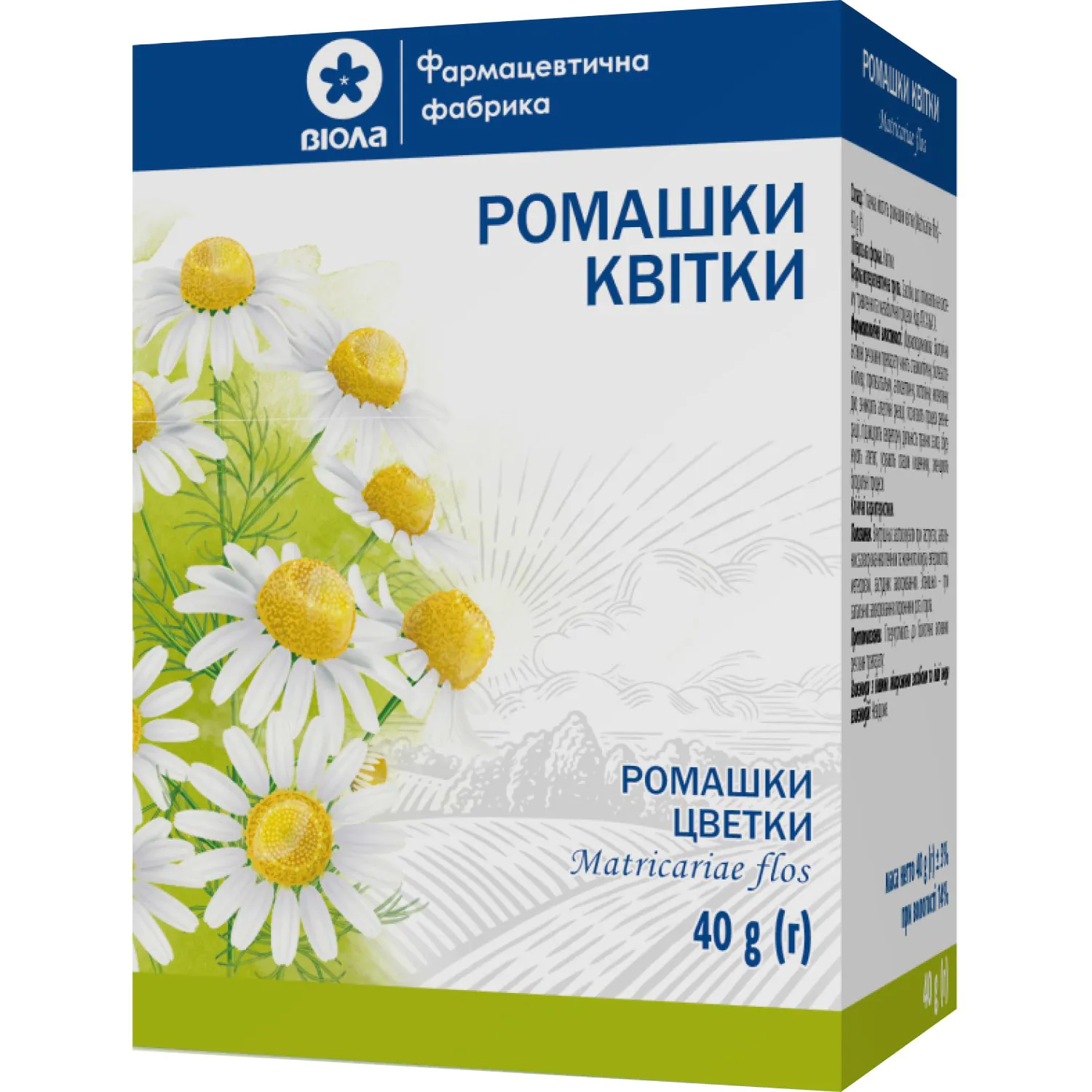
Chamomile flowers pack with an inner bag of 40 g
Reviews
There are no reviews yet.