
🇦🇺 Australia
🇧🇪 Belgium
🇨🇦 Canada
🇨🇿 Czechia
🇩🇰 Denmark
🇪🇪 Estonia
🇫🇮 Finland
🇬🇷 Greece
🇭🇺 Hungary
🇮🇪 Ireland
🇮🇱 Israel
🇮🇹 Italy
🇯🇵 Japan
🇰🇼 Kuwait
🇱🇻 Latvia
🇱🇹 Lithuania
🇲🇽 Mexico
🇲🇩 Moldova
🇳🇱 Netherlands
🇳🇴 Norway
🇵🇱 Poland
🇷🇴 Romania
🇸🇰 Slovakia
🇰🇷 South Korea
🇨🇭 Switzerland
🇬🇧 United Kingdom
🇺🇸 United States of America
and more
🇦🇺 Australia
🇧🇪 Belgium
🇨🇦 Canada
🇨🇿 Czechia
🇩🇰 Denmark
🇪🇪 Estonia
🇫🇮 Finland
🇬🇷 Greece
🇭🇺 Hungary
🇮🇪 Ireland
🇮🇱 Israel
🇮🇹 Italy
🇯🇵 Japan
🇰🇼 Kuwait
🇱🇻 Latvia
🇱🇹 Lithuania
🇲🇽 Mexico
🇲🇩 Moldova
🇳🇱 Netherlands
🇳🇴 Norway
🇵🇱 Poland
🇷🇴 Romania
🇸🇰 Slovakia
🇰🇷 South Korea
🇨🇭 Switzerland
🇬🇧 United Kingdom
🇺🇸 United States of America
and more


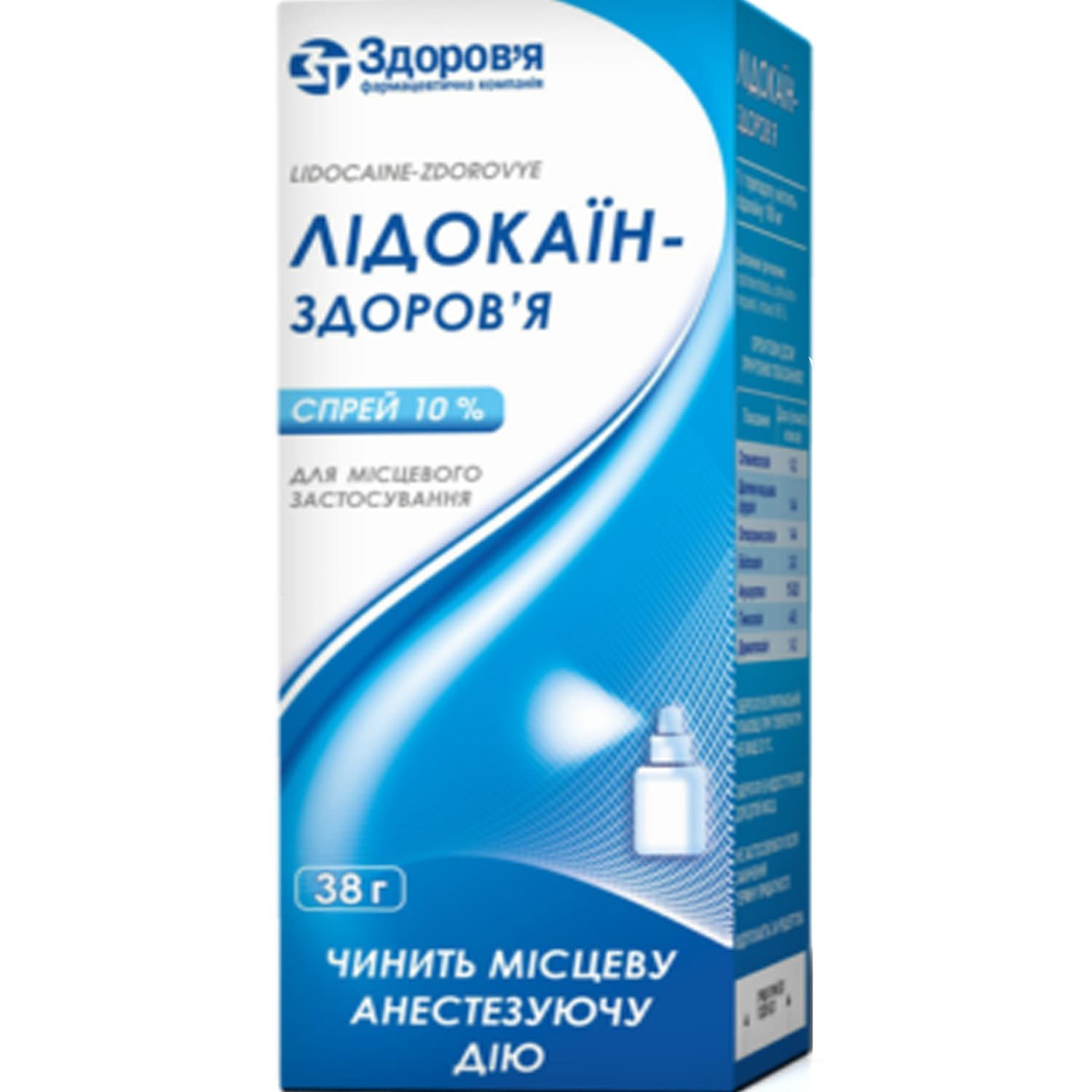

Please note: The product packaging may vary from the images shown. The contents, ingredients, and quality of the product remain unchanged.
Lidocaine Zdorovya spray for topical use 10% bottle 38 g
$27.04
Free Worldwide Shipping
to: Australia, Belgium, Canada, Czechia, Denmark, Estonia, Finland, Greece, Hungary, Ireland, Israel, Italy, Japan, Kuwait, Latvia, Lithuania, Mexico, Moldova, Netherlands, Norway, Poland, Romania, Slovakia, South Korea, Switzerland, United Kingdom, United States and more
🏖️ Hello! We are on vacation!
We are still accepting orders on our website; however, order processing and shipping will resume after September 10. If you place an order during our vacation, we will contact you and remind you about the temporary shipping delay. Starting September 10, all orders received during this period will be processed and shipped in the order they were placed. If your order contains a product with less than one year remaining before its expiration date, we will notify you after September 10 and proceed according to your instructions. If you decide to cancel an order placed during our vacation, simply contact us through the contact form on our website, and we will be happy to assist you. Thank you for your understanding, and we apologize for any inconvenience caused.
In stock
Lidocaine Spray 10% provides rapid local anesthesia of skin and mucous membranes for dental, ENT, gynecological, endoscopic and minor surgical procedures.
Payment
PayPal, Debit or Credit card, Google Pay, Apple Pay
Composition and form of release
active ingredient: lidocaine;
Composition
- 1 g of the drug contains 100 mg of lidocaine;
- Excipients: propylene glycol, peppermint oil, ethanol 96%.
Release form
Spray for topical use.
Indications for use
- Dentistry and maxillofacial surgery. Anesthesia of the injection site before local anesthesia; anesthesia during the opening of a superficial abscess, the removal of mobile deciduous teeth and bone fragments, and suturing of mucous membranes. Anesthesia of the gums for fixing a tooth crown or a dental bridge. The drug should be used during manual or instrumental removal of tartar or when cutting off enlarged interdental papillae to reduce or suppress the hypersensitive swallowing reflex. When taking an impression of the dentition or when placing an X-ray film, the drug can be used only when elastic impression materials are used.
- The drug should be used in children for frenectomy and removal of salivary gland cysts.
- Excision of superficial benign tumors of the mucous membrane.
- Otolaryngology. In the treatment of nosebleeds before electrocautery, septal resection and nasal polyp resection. Also used before tonsillectomy to suppress the gag reflex and anesthetize the injection site.
- As additional anesthesia before opening a peritonsillar abscess or before puncture of the maxillary sinus.
- Anesthesia before sinus lavage.
- Endoscopic and instrumental examinations. Pharyngeal anesthesia before insertion of various tubes through the nose or mouth (gastroduodenal tube, Sengstaken tube).
- Tracheotomy tube replacement.
- Obstetrics and gynecology. Perineal anesthesia for episiotomy. Suture removal. Anesthesia of the surgical field for vaginal or cervical surgeries.
- Dermatology. Anesthesia of the skin and mucous membranes during minor surgical interventions.
Contraindication
Hypersensitivity to the components of the drug, as well as to other amide local anesthetic drugs; in dentistry, the use of the drug is contraindicated before using plaster due to the risk of aspiration.
Special precautions. Lidocaine should not be allowed to enter the respiratory tract (risk of aspiration). As far as possible, when spraying the aerosol, the bottle should be held in an upright position. Avoid contact with the eyes.
Method of application
The dose of the drug depends on the indications and the size of the surface to be anesthetized.
With each spray of 1 portion of the spray, 4.8 mg of lidocaine (1 dose) is released onto the surface.
To avoid high plasma drug concentrations, it is important to use the lowest dose that provides a satisfactory effect.
Usually 1-2 sprays are sufficient, although in obstetrics 15-20 sprays or more are used (maximum dose – 40 sprays/70 kg of body weight).
Children: In dentistry or maxillofacial surgery, the drug can be administered to children by applying it with a swab, which avoids the risk of inhalation of the drug, as well as the burning sensation that is usually a side effect of the drug. Children under 2 years of age can be administered the drug in the same way.
For children over 12 years of age, the maximum dose is 3 mg/kg.
By suppressing the pharyngeal reflex and reaching the larynx and trachea (risk of aspiration), lidocaine suppresses the cough reflex, which can lead to bronchopneumonia.
The drug is not recommended for use for local anesthesia before tonsillectomy and adenoidectomy in children under 8 years of age.
Application features
The drug should be applied with caution to the posterior wall of the pharynx.
With transbuccal use, there is a risk of dysphagia and subsequent aspiration, especially in children. Due to the insensitivity of the tongue and buccal mucosa, there is a risk of injury due to biting.
Lidocaine is rapidly absorbed through mucous membranes (especially the tracheal mucosa) and through damaged skin. This should be taken into account, especially when the drug is applied to large areas or used in children.
Caution should be exercised when applying the drug to affected mucous membranes and/or infected areas.
Caution should be exercised when using the drug in patients with epilepsy, as well as in bradycardia, conduction disorders, liver dysfunction, and shock, especially if absorption of a significant amount of the drug is expected based on the dose used and the area treated.
Debilitated patients, elderly patients, seriously ill patients, and children should use lower doses of the drug according to their age and general condition.
Propylene glycol may cause skin irritation.
Use during pregnancy or breastfeeding
Strictly controlled clinical studies of the safety of the drug during pregnancy have not been conducted. However, lidocaine has been used for a long time and has not caused any harm to the patient’s health.
Preclinical studies have not revealed any toxic effects of lidocaine on fetal development. In the absence of a safer method of treatment, the drug can also be used during pregnancy.
Lidocaine is excreted in breast milk, but at usual therapeutic doses the amount excreted is so small that it is unlikely to harm a breastfed infant.
Ability to influence reaction speed when driving vehicles or other mechanisms
Considering that sensitive patients may experience adverse reactions from the central nervous system (excitement, depression, nervousness, dizziness, drowsiness, spasms, loss of consciousness, respiratory paralysis) when using the drug, you should refrain from driving vehicles and performing other work that requires concentration of attention while taking the drug.
Overdose
Symptoms: increased sweating, pale skin, dizziness, headache, blurred vision, tinnitus, diplopia, decreased blood pressure, bradycardia, arrhythmia, drowsiness, chills, numbness of the extremities, anxiety, convulsions, shock, methemoglobinemia.
Treatment: If necessary, provide access to fresh air, oxygen and/or artificial respiration.
Dosage for children should be based on the patient’s age and body weight.
Side effects
- Local effects. When using the drug, a burning sensation may occur, which disappears after the anesthetic effect appears (within 1 minute). Transient erythema, edema, and decreased sensitivity may be observed at the site of application.
- Allergic reactions. Including: skin rash, itching, urticaria, angioedema, bronchospasm, in extremely severe cases – shock. In case of hypersensitivity reactions, the use of the drug should be discontinued.
- Systemic effects. If the drug is used according to the instructions, the incidence of systemic effects is extremely low, since the amount of active substance that can reach the bloodstream is very small. When using high doses and in the case of rapid absorption of lidocaine or in case of hypersensitivity, idiosyncrasy or reduced tolerance, the following side effects may develop:
- From the side of the central nervous system: excitement, depression, nervousness, dizziness, drowsiness, spasms, loss of consciousness, respiratory paralysis;
- Cardiovascular system: hypotension, myocardial infarction, bradycardia.
Interaction
When used simultaneously, the following drugs increase the concentration of lidocaine in the blood serum: aminazine, cimetidine, propranolol, peptidine, bupivacaine, quinidine, disopyramide, amitriptyline, imipramine, nortriptyline.
Storage conditions
Store in original packaging at a temperature not exceeding 25 °C. Keep out of reach of children. Shelf life 2 years.
You may also like

Reviews
There are no reviews yet.