
🇦🇺 Australia
🇧🇪 Belgium
🇨🇦 Canada
🇨🇿 Czechia
🇩🇰 Denmark
🇪🇪 Estonia
🇫🇮 Finland
🇬🇷 Greece
🇭🇺 Hungary
🇮🇪 Ireland
🇮🇱 Israel
🇮🇹 Italy
🇯🇵 Japan
🇰🇼 Kuwait
🇱🇻 Latvia
🇱🇹 Lithuania
🇲🇽 Mexico
🇲🇩 Moldova
🇳🇱 Netherlands
🇳🇴 Norway
🇵🇱 Poland
🇷🇴 Romania
🇸🇰 Slovakia
🇰🇷 South Korea
🇨🇭 Switzerland
🇬🇧 United Kingdom
🇺🇸 United States of America
and more
🇦🇺 Australia
🇧🇪 Belgium
🇨🇦 Canada
🇨🇿 Czechia
🇩🇰 Denmark
🇪🇪 Estonia
🇫🇮 Finland
🇬🇷 Greece
🇭🇺 Hungary
🇮🇪 Ireland
🇮🇱 Israel
🇮🇹 Italy
🇯🇵 Japan
🇰🇼 Kuwait
🇱🇻 Latvia
🇱🇹 Lithuania
🇲🇽 Mexico
🇲🇩 Moldova
🇳🇱 Netherlands
🇳🇴 Norway
🇵🇱 Poland
🇷🇴 Romania
🇸🇰 Slovakia
🇰🇷 South Korea
🇨🇭 Switzerland
🇬🇧 United Kingdom
🇺🇸 United States of America
and more


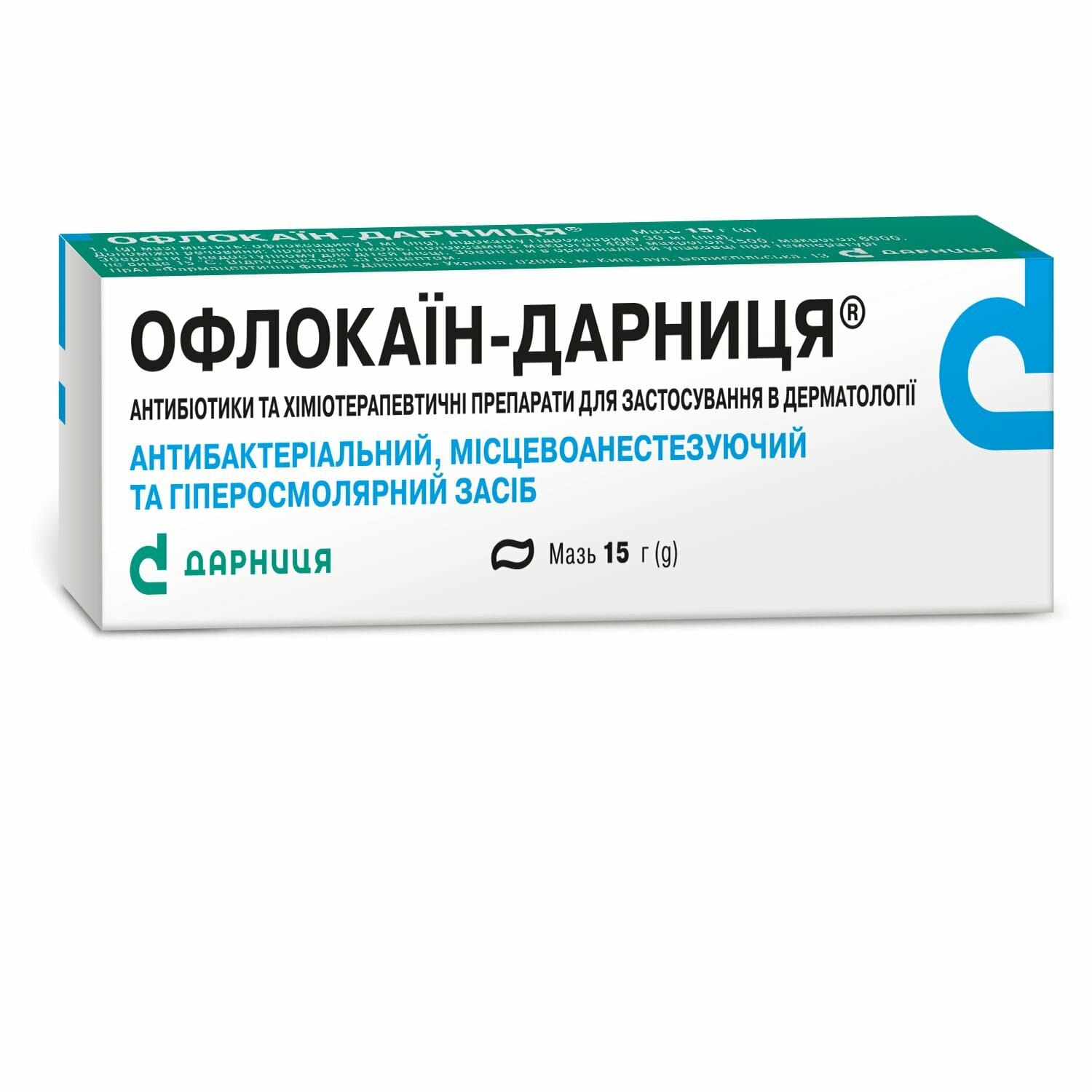

Oflocain Darnytsia ointment tube 15 g
$17.44
Free Worldwide Shipping
to: Australia, Belgium, Canada, Czechia, Denmark, Estonia, Finland, Greece, Hungary, Ireland, Israel, Italy, Japan, Kuwait, Latvia, Lithuania, Mexico, Moldova, Netherlands, Norway, Poland, Romania, Slovakia, South Korea, Switzerland, United Kingdom, United States and more
🏖️ Hello! We are on vacation!
We are still accepting orders on our website; however, order processing and shipping will resume after September 10. If you place an order during our vacation, we will contact you and remind you about the temporary shipping delay. Starting September 10, all orders received during this period will be processed and shipped in the order they were placed. If your order contains a product with less than one year remaining before its expiration date, we will notify you after September 10 and proceed according to your instructions. If you decide to cancel an order placed during our vacation, simply contact us through the contact form on our website, and we will be happy to assist you. Thank you for your understanding, and we apologize for any inconvenience caused.
In stock
Oflocain Darnytsia ointment with ofloxacin and lidocaine helps treat infected wounds, burns and skin infections, reducing pain and aiding healing safely
Payment
PayPal, Debit or Credit card, Google Pay, Apple Pay
Pharmacological properties
Pharmacodynamics. Oflocain Darnytsia is a combination of an antimicrobial agent from the fluoroquinolone group, ofloxacin, and a local anesthetic, lidocaine, on a hydrophilic, hyperosmolar, and water-soluble basis. The pharmacological effects of the ointment are due to the properties of the active ingredients.
Ofloxacin acts on the bacterial enzyme DNA gyrase and bacterial topoisomerase IV, which ensures supercoiling and stability of bacterial DNA. It exerts a bactericidal effect by destabilizing bacterial DNA chains.
Ofloxacin provides antimicrobial properties of the ointment by affecting gram-positive and gram-negative bacteria (to a greater extent), aerobic and anaerobic, spore-forming and asporogenic microflora in the form of monocultures and microbial associations. Ofloxacin is also effective against hospital strains resistant to antibiotics and sulfonamides.
Hyperosmolar, polymeric ointment base of the drug provides the movement of fluid in the wound towards the ointment base. Due to this, swelling of the tissues around the wound decreases, purulent-necrotic masses are absorbed. Excipients of the ointment base are able to transport ofloxacin into the tissues surrounding the wound, as a result of which it affects both superficial and deep wound infection.
The mechanism of local anesthetic action of lidocaine is to stabilize the neuronal membrane by reducing its permeability to sodium ions, which prevents the occurrence of an action potential and the conduction of impulses along nerve fibers. Antagonism with calcium ions is possible. It inhibits the conduction of not only pain impulses, but also impulses of other modalities. It is rapidly hydrolyzed in a slightly alkaline tissue environment and after a short latent period acts for 60-90 minutes. The anesthetic effect of lidocaine is 2-6 times stronger than that of procaine. When applied topically, it dilates blood vessels, does not have a local irritating effect. In inflammation (tissue acidosis), the anesthetic activity decreases. Effective for all types of local anesthesia. Dilates blood vessels. Does not irritate tissues.
Pharmacokinetics. Ofloxacin and lidocaine practically do not enter the systemic bloodstream when applying the ointment to healthy skin. After application to the wound surface in case of impaired barrier functions of the skin, about 3% of the applied dose of ofloxacin enters the systemic bloodstream. The peak concentration of the substance in the blood is noted after 3-4 hours. 6 hours after application of the ointment, ofloxacin is not detected in the blood.
Indication
Complicated infected wounds in the and phase of the wound process of various localization and origin (amputation stumps of limbs, wounds after surgical treatment of purulent foci, bedsores, trophic ulcers, postoperative complicated wounds and fistulas, abscesses and phlegmons of the maxillofacial region, etc.) after their surgical treatment.
Prevention and treatment of suppuration of burn wounds.
Purulent-inflammatory skin diseases caused by bacterial microflora sensitive to ofloxacin.
Application
Locally. After treating wounds and burns, the ointment is applied directly to the wound surface, then a sterile gauze bandage or ointment is applied, applied to the dressing material, and then the wound is covered with it. Tampons soaked in ointment are loosely filled with the cavity of purulent wounds after surgical treatment, and gauze turundas with ointment are inserted into the fistulous course.
In the treatment of purulent wounds, the ointment is used once a day, in the treatment of burns – daily or 2-3 times a week, depending on the amount of purulent discharge. The dose of the drug is determined by the area of the wound surface (the ointment should cover the entire affected area) and the degree of purulent exudation. The duration of treatment depends on the dynamics of cleansing the wound from purulent exudate and eliminating the inflammatory process.
When treating patients with skin diseases, the ointment is applied in a thin layer to the affected areas 1-2 times a day or on a gauze bandage with subsequent application to the lesion.
Contraindication
Hypersensitivity to ofloxacin or other quinolone derivatives; hypersensitivity to lidocaine hydrochloride or other amide-type local anesthetics (e.g. bupivacaine, etidocaine, mepivacaine and prilocaine); hypersensitivity to other components of the drug.
Side effects
When using the ointment, the following reactions may occur: itching, burning sensation, rash, hyperemia, wetting, allergic reactions, including dermatitis, urticaria, Quincke’s edema. Propylene glycol, which is part of the drug, can cause skin irritation.
Special instructions
Before applying the drug to the wound surface, it is advisable to rinse the wound with an aseptic solution.
Use during pregnancy and breastfeeding. The drug is not used during pregnancy and breastfeeding.
Children. Oflocain Darnytsia is not used to treat children.
The ability to influence the reaction rate when driving vehicles or working with other mechanisms. The drug does not affect the speed of neuromuscular conduction, in recommended doses it can be used by people who drive vehicles and work with complex mechanisms.
Interactions
Absorption of lidocaine through the skin is usually low, but caution should be exercised in patients taking class I antiarrhythmics (tocainide, mexiletine) or other local anesthetics, as there is a risk of cumulative systemic effects. MAO inhibitors enhance the local anesthetic effect of lidocaine.
Overdose
No cases of overdose have been reported.
Storage conditions
In original packaging at a temperature not exceeding 15 °C.
You may also like

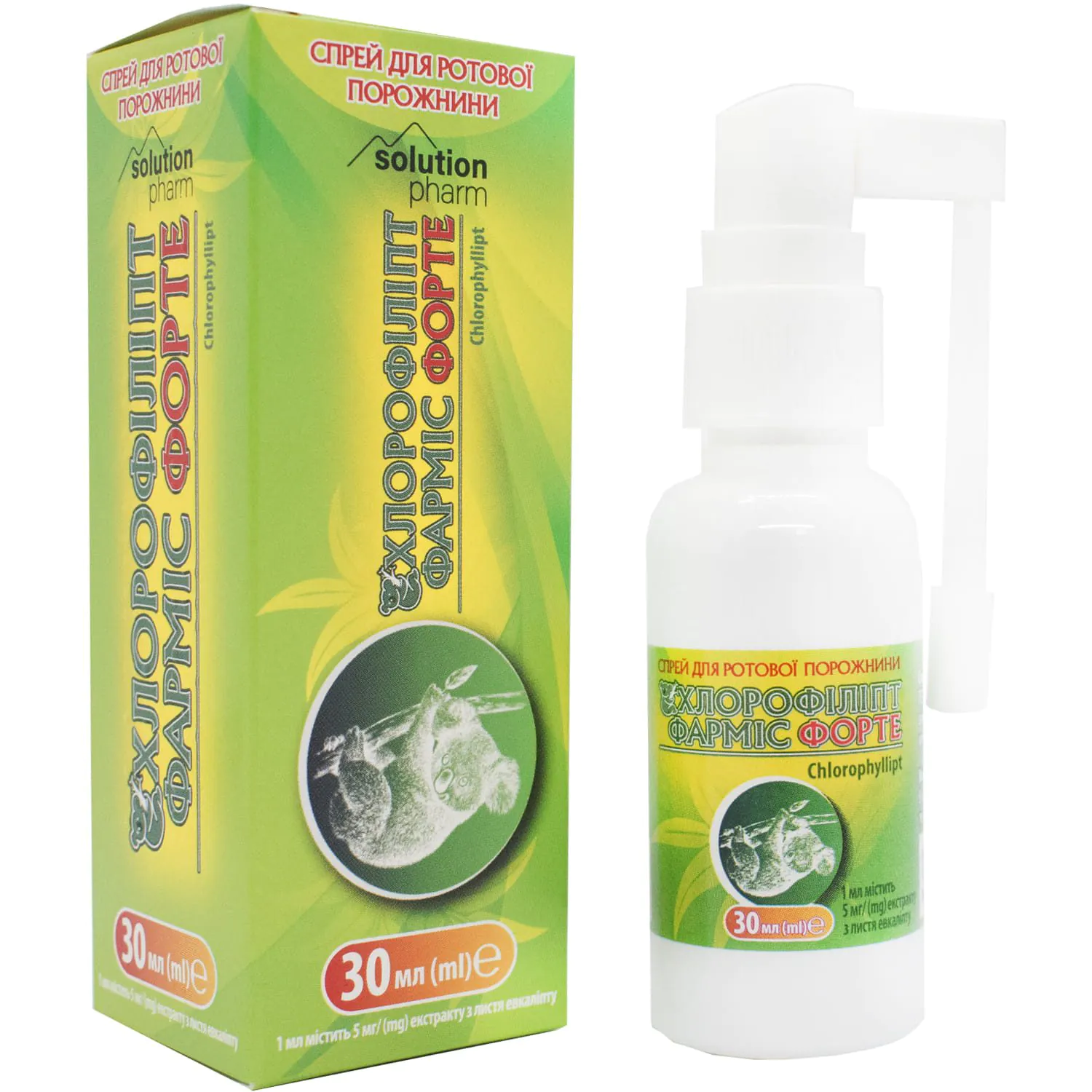
Chlorophyllipt Farmis Forte spray for the oral cavity bottle 30 ml Solution Pharm

Calendula ointment tube 30 g
Reviews
There are no reviews yet.