
🇦🇺 Australia
🇧🇪 Belgium
🇨🇦 Canada
🇨🇿 Czechia
🇩🇰 Denmark
🇪🇪 Estonia
🇫🇮 Finland
🇬🇷 Greece
🇭🇺 Hungary
🇮🇪 Ireland
🇮🇱 Israel
🇮🇹 Italy
🇯🇵 Japan
🇰🇼 Kuwait
🇱🇻 Latvia
🇱🇹 Lithuania
🇲🇽 Mexico
🇲🇩 Moldova
🇳🇱 Netherlands
🇳🇴 Norway
🇵🇱 Poland
🇷🇴 Romania
🇸🇰 Slovakia
🇰🇷 South Korea
🇨🇭 Switzerland
🇬🇧 United Kingdom
🇺🇸 United States of America
and more
🇦🇺 Australia
🇧🇪 Belgium
🇨🇦 Canada
🇨🇿 Czechia
🇩🇰 Denmark
🇪🇪 Estonia
🇫🇮 Finland
🇬🇷 Greece
🇭🇺 Hungary
🇮🇪 Ireland
🇮🇱 Israel
🇮🇹 Italy
🇯🇵 Japan
🇰🇼 Kuwait
🇱🇻 Latvia
🇱🇹 Lithuania
🇲🇽 Mexico
🇲🇩 Moldova
🇳🇱 Netherlands
🇳🇴 Norway
🇵🇱 Poland
🇷🇴 Romania
🇸🇰 Slovakia
🇰🇷 South Korea
🇨🇭 Switzerland
🇬🇧 United Kingdom
🇺🇸 United States of America
and more


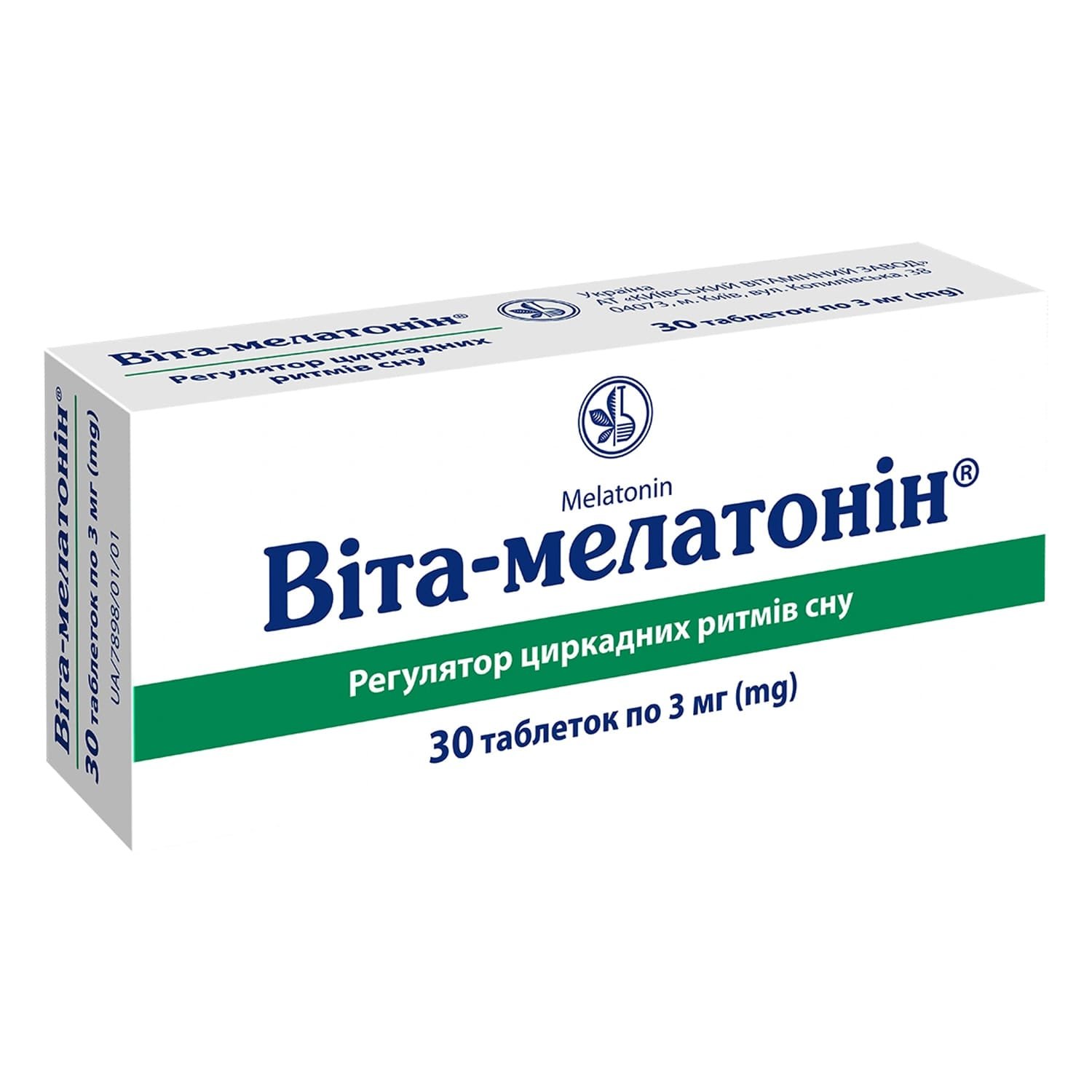

Vita-melatonin tablets 3 mg 30 pcs.
$19.65
Free Worldwide Shipping
to: Australia, Belgium, Canada, Czechia, Denmark, Estonia, Finland, Greece, Hungary, Ireland, Israel, Italy, Japan, Kuwait, Latvia, Lithuania, Mexico, Moldova, Netherlands, Norway, Poland, Romania, Slovakia, South Korea, Switzerland, United Kingdom, United States and more
🏖️ Hello! We are on vacation!
We are still accepting orders on our website; however, order processing and shipping will resume after September 10. If you place an order during our vacation, we will contact you and remind you about the temporary shipping delay. Starting September 10, all orders received during this period will be processed and shipped in the order they were placed. If your order contains a product with less than one year remaining before its expiration date, we will notify you after September 10 and proceed according to your instructions. If you decide to cancel an order placed during our vacation, simply contact us through the contact form on our website, and we will be happy to assist you. Thank you for your understanding, and we apologize for any inconvenience caused.
In stock
Vita-Melatonin helps normalize sleep, reduce stress and jet lag, improve sleep quality and support mental and physical performance naturally.
Payment
PayPal, Debit or Credit card, Google Pay, Apple Pay
Orders Temporarily Unavailable
Due to temporary postal service disruptions, we are currently unable to accept orders.
Pharmacological properties
Pharmacodynamics. Vita-melatonin is a synthetic analogue of melatonin – a neuropeptide produced by the pineal gland (epiphysis). The main effect of Vita-melatonin is to inhibit the secretion of gonadotropins. To a lesser extent, the drug inhibits the secretion of other hormones of the adenohypophysis – corticotropin, thyrotropin, somatotropin. In addition, the content of GABA and serotonin increases in the midbrain and hypothalamus.
The processes listed above contribute to the normalization of circadian rhythms, changes in sleep and wakefulness, the rhythmicity of gonadotropic effects and sexual function, increase mental and physical performance, and reduce the severity of stress reactions.
The drug has antioxidant properties, which determines its membrane-stabilizing effect. It normalizes the permeability of the vascular wall and increases its resistance to damage by factors, improves microcirculation.
The drug improves only the impaired functional state of the endothelium, without affecting its normal function. Melatonin reduces systolic blood pressure and heart rate in elderly patients at rest, reduces elevated blood pressure during psychoemotional stress. The drug normalizes the autonomic nervous regulation of the cardiovascular system mainly at night, which helps to improve the impaired diurnal blood pressure profile.
Vita-melatonin, by stimulating cellular immune responses, has an immunomodulatory effect on the body.
Pharmacokinetics. After oral administration, melatonin undergoes significant transformation during the first pass through the liver. The bioavailability of the drug is 30-50%. When administered orally at a dose of 3 mg, C max in blood plasma and saliva is achieved after 20 and 60 minutes, respectively.
Melatonin penetrates the blood-brain barrier, is determined in the placenta. The average T ½ of melatonin is 45 minutes. It is excreted from the body by the kidneys.
Indication
Vita-melatonin is used for the prevention and treatment of circadian rhythm disorders “sleep-wake” when changing time zones, manifested by increased fatigue; sleep disorders, including chronic insomnia of functional origin, insomnia in the elderly (including with concomitant AG and hypercholesterolemia); to increase mental and physical performance, as well as eliminate stress reactions and depressive states of a seasonal nature. increased fever and hypertension (stages I-II) in elderly patients (as part of complex therapy).
Application
For treatment, vita-melatonin is prescribed to adults at a dose of 3-6 mg (1-2 tablets) per day 30 minutes before bedtime every day, preferably at the same time.
The course of treatment is continued until the physiological rhythm of “sleep-wakefulness” is restored, but not more than 1 month.
For preventive purposes, the dose of the drug and the duration of its use are determined by the doctor depending on the individual characteristics of the patient and the course of the disease. Usually, 1-2 tablets are prescribed per day 30 minutes before bedtime, preferably at the same time every day for 2 months with a week break between courses (course of use – 1 month).
For the treatment of chronic sleep disorders (including concomitant hypertension and/or hypercholesterolemia) in elderly patients, the drug is prescribed in a minimum effective dose of 1.5 mg (½ tablet) once a day 30 minutes before bedtime. If the effectiveness is insufficient, the dose is increased to 3 mg. The drug should be discontinued gradually, reducing the dose over 1-2 weeks.
The drug is taken according to the same scheme for high blood pressure and hypertension in elderly patients. The drug can be used for 3-6 months with 1-week intervals between monthly courses of treatment.
Renal insufficiency: There are no studies on the effect of varying degrees of renal insufficiency on the pharmacokinetics of melatonin, therefore melatonin should be used with caution in such patients.
Hepatic impairment. There is no experience with the use of melatonin in patients with hepatic impairment. Published data suggest markedly increased levels of endogenous melatonin during the daytime as a result of reduced clearance in such patients. Therefore, melatonin is not recommended for use in patients with hepatic impairment.
Contraindication
Hypersensitivity to the components of the drug, autoimmune diseases, lymphogranulomatosis, leukemia, lymphoma, myeloma, epilepsy, diabetes mellitus, simultaneous use of MAO inhibitors, corticosteroids, cyclosporine.
Side effects
In some cases, adverse reactions may occur when using the drug.
Infections and infestations: shingles.
Blood and lymphatic system disorders: leukopenia, thrombocytopenia.
Cardiovascular system: angina pectoris, palpitations.
On the part of the psyche: irritability, increased excitability, restlessness, insomnia, unusual dreams, mood changes, aggressiveness, agitation, tearfulness, early morning awakening, increased libido, depression.
From the side of the central nervous system: headache, increased psychomotor activity, dizziness, drowsiness, memory impairment, impaired attention, impaired sleep quality, paresthesia.
On the part of the organ of vision: decreased visual acuity, blurred vision, increased lacrimation.
From the side of the organs of hearing and vestibular apparatus: dizziness when changing body position.
Vascular disorders: flushing.
On the part of the digestive system: abdominal pain, constipation, dry mouth, mouth ulcers, vomiting, abnormal bowel sounds, flatulence, increased salivation, bad breath, gastroesophageal reflux.
Metabolic: hypertriglyceridemia, hypocalcemia, hyponatremia.
From the hepatobiliary system: hyperbilirubinemia, increased activity of liver enzymes, impaired liver function, deviations from the norm of laboratory test data.
Skin and subcutaneous tissue disorders: night sweats, dermatitis, eczema, erythema, rash, itching, dry skin, psoriasis, nail damage.
Musculoskeletal and connective tissue disorders: pain in the extremities, muscle spasms, neck pain, arthritis.
From the genitourinary system: glycosuria, proteinuria, menopausal symptoms, polyuria, hematuria, nocturia, priapism, prostatitis.
General disorders: asthenia, chest pain, fatigue, thirst.
Other disorders: weight gain, changes in electrolyte balance.
Special instructions
Do not use in women planning pregnancy due to the certain contraceptive effect of melatonin.
When using Vita-melatonin, bright lighting should be avoided.
In patients with liver cirrhosis, the level of melatonin metabolism is reduced, so the drug should be used with caution in these patients.
The drug can be used in patients with high blood pressure (especially systolic) and hypercholesterolemia. With prolonged use, Vita-melatonin reduces cholesterol levels in patients with hypercholesterolemia, but does not affect cholesterol levels with normal plasma levels. The drug reduces insulin and glucose levels in blood plasma, so it can be used in patients with hypertension and hypercholesterolemia accompanied by insulin resistance (HOMA index 3).
It is prescribed with caution in cases of hormonal disorders and/or hormone therapy, as well as in patients with allergic diseases.
Melatonin causes drowsiness. The drug should be used with caution if the potential drowsiness may be associated with a risk or danger to the patient’s health.
Not recommended for use in autoimmune diseases.
Patients with hereditary diseases such as galactose intolerance, Lapp lactase deficiency or glucose-galactose malabsorption should not use this medicine.
Concomitant use of alcohol reduces the effectiveness of melatonin.
Use during pregnancy and breastfeeding. The drug is not used during pregnancy and breastfeeding due to the lack of clinical data.
Children: There is no experience with the use of the drug in children.
The ability to influence the reaction rate when driving vehicles or working with other mechanisms. Given that the drug causes drowsiness, while taking the drug you should refrain from driving vehicles and performing other work that requires concentration.
Interactions
Drugs that block β-adrenergic receptors, clonidine, dexamethasone, fluvoxamine, and some other drugs can alter the secretion of endogenous melatonin.
Vita-melatonin can affect the effectiveness of hormonal drugs (estrogens, androgens, etc.), increase the binding of benzodiazepines to specific receptors, therefore their simultaneous use requires medical supervision.
Melatonin may enhance the sedative properties of benzodiazepines and nonbenzodiazepine hypnotics such as zaleplon, zolpidem and zopiclone. There is clear evidence of a pharmacodynamic interaction between melatonin and zolpidem 1 hour after co-administration. Co-administration results in more pronounced impairment of attention, memory and coordination compared to zolpidem alone.
Vita-melatonin may potentiate the antitumor effect of tamoxifen.
The dopaminergic and serotoninergic effects of methamphetamine may be enhanced when used simultaneously with Vita-melatonin.
Vita-melatonin may potentiate the antibacterial effect of isoniazid.
Melatonin can be used with lisinopril in concomitant antihypertensive therapy in patients with functional insufficiency of the pineal gland, enhancing its effect.
Melatonin has been observed to induce CYP3A in vitro at concentrations exceeding therapeutic levels. The clinical significance of this finding is unknown. The occurrence of induction may result in decreased plasma concentrations of concomitantly administered drugs.
Fluvoxamine increases melatonin levels by inhibiting its metabolism by the hepatic cytochrome P450 (CYP) isoenzymes CYP 1A2 and CYP 2C19. This combination should be avoided.
Patients receiving 5- or 8-methoxypsoralen, which increases plasma melatonin levels by inhibiting its metabolism, should be closely monitored.
Patients receiving cimetidine, a CYP 2D inhibitor that increases melatonin plasma levels by inhibiting its metabolism, should be closely monitored.
Smoking may reduce melatonin levels by inducing CYP 1A2.
Patients receiving estrogens (e.g., contraceptives or hormone replacement therapy) should be carefully monitored, as melatonin levels are increased due to inhibition of its metabolism by CYP 1A1 and CYP 1A2.
CYP 1A2 inhibitors, such as quinolones, may enhance the effects of melatonin.
CYP 1A2 inducers, such as carbamazepine and rifampicin, may contribute to a decrease in melatonin plasma concentrations.
Overdose
Cases of melatonin overdose have been described (single dose of 24-30 mg of melatonin). Overdose may cause disorientation, prolonged sleep, and anterograde amnesia. Treatment is symptomatic.
Storage conditions
In the original packaging at a temperature not exceeding 25 °C.
You may also like

Reviews
There are no reviews yet.