
🇦🇺 Australia
🇧🇪 Belgium
🇨🇦 Canada
🇨🇿 Czechia
🇩🇰 Denmark
🇪🇪 Estonia
🇫🇮 Finland
🇬🇷 Greece
🇭🇺 Hungary
🇮🇪 Ireland
🇮🇱 Israel
🇮🇹 Italy
🇯🇵 Japan
🇰🇼 Kuwait
🇱🇻 Latvia
🇱🇹 Lithuania
🇲🇽 Mexico
🇲🇩 Moldova
🇳🇱 Netherlands
🇳🇴 Norway
🇵🇱 Poland
🇷🇴 Romania
🇸🇰 Slovakia
🇰🇷 South Korea
🇨🇭 Switzerland
🇬🇧 United Kingdom
🇺🇸 United States of America
and more
🇦🇺 Australia
🇧🇪 Belgium
🇨🇦 Canada
🇨🇿 Czechia
🇩🇰 Denmark
🇪🇪 Estonia
🇫🇮 Finland
🇬🇷 Greece
🇭🇺 Hungary
🇮🇪 Ireland
🇮🇱 Israel
🇮🇹 Italy
🇯🇵 Japan
🇰🇼 Kuwait
🇱🇻 Latvia
🇱🇹 Lithuania
🇲🇽 Mexico
🇲🇩 Moldova
🇳🇱 Netherlands
🇳🇴 Norway
🇵🇱 Poland
🇷🇴 Romania
🇸🇰 Slovakia
🇰🇷 South Korea
🇨🇭 Switzerland
🇬🇧 United Kingdom
🇺🇸 United States of America
and more
Dear Customers! Due to temporary issues affecting postal carriers, delivery times may be longer than usual!
Dear Customers! Due to temporary issues affecting postal carriers, delivery times may be longer than usual!
Dear Customers! Due to temporary issues affecting postal carriers, delivery times may be longer than usual!
Dear Customers! Due to temporary issues affecting postal carriers, delivery times may be longer than usual!
Dear Customers! Due to temporary issues affecting postal carriers, delivery times may be longer than usual!
Dear Customers! Due to temporary issues affecting postal carriers, delivery times may be longer than usual!

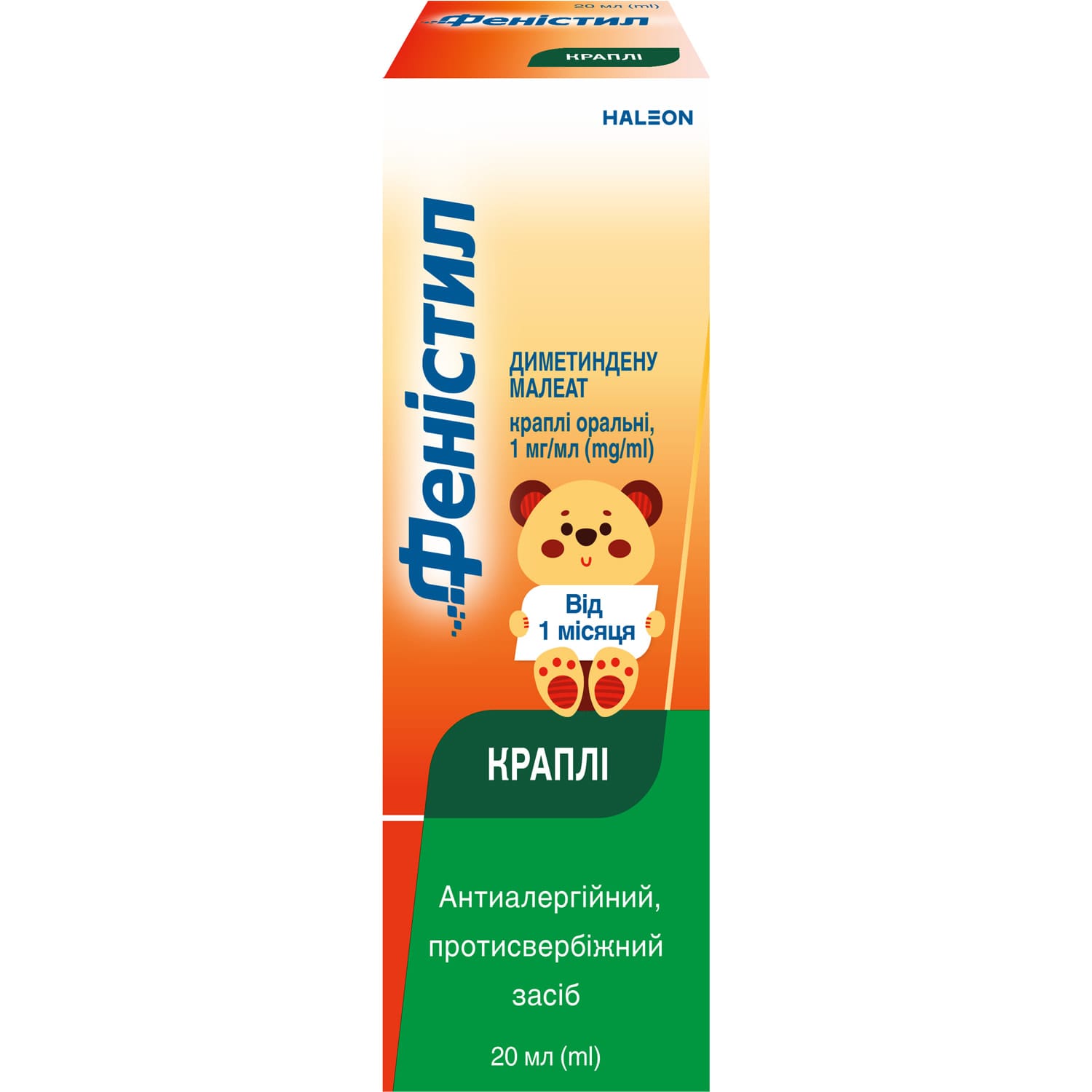

Fenistil oral drops 1 mg/ml bottle with dropper 20 ml
$23.73
Free Worldwide Shipping
to: Australia, Belgium, Canada, Czechia, Denmark, Estonia, Finland, Greece, Hungary, Ireland, Israel, Italy, Japan, Kuwait, Latvia, Lithuania, Mexico, Moldova, Netherlands, Norway, Poland, Romania, Slovakia, South Korea, Switzerland, United Kingdom, United States and more
🏖️ Hello! We are on vacation!
We are still accepting orders on our website; however, order processing and shipping will resume after September 10. If you place an order during our vacation, we will contact you and remind you about the temporary shipping delay. Starting September 10, all orders received during this period will be processed and shipped in the order they were placed. If your order contains a product with less than one year remaining before its expiration date, we will notify you after September 10 and proceed according to your instructions. If you decide to cancel an order placed during our vacation, simply contact us through the contact form on our website, and we will be happy to assist you. Thank you for your understanding, and we apologize for any inconvenience caused.
In stock
Fenistil drops relieve allergy symptoms, itching and skin irritation caused by hives, insect bites and allergic reactions in children and adults.
Payment
PayPal, Debit or Credit card, Google Pay, Apple Pay
Orders Temporarily Unavailable
Due to temporary postal service disruptions, we are currently unable to accept orders.
Fenistil drops are used for the following indications:
- symptomatic treatment of seasonal (hay fever) and perennial allergic rhinitis;
- allergies to medicines and foods;
- itching of the skin of various origins, except for that associated with cholestasis;
- endogenous itching in diseases with skin rashes, chickenpox, insect bites;
- hives;
- as an adjuvant for eczema and other itchy dermatoses of allergic origin;
- prevention of allergic reactions during desensitization therapy.
Composition
The active substance is dimethindene maleate (1 ml contains 1 mg of dimethindene maleate).
Excipients: sodium hydrogen phosphate dodecahydrate, propylene glycol, benzoic acid (E 210), disodium edetate, citric acid monohydrate, sodium saccharin, purified water.
Contraindication
- hypersensitivity to dimethindene maleate or to any component of the drug;
- Do not prescribe to children under one month of age, especially premature babies.
Method of application
Adults, children over 12 years of age and elderly patients
The daily dose is 3-6 mg, divided into 3 doses – 20-40 drops 3 times a day. Patients prone to drowsiness are recommended to be prescribed 40 drops before bedtime and 20 drops – in the morning, during breakfast.
For children
It is recommended to take the drug after consulting a doctor. The daily dose is 0.1 mg/kg of body weight.
Recommended dosage:
- from 1 month to 1 year – 3-10 drops 3 times a day;
- 1-3 years – 10-15 drops 3 times a day;
- 4-12 years – 15-20 drops 3 times a day.
20 drops – 1 ml – 1 mg of dimethindene maleate.
The drops should be added to a bottle of warm baby food just before feeding. If the baby is already being spoon-fed, the drops can be used undiluted, with a teaspoon. The drops have a pleasant taste.
Application features
Pregnant women
During pregnancy, Fenistil drops can be prescribed only if the expected benefit to the mother outweighs the potential risk to the fetus. It is not recommended to take the drug during breastfeeding. If treatment is necessary during breastfeeding, breastfeeding should be discontinued.
Children
Use caution when administering the drug in the form of drops to children under one year of age; the sedative effect may be accompanied by episodes of sleep apnea.
Drivers
When taking the drug, a slowdown in the speed of psychomotor reactions is possible, so it should be prescribed with caution to patients who drive a car or work with complex mechanisms.
Overdose
In case of overdose with the drug, as with other antihistamines, the following symptoms may occur: central nervous system (CNS) depression, drowsiness (mainly in adults), CNS stimulation and anticholinergic effects (especially in children), including agitation, ataxia, tachycardia, hallucinations, tonic or clonic convulsions, mydriasis, dry mouth, facial flushing, urinary retention and fever. Arterial hypotension is also possible. In the terminal phase of coma, depression of the respiratory and vascular centers may develop, causing death. There is no specific antidote in case of antihistamine overdose. Standard measures should be taken: induce vomiting, if this fails – perform gastric lavage, prescribe the patient activated charcoal, saline laxative, and also take measures to support the functions of the cardiovascular and respiratory systems. Vasoconstrictors can be used to treat arterial hypotension.
Side effects
Immune system disorders: very rarely – anaphylactic reactions, including facial swelling, pharyngeal swelling, rash, muscle spasms and shortness of breath.
On the part of the digestive tract: rarely – gastrointestinal disorders, nausea, dry mouth and throat.
From the nervous system: often – drowsiness; rarely – agitation, headache, dizziness.
Storage conditions
Store out of the reach of children in the outer carton at a temperature below 25 °C.
Shelf life – 3 years.


Reviews
There are no reviews yet.